






 Portuguese
  Spanish


First Humanoid Robot from China Operates 24 Hours Without Pauses, Changes Its Own Battery and Is Already Present in Large Industrial Production Lines.
The Walker S2, developed by UBTech Robotics, represents a milestone in industrial automation as the world’s first humanoid robot capable of operating 24 hours a day by automatically changing its own battery without human intervention.
The technology is already in use in production lines of Chinese manufacturers such as BYD, Nio, and Zeekr, performing essential functions such as parts transportation and quality inspection, according to information from the portal Diário do Comércio.
Robot Changes Its Own Battery: Innovation in Continuous Operation
The Walker S2 stands 1.62 meters tall and weighs 43 kilograms, with a system of two 48-volt lithium batteries that operate alternately.
-
Cassini Discovers Fresh Organic Molecules Emanating from Enceladus’ Hidden Ocean, Making Saturn’s Icy Moon a Prime Target in the Search for Extraterrestrial Life

-
Scientists Discover Simple Fluids Can Shatter Like Solids Under Extreme Force, Challenging Our Understanding of Matter

-
Xiaomi to Launch Robot Vacuum 6 Max Globally: Features 85°C Mop Cleaning, 35,000 Pa Suction, Extendable Arms, AI with 3 Cameras, and 6 cm Obstacle Clearance
-
Engineers Develop Jacket That Converts Air Humidity Into Drinkable Water, Producing Up to 900 ml Daily for Hikers, Campers, Rescuers, Rural Workers, and Military in Remote Areas



When one of the batteries is drained, the robot itself identifies the energy level, proceeds to a changing station, and replaces the battery in under three minutes.
Immediately after the change, it resumes tasks continuously.
Uninterrupted Efficiency in Factories
The energy system of the Walker S2 ensures operation without stops.
If one battery fails, the robot automatically activates the backup battery, maintaining productivity.
In practical tests, it can walk for about two hours or stand for up to four hours before needing a recharge.
The total recharge time is approximately 90 minutes.
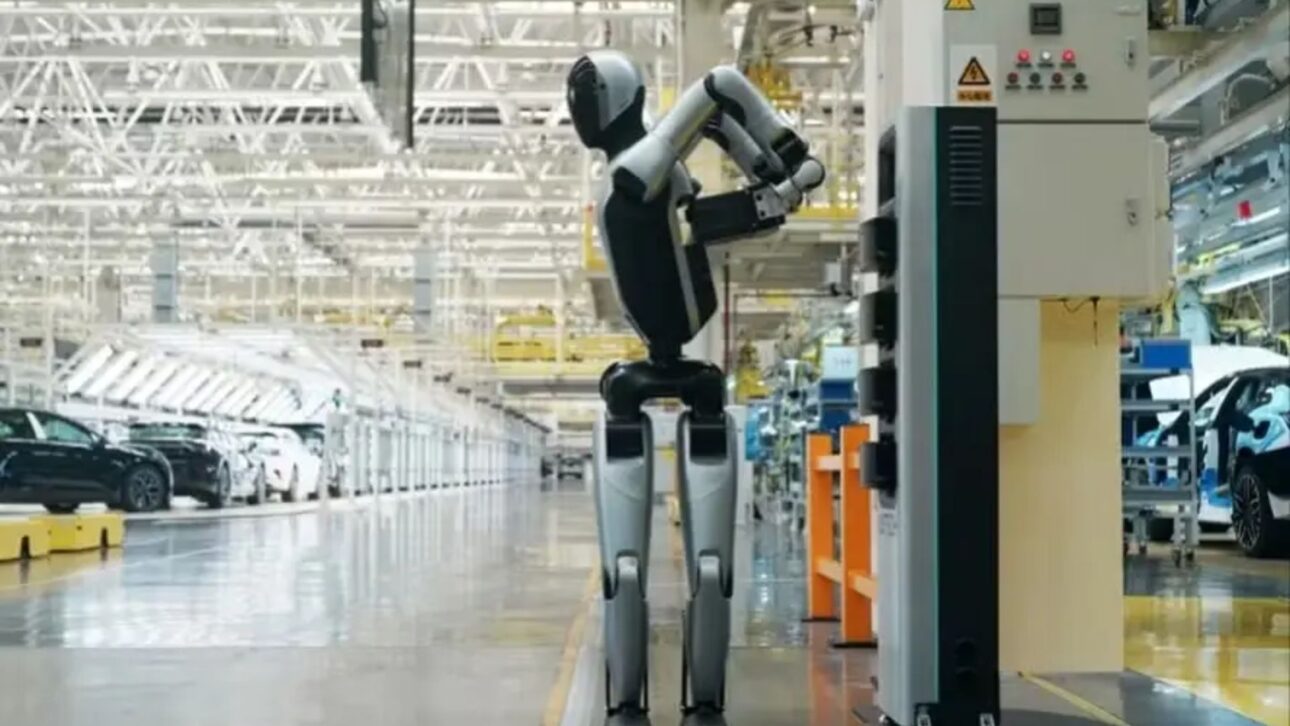
Robot Used by BYD and Large Manufacturers
The Walker S2 is already integrated into industrial operations of companies such as BYD, Nio, and Zeekr.
Previous models, such as the Walker S1, had already demonstrated significant gains: efficiency increased by up to 120% and labor cost reductions of up to 65%.
The new model elevates automation even further with less need for human supervision.
Technological Advancements in Industrial Robotics
With 20 degrees of freedom and advanced connectivity via Wi-Fi and Bluetooth, the robot performs agile movements and acts intelligently in factories.
Its autonomous energy management system determines when it’s more efficient to change or recharge the batteries, always prioritizing the most urgent tasks.
Partnerships and Expansion of the Robot That Changes Its Own Battery
UBTech established a strategic partnership with Huawei in May of this year to expand the adoption of humanoid robots in the industrial and domestic sectors.
The launch of the Walker S2 reflects China’s strategy to position itself as a global leader in robotic automation.
Since December 2023, UBTech has increased investments after going public, accumulating around 1 billion dollars for innovation.
According to reports, more than 500 units of the robot have already been ordered by major companies by July 2025.
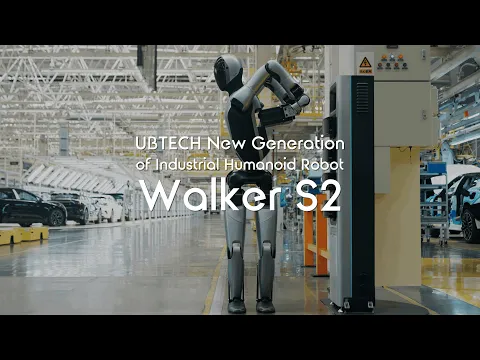

Plug-and-Play Technology and Advanced Logistics
The Walker S2 uses standardized battery modules, facilitating repetitive and scalable operations.
The battery swapping station keeps the modules charged and ready for replacement, allowing the robot to operate without prolonged interruptions.
This solution integrates without the need for significant changes to factory infrastructure.
Safety, Regulation, and Challenges
There is currently no official information regarding mass production, pricing, or international availability of the Walker S2.
No safety certifications for other markets or necessary adjustments to labor regulations outside China have been disclosed.
Autobattery Swap Robot: A New Level of Industrial Autonomy
The Walker S2 goes beyond task execution, promoting autobattery swap robot and further reducing the need for human interventions in factory routines.
The promise is for continuous shifts and greater efficiency in logistics and assembly operations.
With this advancement, are we facing the end of the era of repetitive manual labor in factories? What other human roles might be affected by the expansion of robots like the Walker S2?


