






 Portuguese
  Spanish


A research study from Drexel University in the United States has shown that a simple and viscous liquid can fracture like a solid when subjected to extreme stretching conditions. The study was published in March 2026 in the journal Physical Review Letters and describes a behavior that contradicts the classical view that liquids only flow, thin, and continuously deform.
The phenomenon surprised the research team itself. During the tests, the liquid did not stretch gradually, as would be expected in viscous materials, but broke with a sharp snap, leading the researchers to repeat the experiment to confirm it was not a failure in the equipment.
Discovery by Drexel University reveals that viscous liquid can fracture like solid under extreme stress
The discovery occurred while the team was studying two simple liquids in collaboration with ExxonMobil Technology & Engineering Company. The experiment was an extensional rheology test, used to measure how much force is needed to make a liquid flow when it is pulled.
-
Xiaomi to Launch Robot Vacuum 6 Max Globally: Features 85°C Mop Cleaning, 35,000 Pa Suction, Extendable Arms, AI with 3 Cameras, and 6 cm Obstacle Clearance

-
Engineers Develop Jacket That Converts Air Humidity Into Drinkable Water, Producing Up to 900 ml Daily for Hikers, Campers, Rescuers, Rural Workers, and Military in Remote Areas

-
NASA Plans to Repurpose Mars Rover for Lunar Mission, Sending a 1-Ton Nuclear-Powered Vehicle to Explore the Moon’s South Pole Without Solar Dependence
-
Early Humans Made Beds Nearly 200,000 Years Ago in African Caves, Study Reveals


The expectation was to observe the classical behavior of a viscous fluid, similar to honey or tar being stretched. Instead, the tested liquids separated suddenly, exhibiting a fracture pattern similar to what is usually associated with solid materials under tension.
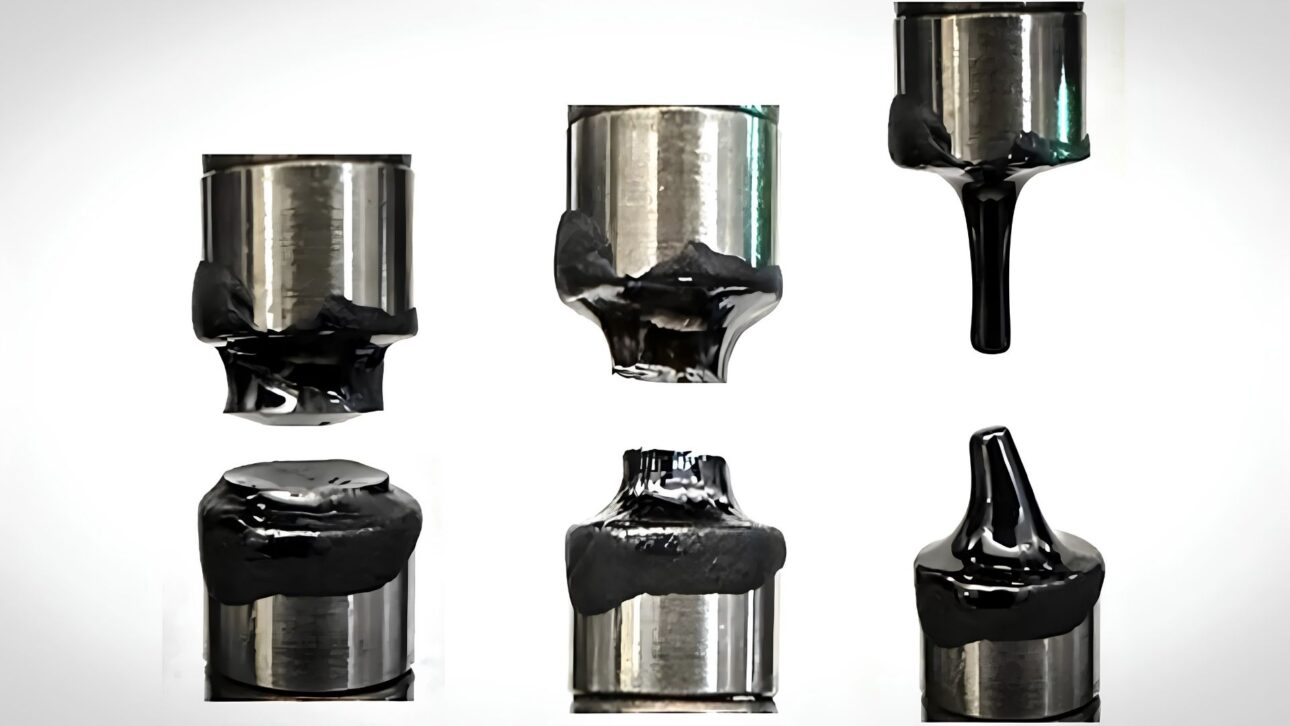
Researcher Thamires Lima reported that the rupture produced a snap loud enough to startle her. Meanwhile, Nicolas Alvarez from Drexel stated that the result was so unexpected that the experiments had to be repeated several times before the team accepted that the phenomenon was real.
Critical stress point in simple liquids explains when the fluid stops flowing and starts breaking
The center of the discovery is in the so-called critical stress point. According to the team, when a simple liquid is pulled hard enough per unit area, it can reach a threshold where it stops relieving tension by flowing and starts to break like a solid.
In the initial tests, tar-like hydrocarbon mixtures fractured around 2 megapascals of critical stress. The team also observed that for each viscosity tested, there was a specific rate of stretching capable of inducing rupture, maintaining the relationship with this critical threshold.
When the liquid is pulled slowly, it can still flow and redistribute the tension. When the stretching occurs too quickly, the material cannot relax in time, the tension builds up, and the fracture appears abruptly.
Viscosity and not elasticity emerges as the central factor in the fracture of simple liquids
One of the most relevant points of the study is that the fracture does not seem to depend on elasticity, as was imagined in similar cases involving complex fluids.
Until then, this type of behavior was more associated with viscoelastic or polymeric liquids, like thick mixtures capable of storing tension more similarly to solids.
To test this hypothesis, the researchers compared a simple oligomeric styrene liquid with its equivalent polymeric version. The result was striking because both broke at the same critical stress point, suggesting that viscosity was the dominant factor in the process, not elasticity.
This conclusion increases the importance of viscosity in the mechanical description of fluids and opens a new front of investigation in fluid dynamics. In Drexel’s statement, the team claims that the behavior may be more general than previously thought and might apply, under the correct conditions, to many other simple liquids.
Fracture speed and cavitation hypothesis amplify the impact of the scientific discovery
After confirming the rupture, the team began to investigate how this fracture propagates within the liquid. According to the results summarized in the consulted sources, the cracks advanced at speeds between 500 and 1,500 meters per second, a range compatible with the cavitation hypothesis.
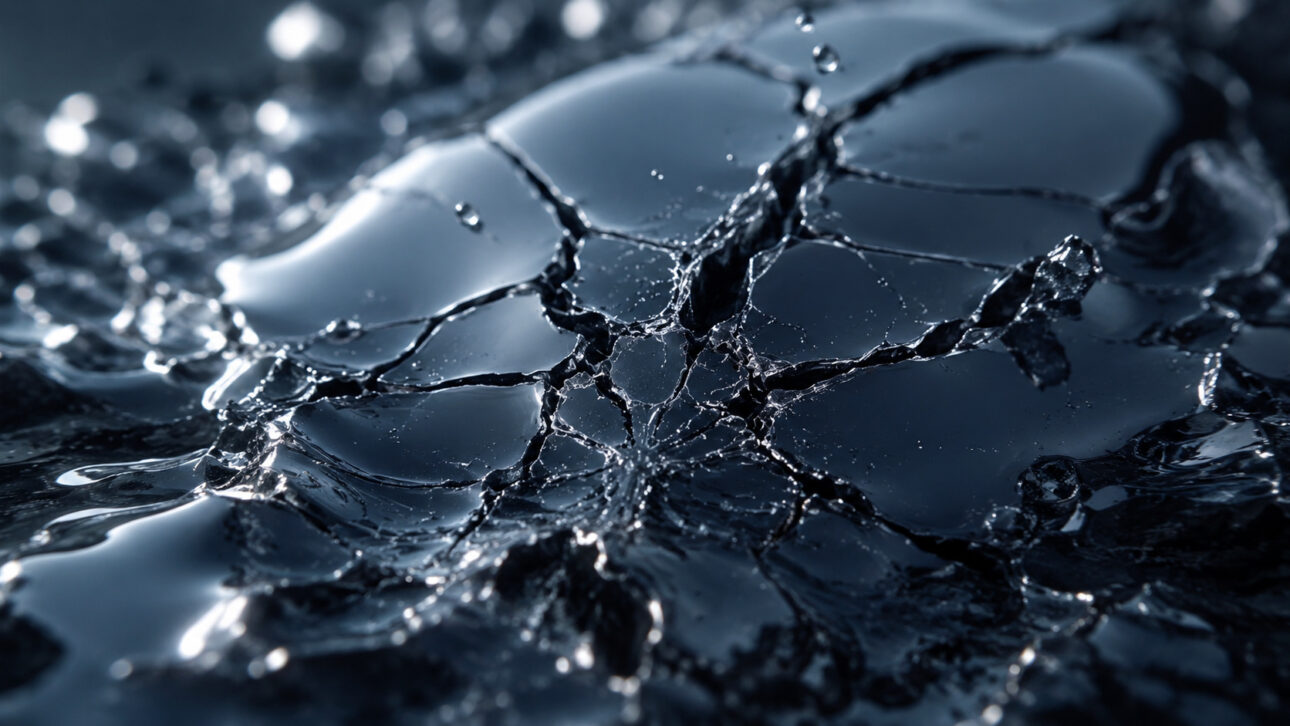
Cavitation is an important phenomenon in engineering because it involves the rapid formation and collapse of cavities or bubbles, which can cause damage to mechanical systems.
Drexel itself reported that initial evidence points to this possibility, although the complete physical mechanism still needs to be investigated in future studies.
This point is important because it keeps the text technically correct. The discovery is recent and robust enough to support the existence of fracture in simple liquids under the tested conditions, but the authors make it clear that the detailed explanation of the mechanism is still under development.
Applications in hydraulics, 3D printing, fibers, and blood flow show why the discovery matters
Despite seeming like a laboratory curiosity, the discovery has the potential to impact practical areas.
Drexel states that the phenomenon can influence research in hydraulics, 3D printing, processing of viscous liquids, production of fibers, and even biological systems that depend on the behavior of fluids under stress.
The scientific interest lies precisely in the fact that a rule considered basic may not be as rigid as it seemed. If simple liquids also have a breaking point under certain conditions, models used to predict the behavior of these materials may need to be refined.
In the end, the discovery reinforces one of the strongest hallmarks of science: even everyday and seemingly well-understood phenomena can still hide unexpected behaviors. In this case, a common liquid revealed a mechanical limit that may reopen fundamental discussions about how fluids respond to extreme force.


