






 Portuguese
  Spanish


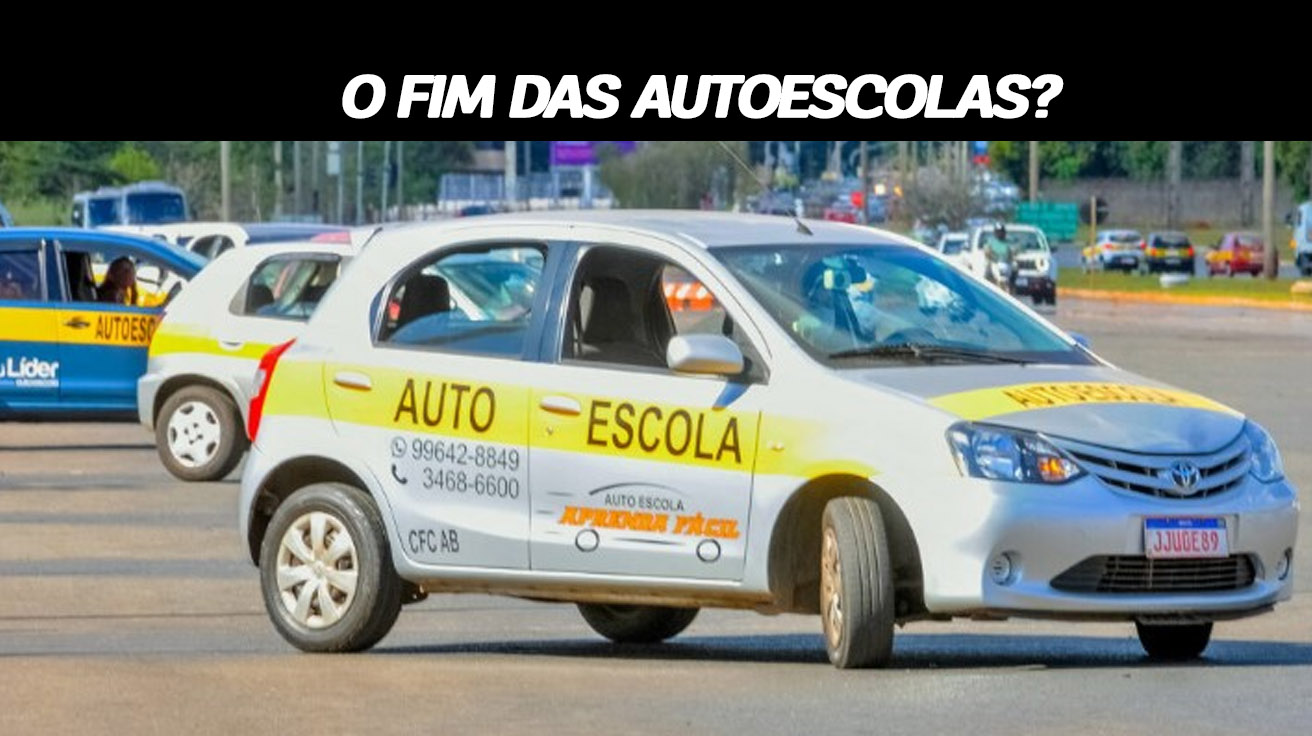


Proposed Laws Under Review in Brazil Suggest Significant Changes to the Process of Obtaining a Driver’s License. The Proposals Include Allowing Independent Instructors to Offer Practical Lessons and Creating a Specific License for Automatic Vehicles.
Imagine a Brazil where obtaining the National Driver’s License (CNH) becomes much simpler and cheaper.
A proposal already circulating in the Chamber of Deputies promises to change the lives of future drivers by allowing them to forgo driving schools for practical lessons.
Would this mean the end of driving schools as we know them? While the topic causes heated debates, it is important to understand what lies behind this bill and what may change in the coming years.
-
End of an era in Brazil: beloved sedan by Brazilians is discontinued despite having a 2.0 engine with 151 hp, CVT transmission, 466-liter trunk, and up to 650 km of range.

-
New Law Proposal in Brazil Could Heavily Penalize Drivers: Dangerous Overtaking May Become a Serious Offense with Fines Increased Tenfold and a 12-Month License Suspension; Update on 2026 Progress

-
Electric Revolution: Watts W125 Motorcycle Offers 160 km Range, 90 km/h Speed, and Affordable Price Starting at $3,000
-
General Motors Replaces Over a Thousand Workers with 50 Cobots at Electric Vehicle Plant, UAW Union Criticizes Move Amid Industry’s Automation Push



Bill 5558/19: What Does It Propose?
According to the text approved by the Commission of Transportation and Viação of the Chamber of Deputies, the Bill 5558/19 allows independent instructors, without ties to Driver Training Centers (CFCs), to teach practical driving lessons.
This flexibility would give CNH candidates the option to choose between independent instructors and traditional driving schools.
According to the bill’s rapporteur, Deputy Maurício Marcon (Pode-RS), the proposal aims to reduce the costs of licensing and increase economic freedom, allowing independent professionals to expand their incomes.
In practice, anyone accredited by Detran could serve as an instructor.
It is important to highlight that, to come into effect, the bill still needs to pass through the Commission of Constitution and Justice and Citizenship (CCJ) and then be approved by the Senate.
If this happens, driving schools would lose their monopoly on practical lessons, which has generated controversy among experts and professionals in the sector.

Advantages and Critiques: The Division of Opinions
The approval of the proposal promises to lower the cost of the CNH by providing more options for students, as independent instructors would have greater flexibility in pricing.
Currently, practical lessons are one of the most costly parts of the licensing process.
On the other hand, critics warn about the potential decline in the quality of training for new drivers.
This is because, according to experts, driving schools adhere to strict standards to ensure that students are prepared both technically and psychologically to navigate traffic.
According to information reported by the AutoPapo portal, many independent instructors might not follow the same teaching standards required of CFCs, putting road safety at risk.
Additionally, there are concerns about the oversight of these instructors by Detrans.
Another Proposal Under Discussion: Driver’s License for Automatic Cars
Alongside Bill 5558/19, the Bill 7746/2017 is currently being discussed in the Chamber, proposing the creation of a subcategory of the CNH exclusively for vehicles with automatic transmission.
According to the text, the candidate could complete the entire licensing process (lessons and tests) in automatic cars. However, upon approval, they would have the restriction to drive only this type of vehicle.
This measure has sparked a series of rumors on social media, with messages claiming that the new CNH will come into effect at the beginning of next year.
However, as clarified by Agência Brasil, this information is false. The proposal still needs to go through various stages of analysis before being approved.
If enacted, the proposal could benefit drivers who intend to drive only automatic cars, a growing trend in the Brazilian automotive market.
The Impact on Driving Schools: Adaptation or Disappearance?
With the flexibility in the licensing process, driving schools may face an unprecedented crisis.
According to specialists consulted by the newspaper O Globo, CFCs will need to reinvent themselves to attract candidates by offering differentiated services or competitive discounts.
On the other hand, it is unlikely that driving schools will disappear completely, as they still have the necessary infrastructure to serve thousands of students with proven quality.
However, it is possible that there will be a significant migration to independent instructors.
A Change That Requires Caution
The proposals under discussion in the Chamber of Deputies represent a profound change in the model of training new drivers in Brazil.
While Bill 5558/19 opens the door for independent instructors and increases economic freedom, Bill 7746/2017 offers an alternative for those who prefer to be licensed only in automatic cars.
However, it is crucial to balance economic benefits with safety on the roads, avoiding any compromise in the quality of education. The debate remains heated and should continue in the coming months.
Do you believe that these proposals will bring improvements or problems to Brazilian traffic? Share your opinion in the comments!



Não tem nada de errado de como funciona a auto escola, o instrutor autônomo vai precisar de um veículo adaptado, seguro, IPVA e vai ter que correr atrás de clientes.
Se esse instrutor comprar um carro automático não vai poder treinar candidatos a carros mecânicos, a situação fica ainda pior.
Não vão conseguir baixar custo, só aumentar os problemas.
Excelente.
Isso reduziria muitos o número de reprovados, afinal muitas dessas instituições quando o condutor iniciante vai para a 1° habilitação cobra o famoso quebra. Tende em vista a falta de habilidade e o grande índice de reprovados, coloca-os a mercê dessa **** ****.
Será ótimo para desvencilhar a população da mão de uma quadrilha mascarada dentre uma das maiores instituições de nosso país.
Deveria ser seguido de petição com colaboração pública e assinaturas livres da população.
Seria sim benéfico por vários aspectos, doou instrutor prático e teórico. 25 anos nesse universo de CFCs, e o Detran não permitirá qq um ser credenciado. Sabemos que instrutor credenciados que não exercem atividade existem aos monte por não ter CFCs o bastante pra alocar todos. Ou seja, essa história que cairá o nível do ensino não procede, pois dentro das próprias CFCs já tem muitos instrutores horríveis. Então isso não garante nada. O qua vai garantir isso será a banca examinadora, pois o treino prático é pra ser aprovados no exame. A ideia não é treinar e já sair habilitado. Então eu apoio