Portuguese
  Spanish


While Nvidia, Intel, and AMD cut a wafer into hundreds of tiny chips, Cerebras keeps the whole wafer and creates a giant processor made for one thing: running artificial intelligence at record speed
The world’s largest chip doesn’t fit on the tip of a finger; it’s the size of a dinner plate. The American company Cerebras does exactly the opposite of the rest of the semiconductor industry: instead of cutting the silicon disc into hundreds of small chips, it keeps the entire wafer and transforms it into a single colossal processor, the Wafer Scale Engine, created to train artificial intelligence.
How can a chip be so large? Because Cerebras decided not to slice the wafer, that round silicon disc from which chips are made. Keeping the whole wafer was considered almost impossible due to manufacturing defects, but the company found a way to make it work, and the result is a processor with a power that no traditional chip can reach.
The chip that occupies an entire silicon disc
The size is the first shock. According to IEEE Spectrum, the third-generation Wafer Scale Engine, the WSE-3, is square with 21.5 centimeters on each side and uses almost an entire 300-millimeter silicon wafer to form a single chip, around 46,000 square millimeters of area.
-
Scientists Unveil Largest-Ever Image of the Milky Way’s Core Featuring 60 Million Stars, Achieved by Euclid Telescope to Boost Planet Discovery and Solve Universe’s Mysteries

-
Hawaii Turns Abandoned Fishing Nets and Household Plastic into Urban Pavement for Experimental Road in Oahu

-
Is This the End of Smartphones? Mark Zuckerberg Unveils AI Glasses with Lens Display and Neural Bracelet Two Years Later, Shaking Up the Market Again
-
Astranis Builds Half-Ton Satellites, 20 Times Smaller and Cheaper, to Provide Internet to Alaska, Mexico, and the Philippines





The comparison with the competition highlights the difference. According to IEEE Spectrum, traditional manufacturers usually limit themselves to chips of at most about 800 square millimeters, meaning the world’s largest chip from Cerebras is dozens of times larger than a common processor. It’s like choosing between serving a cake in slices or bringing the whole cake to the table, and Cerebras brought the whole cake.
4 trillion transistors in a single piece
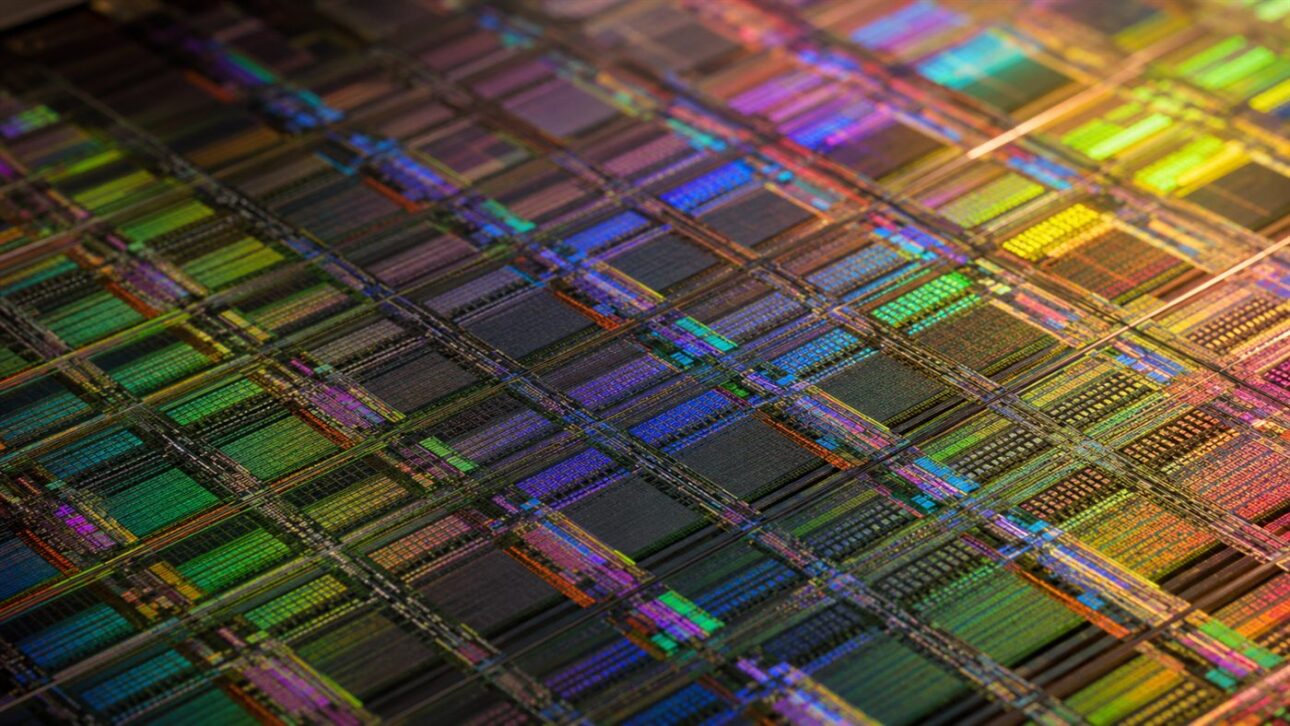
The numbers for the WSE-3 are breathtaking. According to Interesting Engineering, the chip contains 4 trillion transistors and 900 thousand cores optimized for processing artificial intelligence, all in a single block of silicon manufactured by TSMC using 5-nanometer technology.
Keeping all this within a single chip brings enormous gains. According to IEEE Spectrum, the processor also embeds 44 gigabytes of memory within the chip itself, which avoids the slow data back-and-forth that hinders common systems. Having memory and processing on the same piece of silicon is what provides the extra speed, because the information doesn’t need to travel outside the chip with each calculation.
Why everyone cuts the wafer, except Cerebras
Cerebras’ approach goes against decades of industry practice. Every chip manufacturer starts with the same silicon wafer, a round disc, and cuts it into hundreds of small pieces, because the smaller the chip, the lower the chance of a microscopic defect ruining the entire piece. Keeping the entire wafer has always been seen as a recipe for waste.
The trick was to design the chip to coexist with failures instead of avoiding them. By creating pathways and reserve cores that bypass any defect, the company managed to keep the entire wafer functioning even if part of it has a problem. Turning the biggest manufacturing enemy, the defect, into something manageable was the turning point that made the giant possible.
The world’s largest chip is 57 times larger than Nvidia’s largest GPU
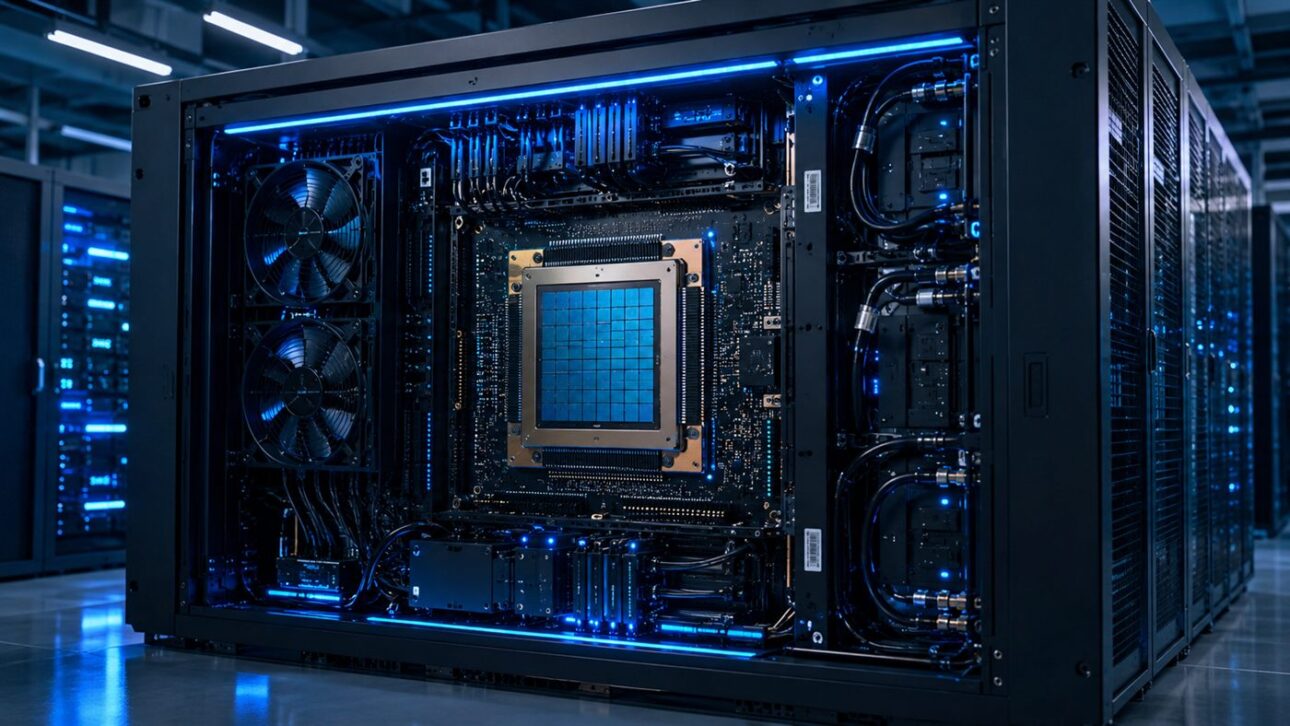
The market reference today is GPUs, and it is against them that Cerebras measures its strength. According to Interesting Engineering, the WSE-3 is about 57 times larger than the H200, Nvidia’s powerful GPU used to train artificial intelligence worldwide.
And size, here, turns into real performance. According to Interesting Engineering, the chip can handle a model with up to 24 trillion parameters in a single memory space, something that would require gathering and synchronizing thousands of GPUs. According to IEEE Spectrum, the WSE-3 also doubles the performance of the previous generation while consuming the same energy. Doing more while spending the same is the holy grail in a sector where the AI electricity bill keeps rising.
Less code and more speed for AI
It’s not just raw power, it’s also ease. According to Interesting Engineering, running a language model on Cerebras’ chip requires about 97% less code than doing the same on a GPU, and a model the size of GPT-3 fit in just 565 lines of programming.
This simplicity saves researchers time and money. According to Interesting Engineering, the system can train a model with 70 billion parameters in a single day, a speed that changes the routine of those developing artificial intelligence. Cutting months of work to a day is the kind of leap that decides who gets there first in the AI model race.
Who uses the monster, from Mayo Clinic to G42
A chip of this size is not a laboratory toy; it already has heavyweight clients. According to Interesting Engineering, the CS-3 supercomputer, built with these chips, is used by institutions like the Argonne National Laboratory, the American Mayo Clinic, and the G42 company from the United Arab Emirates.
Each one uses the power in its own way. Mayo Clinic applies artificial intelligence in medical research, Argonne in heavy science, and G42 in Arabic language models, showing that the appetite for AI processing crosses health, science, and language. When a hospital, national laboratory, and billion-dollar fund compete for the same AI chip, it’s a sign that the hunger for artificial intelligence has gone global.
Who is behind the bet
Leading Cerebras Systems, based in California, is Andrew Feldman, co-founder and CEO, who bet on an idea many considered crazy: making the largest chip possible instead of the smallest. The company has been improving the giant with each generation, from the WSE-1 in 2019 to the current WSE-3.
The trajectory shows persistence in a counter-current thesis. While the entire world was pursuing ever smaller chips, Cerebras went in the opposite direction and turned exaggeration into an advantage. Going against industry consensus and proving it works is what separates a bold bet from an expensive extravagance, and for now, Cerebras is on the right side of that line.
What this bet represents
The giant chip from Cerebras is a reminder that not always the path everyone takes is the only one that works. By keeping the wafer whole, the company created a specialized tool that tackles the biggest bottleneck in artificial intelligence, which is the speed of training ever larger models. It won’t replace the GPU in everything, but it shows there is more than one way to solve the most expensive problem in current technology.
And you, do you prefer a future of AI dominated by thousands of small chips working together, or by a few giants like Cerebras’? Share in the comments which bet you think is more promising.