Portuguese
  Spanish


An unprecedented image captured by the Euclid space telescope has revealed the most detailed portrait ever produced of the heart of the Milky Way, recording about 60 million stars in a single composition and opening new possibilities for the discovery of exoplanets and for the study of the structure of our galaxy.
Looking at the night sky has always sparked humanity’s curiosity. Even after decades of technological advancements, the Milky Way still holds numerous secrets about its origin, evolution, and composition. Now, a new achievement in astronomy promises to change the way scientists study our galaxy.
According to information released by Agence France-Presse (AFP) and the European Space Agency (ESA) on Wednesday, one of the most impressive images ever produced of the Universe has just been presented to the public. The record was obtained by the space telescope Euclid, which captured the largest and most detailed portrait ever made of the center of the Milky Way in visible light.
The result impresses not only for the beauty of the image but also for its enormous scientific value. The photograph gathers approximately 60 million stars, allowing researchers to investigate everything from the distribution of matter in the galaxy to the presence of planets located far beyond the Solar System.
-
Cerebras Creates World’s Largest Chip with 4 Trillion Transistors and 900,000 Cores for AI Training

-
Hawaii Turns Abandoned Fishing Nets and Household Plastic into Urban Pavement for Experimental Road in Oahu

-
Is This the End of Smartphones? Mark Zuckerberg Unveils AI Glasses with Lens Display and Neural Bracelet Two Years Later, Shaking Up the Market Again

-
Astranis Builds Half-Ton Satellites, 20 Times Smaller and Cheaper, to Provide Internet to Alaska, Mexico, and the Philippines




The heart of the Milky Way appears in never-before-seen details
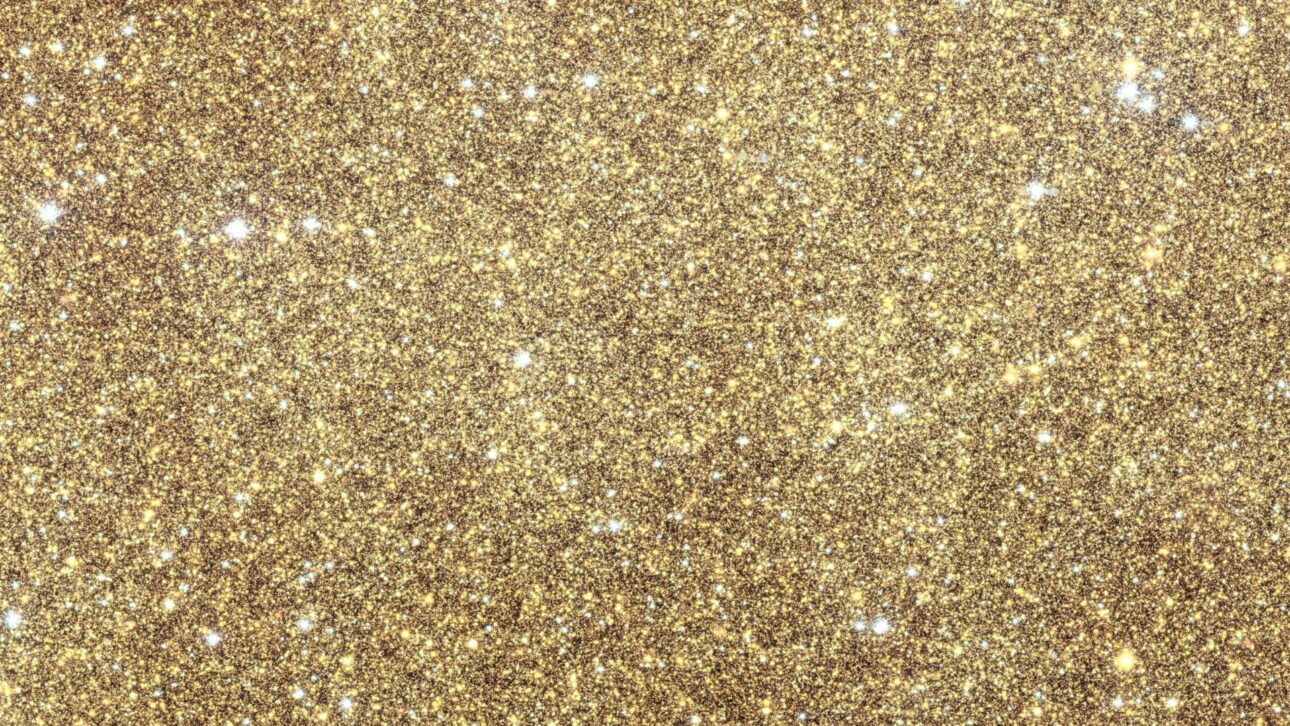
The observations were made in early 2025 with Euclid’s VIS camera, while the colors were added later using data from the MegaCam camera, of the Canada-France-Hawaiʻi Telescope (CFHT), in Hawaii. The combination of information from the two telescopes provided a high-resolution image, essential for studies on the structure of the Milky Way and the distribution of its stars.
Credit: ESA/Euclid/Euclid Consortium/NASA, CFHT. Image processing by J.-C. Cuillandre and E. Bertin (CEA Paris-Saclay).
At the center of the Milky Way lies a structure known as the galactic bulge, a gigantic concentration of stars that forms a kind of luminous bubble around the galaxy’s core.
This region has always posed a huge challenge for astronomers.
The intense concentration of stars, clouds of dust, and gas makes detailed observation difficult using conventional telescopes.
It was precisely to overcome this obstacle that the space telescope Euclid came into action, a scientific mission by the European Space Agency launched in 2023.
Although its main objective is to investigate the mysteries of dark matter and dark energy, responsible for much of the Universe’s composition, the mission has also been producing extraordinary images of different regions of the sky.
According to French astronomer Jean-Charles Cuillandre, a member of the Euclid mission, the team decided to direct the telescope towards one of the brightest areas of the firmament.
The result exceeded all expectations.
How the largest image of the galaxy’s center was produced
The photograph was captured on March 23, 2025, when Euclid continuously observed the central region of the Milky Way for approximately 26 hours.
At the time of capture, the telescope was about 1.5 million kilometers from Earth, a position it occupies near the gravitational equilibrium point known as L2.
The final image does not correspond to a single photograph.
In reality, it is a huge mosaic composed of nine individual images, each covering an area of the sky larger than the apparent disk of the full Moon as seen from Earth.
Initially, all photographs were taken in black and white using Euclid’s visible light camera.
Later, experts added colors based on observations made by the Canada-France-Hawaii Telescope, located in Hawaii.
The final result reveals an impressive cosmic landscape, filled with stars distributed in different shades and luminous intensities.
According to Cuillandre, the goal of the work was never just to create a beautiful image.
Every detail recorded holds enormous scientific importance.
Much more than beauty: a tool to discover new worlds
The wealth of information contained in the image will allow researchers to study with much more precision the behavior of the existing stars in the center of the Milky Way.
Although Euclid is unlikely to directly discover new exoplanets in this specific photograph, the data obtained will play a fundamental role in investigating already known planetary systems and those yet to be identified.
This happens thanks to a phenomenon called gravitational microlensing.
Predicted by the Theory of General Relativity, this effect occurs when one star passes exactly in front of another.
The gravity of the closer star bends the light emitted by the star located in the background, functioning as a gigantic cosmic magnifying lens.
When there is a planet orbiting this star, its gravity causes small additional changes in the observed brightness.
Even though they are extremely subtle, these variations can be detected by modern instruments and used to reveal the existence of worlds invisible to traditional observation methods.
In the last two decades, this technique has allowed the discovery of almost 300 exoplanets, all located in the direction of the center of the Milky Way and identified by telescopes installed on Earth.
With the quality of the images produced by Euclid, scientists believe it will be possible to make these measurements much more precise and significantly expand knowledge about distant planetary systems.
The technique that turns stars into true natural lenses
Among the greatest contributions of the Euclid mission is the ability to enhance studies based on the so-called gravitational microlensing, a phenomenon predicted by Albert Einstein and considered one of the most efficient tools for detecting exoplanets far from Earth.
This effect occurs when one star passes exactly in front of another from the observer’s perspective.
In this rare alignment, the gravity of the foreground star bends space-time and deflects the light emitted by the background star, functioning as a gigantic cosmic magnifying lens.
The result is a small temporary increase in brightness observed by telescopes.
If there is a planet orbiting the closer star, its gravity also interferes with this light beam, producing an even more subtle variation.
It is precisely this small alteration that allows astronomers to identify worlds invisible by other observation methods.
Although the new image from Euclid was not produced to directly discover new exoplanets, it represents an extremely valuable database for future research.
More than 50 planetary systems already appear in the new mosaic
According to the European Space Agency, the gigantic photograph obtained by Euclid already gathers 51 known planetary systems within the observed region.
These systems will serve as a reference for future analyses, allowing for much more precise measurements of the planets’ masses and a better understanding of their orbital characteristics.
The French astronomer Jean-Philippe Beaulieu, one of the specialists involved in the mission, highlighted that the gravitational microlensing technique has already led to the discovery of nearly 300 exoplanets over the past 20 years.
All of them were found by ground-based observatories focused on the center of the Milky Way.
Among these discoveries is an icy planet identified by Beaulieu’s own team, whose appearance was compared to the fictional planet Hoth from the Star Wars franchise, due to its extremely low temperatures.
Now, with the precision of Euclid, scientists hope to significantly increase this number and study these systems with a level of detail never before achieved.
The Euclid mission goes far beyond the search for exoplanets
Launched in 2023, the Euclid space telescope was primarily developed to investigate two of the greatest mysteries of modern cosmology: dark matter and dark energy.
Together, these two invisible components represent approximately 95% of the Universe, but remain practically unknown to scientists.
During its mission, the space observatory is expected to map about one-third of the entire sky, producing one of the largest astronomical surveys ever conducted.
This gigantic database will allow us to understand how galaxies have evolved over billions of years and how gravity has shaped the structure of the Universe since its early stages.
At the same time, each recorded image can also contribute to research involving stars, nebulae, star clusters, black holes, exoplanets, and numerous other celestial objects.
A historical portrait of the Milky Way
Far beyond the visual impact, the new photograph represents a milestone for modern astronomy.
By capturing about 60 million stars in a single high-resolution composition, Euclid offers researchers an unprecedented opportunity to study the most populous region of our galaxy.
Each bright point present in the mosaic corresponds to a star whose light traveled enormous distances to reach the telescope’s sensors.
In the coming decades, this image is expected to serve as a reference for hundreds of scientific studies, helping to understand everything from the dynamics of the galactic bulge to the formation of new planetary systems.
More than an impressive record, the mosaic demonstrates the enormous potential of future Euclid observations and reinforces how space exploration continues to expand the boundaries of human knowledge about the Universe.
The image was released by the European Space Agency (ESA) with information from Agence France-Presse (AFP), having been produced from observations made on March 23, 2025 by the space telescope Euclid.