






 Portuguese
  Spanish
  6 min of reading
  0 comments


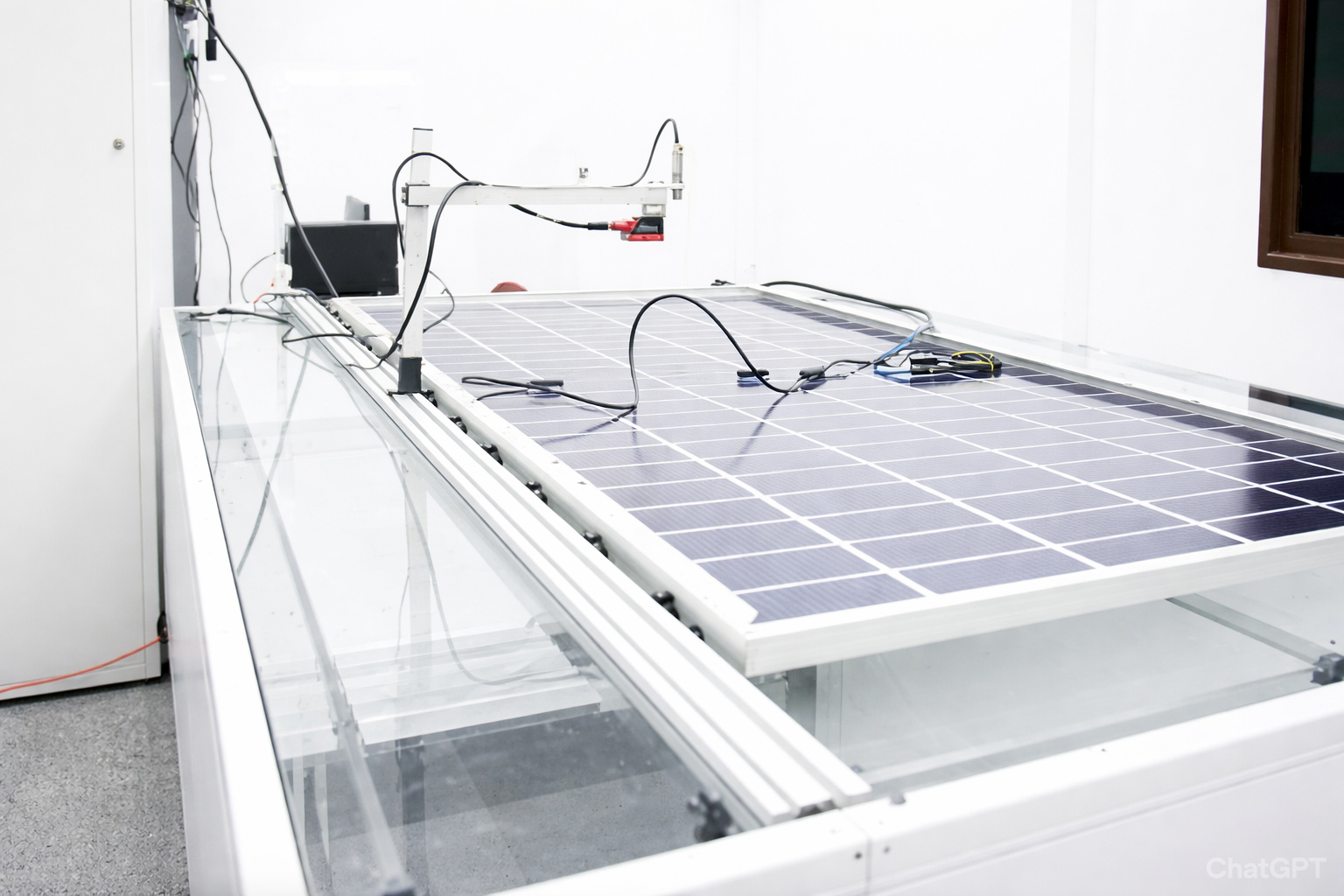
Solar Panel Inspection Receives Technical Maintenance to Enhance Equipment Security and Quality
The inspection of solar panels in Brazil received a direct boost after Inmetro performed preventive maintenance on its testing system aimed at the evaluation of photovoltaic modules. This measure increases the reliability of technical tests and strengthens the quality control of equipment supplying homes, businesses, and solar plants across the country.
The National Institute of Metrology, Quality and Technology intensified technical checks at a strategic moment for the sector. The solar energy market is rapidly growing in Brazil, and the constant influx of new equipment demands strict control to avoid failures, financial losses, and risks to consumers.
In this context, the modernization of the testing system directly impacts manufacturers, importers, distributors, and consumers. Furthermore, the initiative strengthens trust in photovoltaic energy generation, which already holds a prominent position in the Brazilian electricity matrix.
-
Solar energy can increase property value by up to 10% and become a selling point.

-
Solar and wind energy surpass natural gas for the first time in the world and accelerate energy revolution

-
Africa has about 500,000 cell towers and most still burn diesel to operate, while companies rush to cover antennas with solar energy and avoid signal blackouts.
-
Farmers swapped diesel for solar panels in Pakistan, powered irrigation pumps almost cost-free, expanded rice fields, and now groundwater has become a red alert in the countryside.




The inspection of solar panels relies on precise laboratory tests. These tests verify performance, electrical safety, resistance to weather conditions, and durability of the modules. Thus, Inmetro ensures that the equipment meets current technical standards.
The system underwent programmed technical adjustments, focusing on preventive maintenance. This type of action reduces the risks of unexpected failures, improves the accuracy of results, and maintains the reliability of measurements. Therefore, the inspection becomes more robust.
Why Has Solar Panel Inspection Become a Priority in Brazil?
Brazil is experiencing a solar energy boom. Thousands of systems come online every month, both in residences and in businesses and rural properties. At the same time, the supply of equipment in the domestic market is growing.
With this rapid advancement, the inspection of solar panels assumes a strategic role. Equipment that falls outside the standard can lead to efficiency losses, increased costs, and even electrical risks. Furthermore, modules with inferior performance undermine the sector’s credibility.
In this scenario, Inmetro acts as the responsible agency for assessing product compliance. The institute verifies whether the panels meet the technical requirements necessary for commercialization in the country. Thus, it protects the consumer and ensures fair competition among manufacturers.
Preventive maintenance in the testing system reinforces this commitment. By updating and reviewing testing equipment, the institute maintains a high level of accuracy in power, efficiency, and safety measurements.
How Do Technical Tests on Photovoltaic Modules Work?
The inspection of solar panels involves a series of laboratory tests. Technicians subject the modules to simulated conditions of temperature, solar radiation, humidity, and electrical load. This way, they assess the equipment’s behavior in real situations.
The tests measure nominal power, energy efficiency, and structural resistance. Additionally, they check electrical safety, an essential factor in avoiding short circuits and fires.
The testing system employs calibrated equipment with a high degree of precision. Therefore, any preventive maintenance becomes essential to ensure reliable results. Small variations can alter measurements and compromise technical reports.
With the technical update, Inmetro expands its capacity to respond to market demands. Simultaneously, it reduces the risks of interruptions in evaluations and maintains a continuous analysis flow.
Direct Impact on Consumers and Installers
The inspection of solar panels does not only benefit manufacturers. The end consumer also gains protection. When purchasing a certified module, they reduce the risk of acquiring a product with below-expected performance.
Moreover, installers and integrators depend on the quality of the equipment to maintain their reputation in the market. Systems with flaws generate complaints, losses, and rework. Thus, Inmetro’s actions impact the entire production chain.
In this context, preventive maintenance in the testing system strengthens the legal security of the sector. Serious manufacturers gain technical support, while irregular products face increased control.
At the same time, the inspection contributes to national energy efficiency. More efficient systems produce more energy with less installed area. Thus, the country optimizes resources and reduces emissions.
Growth of Solar Energy Requires More Rigorous Technical Control
Photovoltaic generation is already among the main sources of the Brazilian electricity matrix. The advancement occurs both in distributed generation and in large solar plants.
With this growth, the volume of module imports increases. Brazil receives equipment from various countries, with varying technological standards. Therefore, the inspection of solar panels needs to keep pace with this expansion.
Inmetro establishes clear technical criteria. It requires certification and compliance with specific standards before commercialization. Thus, it prevents the circulation of products that do not meet minimum performance and safety requirements.
Additionally, the institute collaborates with consumer protection agencies and the Federal Revenue in market operations. This way, it increases traceability and control over equipment sold in the country.
Preventive Maintenance Reduces Risks and Increases Reliability
Preventive maintenance in the testing system represents a technical strategy. Instead of acting only in the face of failures, the institute anticipates adjustments and revisions.
This practice extends the life span of laboratory equipment. Furthermore, it maintains stability in measurements and reduces the risk of unexpected downtime.
In the solar energy sector, where every watt counts, technical precision makes a difference. Small deviations can alter performance classifications and create significant financial impacts.
Thus, the inspection of solar panels depends on modern and up-to-date technical infrastructure. Investment in maintenance reinforces the commitment to quality and transparency.
What Changes for the Market After the Reinforcement in Inspection?
With the updated testing system, Inmetro enhances security in certification processes. Manufacturers must maintain high technical standards to meet the requirements.
At the same time, importers undergo more rigorous control. Products that do not comply with the requirements may face trade restrictions.
This movement strengthens companies that invest in technology and quality. On the other hand, it reduces space for low-efficiency equipment.
For consumers, the main benefit appears in reliability. Certified systems tend to deliver performance much closer to that promised in catalogs.
Solar Energy and Consumer Confidence
Solar energy involves significant initial investment. Families and companies allocate resources to install systems that promise savings on electricity bills for decades.
In this scenario, the inspection of solar panels acts as an indirect guarantee of financial return. Tested and certified equipment offers greater predictability in energy generation.
Moreover, Inmetro’s actions contribute to the consolidation of the sector. Mature markets depend on clear rules and effective oversight.
Meanwhile, technological advancement continues to accelerate. New models of modules arrive on the market with greater efficiency and new solar cell technologies. Thus, the testing system needs to keep up with this evolution.
Inspection as a Pillar of the Energy Transition
Brazil is advancing in the energy transition with a strong contribution from solar sources. The reduction of emissions and the diversification of the matrix depend on reliable equipment.
In this context, the inspection of solar panels directly connects with environmental goals and climate commitments. Efficient systems produce more clean energy and reduce dependence on fossil sources.
Furthermore, technical control prevents the premature disposal of low-durability modules. This reduces waste and enhances the sustainability of the sector.
Preventive maintenance in the testing system reinforces this scenario. The institute ensures the continuity of evaluations and maintains a high technical standard.
Expectations for the Coming Years
Experts project continuous growth in photovoltaic energy in Brazil. The trend includes the expansion of distributed generation, new financing options, and a gradual reduction in technological costs.
With this advancement, the inspection of solar panels is likely to gain even more relevance. The increase in the volume of equipment necessitates a robust and updated technical structure.
The reinforcement provided by Inmetro signals strategic attention to the sector. By investing in preventive maintenance, the institute strengthens the technical foundation that supports the market.
Thus, consumers, companies, and investors operate in a safer environment. Confidence in the system encourages new projects and increases the share of solar energy in the electric matrix.
Efficient inspection not only protects the market. It drives innovation, quality, and competitiveness. In this scenario, maintaining the testing system represents a concrete step to ensure that the growth of solar energy in Brazil occurs with safety, efficiency, and technical credibility.







Be the first to react!