Portuguese
  Spanish


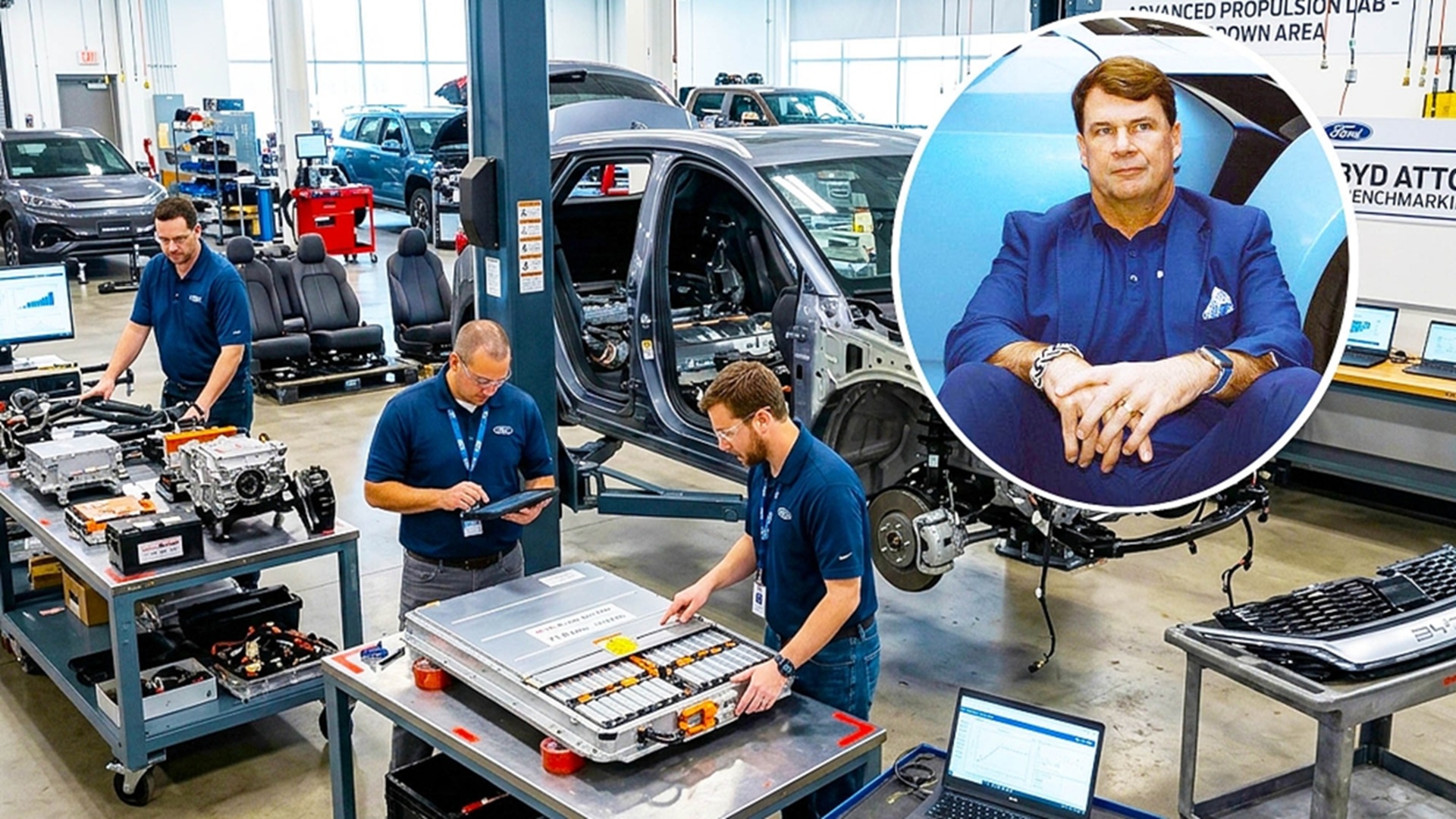


Ford CEO states that the automaker’s biggest concern is not just the low prices of Chinese electric vehicles, but the speed with which BYD, Changan, and Xiaomi launch technologies, reduce costs, and advance in the global market.
Ford CEO, Jim Farley, stated that the automaker’s biggest concern regarding Chinese electric vehicle manufacturers is not just the low prices. The warning is about the speed with which companies like BYD, Changan, and Xiaomi advance.
These manufacturers launch technology, reduce costs, and expand international presence at a pace that pressures the traditional industry. The assessment led Ford to analyze BYD cars through reverse engineering and review its strategy.
The insight gained strength after a trip to China in May 2024. There, Farley observed the pace of local manufacturers and concluded that the Chinese industry develops competitive products with agility capable of exposing the inertia of traditional automakers.
-
1983 Chevrolet Runs Over 100,000 km Without Gasoline, Powered by Wood Chips, Reaches 125 km/h in Airport Test

-
Workshop Converts Giant Tractor Tire Tricycle into a Three-Wheel Drive Hybrid with 36,000-Watt Electric Motor Capable of Climbing Hills

-
Sales of Brazil’s Cheapest Electric Car Halted Before First Deliveries: E-Motors Suspends Emova Easy Due to Import Tax Increase and Rising Freight Costs

-
Nissan Discontinues Qashqai SUV Amid Cost-Cutting, Chinese Competition, and Product Line Review




Ford CEO sees Chinese speed as central threat
Farley summarized the concern by saying that what keeps him awake at night is not the fact that the Chinese make good or cheap cars, but the speed with which they innovate. The phrase marked the reaction.
This perception reinforces the position he has been advocating. For the executive, Chinese rivals are today the main challenge for Western brands in the electric car sector.
To understand this advantage, Ford dismantled and analyzed BYD’s electric vehicles. The internal diagnosis pointed to a combination of factors behind the Chinese brand’s advancement.
Among these factors are an industrial architecture aimed at cost reduction, lithium iron phosphate batteries, known as LFP, and vertical integration in key components.
In Farley’s view, this model reduces intermediate margins and strengthens BYD’s ability to adjust prices without sacrificing quality. The advantage is not only apparent in the final product.
It is also in the industrial efficiency that allows sustaining a proposal difficult to match. Even when the propulsion is not the most efficient, scale, cost control, and speed compensate for deficiencies.
The CEO of Ford admitted that the company needs smaller factories, less labor, and less complex processes. The goal is to close the gap with this form of production.
Reverse engineering exposes industrial difference
The reverse engineering done by Ford helped detail how the Chinese organize their advantage in the electric car. Development speed, industrial capacity, and supply chain control appear as central elements.
Ford’s response involves a strategic shift towards the access segment. The automaker intends to focus on smaller and more affordable electric vehicles.
In this area, Chinese pressure is intense. For the company, more contained prices can expand the market and prevent the electric transition from remaining restricted.
Farley announced that Ford is working on a low-cost electric model, expected in the coming years. The goal is to match the costs of Asian rivals.
Low-cost platform enters the roadmap
Within this plan, Ford is developing a new low-cost platform for electric vehicles. The project is led by Alan Clarke, a former Tesla engineer, and seeks to create a competitive base.
The intention is to support vehicles strong in price and technology without carrying the complexity and cost of previous architectures. The roadmap also seeks to accelerate Ford’s adaptation.
In this market, access to batteries, production efficiency, and iteration weigh as much as design. For Farley, the decisive question is not just whether the technology can compete.
The central point is whether the automaker will be able to manufacture it at scale, with a more agile, smaller, and cost-disciplined industrial structure. In this combination, the CEO of Ford sees the true electric battle.
While Chinese brands set the pace with integration, speed, and cost control, historical groups need to react. Ford finds itself compelled to review size, processes, and global range.