Portuguese
  Spanish


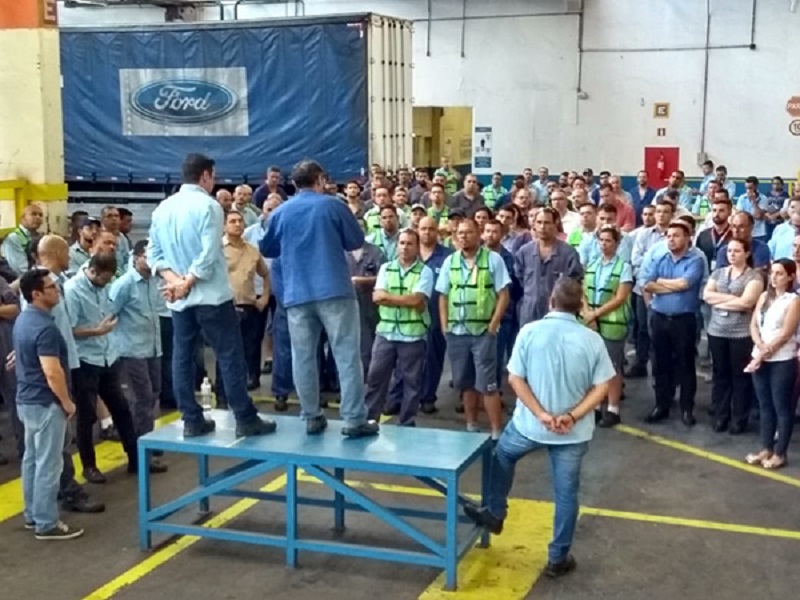

Five Months After Announcing the Closure of the São Bernardo do Campo Factory, Ford Begins to Implement the Layoff Plan Negotiated with the Union
The end of the Fiesta production line left Ford’s factory in São Bernardo do Campo idle, resulting in an agreement between the automaker and the workers’ union for layoffs to occur.
About 750 employees will be laid off this month and will join another 280 who are leaving due to retirement or voluntary resignation.
Ford currently has 1,700 jobs, but part of them work on the truck assembly line, which is scheduled to shut down on October 31.
The administrative workforce is also included in this group, and as previously announced in February during the factory closure announcement, some of this workforce will remain with the company.
-
Lenovo Unveils Legion Y700 Tablet with RGB Backlighting, 5G, and SIM Card Support
-
Lenovo Unveils Legion Y700 Tablet with RGB Backlighting, 5G, and SIM Card Support
-
Northern Brazilian City Prepares Task Force to Mitigate El Niño Impacts with Stockpiled Fish, Drone Monitoring, Firefighting, and Water Supply Reinforcement in Remote Areas

-
Brazil to Issue “Panda Bonds” in China, Aiming to Raise Up to 5 Billion Yuan at Lower Interest Rates Than Dollar Debt

The Company’s Proposals
Ford made two proposals to employees, both approved in assembly; in the first, employees would leave the factory and receive two salaries for each year of work.
In the other proposal, employees who chose to wait for a potential sale of the company to another entity would receive 1.5 salaries for each year of service.
The government of the state of São Paulo gave hope to employees, stating that it was mediating the negotiation for the factory’s sale with two potential buyers, but the negotiations did not progress.
Workers began to hope they might retain employment with a new company when the São Paulo state government presented itself as a mediator for negotiations that were in progress with two interested parties.
The Caoa group, which controls the Hyundai and Chery brands in Brazil, would be one of the interested parties, and now that the closure of Ford’s factory is becoming a concrete possibility, the union is trying to negotiate a more advantageous compensation package for its members.