






 Portuguese
  Spanish


In episode 122 of MF Cast, Caio Afiune reported that the cabbage planted on 800,000 plants turned into a debt of R$ 1.5 million, after technical errors, inadequate timing, and a poor market, reinforcing that financial management, crop study, and cost control weigh as much as producing well in the field.
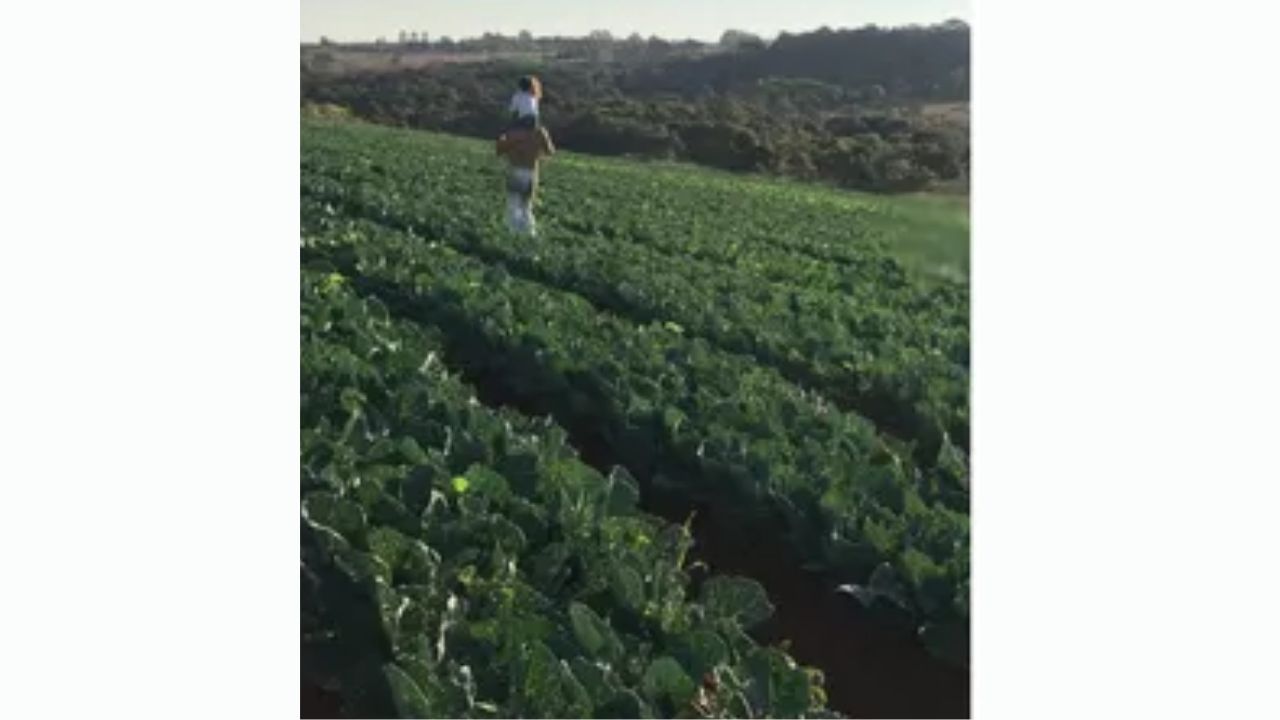
The cabbage became a turning point in the rural trajectory of Caio Afiune, a producer connected to agribusiness in Goiás. In episode 122 of MF Cast, he reported that the cultivation of 800,000 plants, between green and red cabbage, generated a debt of R$ 1.5 million and changed his way of evaluating risk, cost, and agricultural decision-making.
The MF Cast conversation was published on June 26, 2025. Bringing the central point, clearly: the failure was not presented as a lack of work, but as a result of a sum of technical failures, entering a little-known crop, inadequate planting window, pest pressure, poorly managed irrigation, and an unfavorable market.
Error began before planting
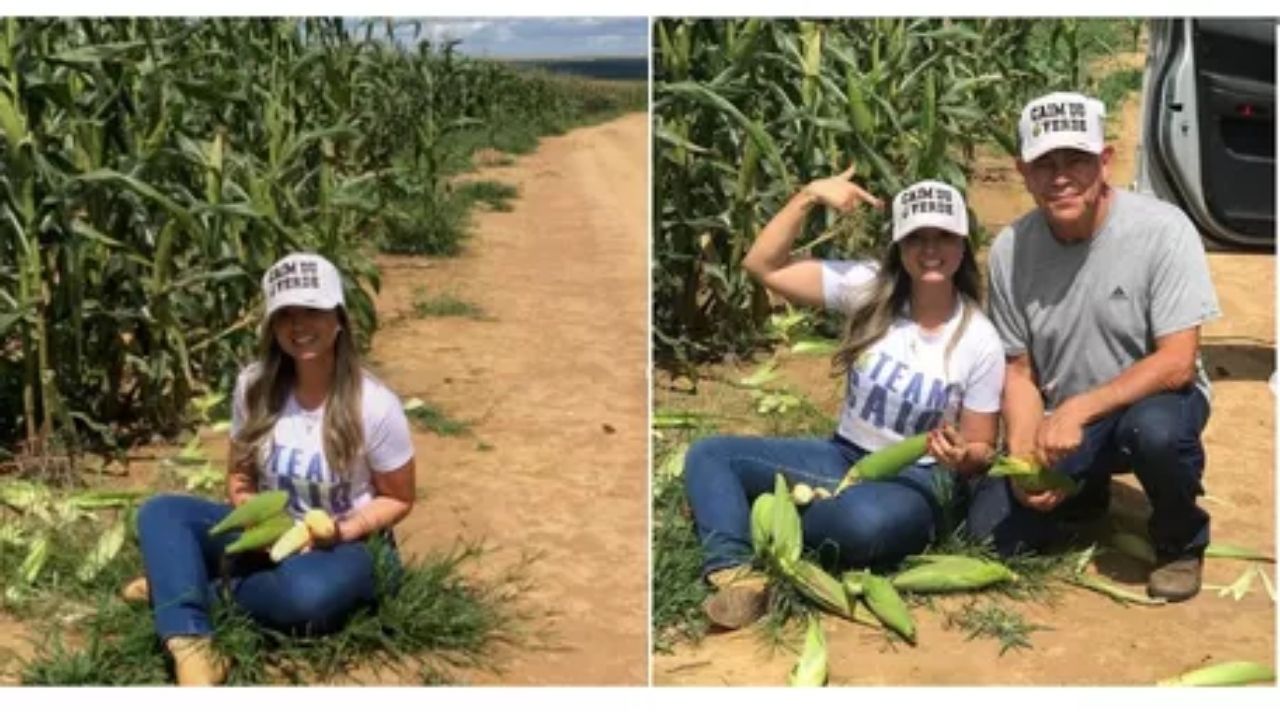
Before the cabbage, Caio was already working with crops like corn, soybeans, sorghum, and green corn. According to the report, he had experience with larger fields, operational management, machinery, fertilization, and agricultural routine.
-
Brazilian Brothers Invent Hydraulic Claw for Tractors, Enabling the Lifting and Stacking of 400 Rice Bags Daily

-
Innovative Low-Cost Electrical Solution Brings Light to Over 1 Million Brazilians, Starting with 400 Families in Southern Brazil

-
Vacuum-insulated windows set to replace traditional glass by 2026, promising 60-70% reduction in heat loss and improved insulation without full frame replacement.
-
Brand-new $40 million Chinese ship makes maiden voyage, docks at Brazilian port on terminal’s 69th anniversary, returns to China with 66,000 tons of soybeans


The problem began when he decided to enter a horticultural crop without mastering all the technical details. The main lesson from the case is that experience in one field does not guarantee automatic mastery over another. Each crop has its own requirements for climate, management, irrigation, market, and labor.
High production does not guarantee profit
In the interview, Caio emphasizes an essential point for any producer: harvesting a lot does not necessarily mean earning more. He uses the logic that productivity needs to be compared to production cost to reveal real profitability.
This reasoning helps to understand why the case of cabbage is relevant for rural management. It wasn’t enough to set up a large structure, irrigate the area, and manage thousands of plants. It was necessary to know if the crop was at the right moment, if the market would absorb the volume, and if the cost would fit within the possible margin.
Area had 800 thousand cabbage plants
The producer reported planting 650 thousand green cabbage plants and 150 thousand purple cabbage plants. The total number, therefore, reached 800 thousand plants, a high scale for an entry into a crop that he himself admitted not knowing enough about.
The structure also involved irrigation, labor, equipment, motor, pipes, sprinklers, and operational organization. The problem was not the absence of investment, but the opposite: there was high spending on a project that did not yet have a sufficiently secure technical and commercial base.
Crop required another type of knowledge

Caio stated that he made a mistake by stepping out of his comfort zone without adequately studying the crop. In the account, he acknowledged that he should have better understood the behavior of cabbage, the planting time, pest control, and market functioning.
This reading avoids turning the story into personal drama. The focus is on the business decision. In agriculture, entering a new crop requires technical information, risk analysis, and humility to recognize limits before scaling up.
Planting time was decisive
One of the points mentioned by Caio was the wrong planting time. According to him, if he had better understood the crop, he might not have planted at that time.
This detail is central because it shows that the mistake was not just in the management after the crop was already formed. The critical decision occurred earlier, in choosing the production window. In horticulture, calendar, climate, and pest pressure can completely alter the outcome.
Irrigation also factored into the account
The report shows that irrigation was conducted inadequately for the crop’s needs. Caio explained that, in the case of cabbage, watering the plant at the wrong times interfered with caterpillar control and the efficiency of applications.
He also mentioned the difference between irrigating to supply water and irrigating strategically to help with pest management. This shows how operational details can have a financial impact when production is on a large scale.
Pests worsened the loss


The pressure from caterpillars appeared as one of the most serious problems. Caio reported that there were days when the presence of butterflies was intense in the field, indicating high pressure on the crop.
The control did not work as it should because the combination of irrigation timing, application timing, and pest behavior hindered management efficiency. The case shows that applying pesticides without strategy can increase costs without delivering the expected result.
Market did not absorb as expected
Besides technical errors, there was a market problem. Caio mentioned that trucks arrived offering very low prices for the boxes of cabbage, in a scenario where the price had already plummeted.
This point reinforces another management lesson: producing without clarity about sales channels, demand, and price can turn volume into a problem. In perishable crops, the marketing window is short, and negotiation capacity can determine whether production turns into revenue or loss.
Decision was to close and assume the loss
Given the scenario, Caio reported that he decided not to sell at any price. Instead of delivering the production for values he considered unviable, he closed the crop and assumed the loss.
This decision was tough, but it has a business perspective. When the cost of continuing to try to sell exceeds the real chance of recovery, the producer needs to calculate whether it’s worth insisting or stopping the loss. In the case of cabbage, the decision was to preserve what was still possible and reorganize the debt.
Debt reached R$ 1.5 million
The financial result was heavy. Caio stated on the podcast that he ended up owing R$ 1.5 million. He also reported that he handed over vehicles to help pay part of the bills and still remained with a significant debt.
This data is important because it shows the magnitude of the risk of a poorly calibrated agricultural decision. A new crop, when it enters on a large scale, can compromise cash flow, assets, credit, suppliers, and family planning of the property.
Recovery involved operational work
The recovery did not come from an instant turnaround. Caio reported that he started doing services for third parties, especially maintenance and work related to machinery and rural properties, to generate cash and pay bills.
According to the account, there were shifts that started around 3 or 3:30 in the morning and could end at 10 or 11 at night. The journalistic point is not to romanticize exhaustion, but to show the recovery mechanism: operational work, revenue generation, and continuous payment of commitments.
Creditors were attended to
Another relevant point was the stance towards the demands. Caio said he did not fail to attend to creditors, even when receiving harsh calls. The strategy was to maintain contact and pay as he managed to generate revenue.
This behavior shows a dimension of management that often remains outside the farm. When production breaks, recovery also depends on communication, negotiation, financial discipline, and predictability for those who need to receive.
Debt decreased before BBB
The interview also informs that, when he entered the television program, Caio had already reduced the debt to about R$ 240,000. Before that, according to the account, he had raised practically R$ 1 million with work and bill payments.
This section should be treated only as a financial milestone of recovery, not as a celebrity focus. His public passage is not the center of the topic; what matters here is the reorganization of the business after the breakdown caused by the cabbage.
Main lesson was money management
Caio sums up the experience with a strong idea: those who do not learn to manage money can lose any amount, no matter how large it may seem. This view was born from the attempt to recover the debt after the mistake in cultivation.
The phrase connects directly to rural management. In the field, machines, inputs, labor, irrigation, pesticides, seeds, freight, and sales deadlines form a complex equation. If the producer does not measure cost and risk, high production can turn into a liability.
Technology helps, but does not replace planning
The episode also addresses the importance of technology for small and medium producers. However, the cabbage story shows that technology alone does not solve a poorly studied decision.
Irrigation, machinery, and operational structure need to be connected to technical knowledge, market, and financial management. Technology only becomes an advantage when it is part of a viable plan, with calculated costs and well-understood culture.
Comfort zone needs to be analyzed
One of the most useful alerts from the story is about stepping out of the comfort zone. Caio does not treat change as something forbidden, but as a decision that requires preparation.
The risk lies in migrating to a new crop just because it seems like an opportunity. In his case, experience in corn, soybeans, sorghum, and green corn was not enough to ensure success in cabbage, which required a different type of technical and commercial understanding.
Agro requires mastery of the entire process
The interview also highlights the importance of knowing the operation from the ground up. Caio talks about learning maintenance, parts, machinery, planting, adjustment, fertilization, and farm operation before taking on management.
This point resonates with the cabbage breakdown. Those who understand only part of the production can make mistakes in the whole. Rural management requires looking at the crop, cost, team, equipment, pests, climate, sales, cash flow, and debt all at once.
Case serves as a warning for new crops
The story should not be read as a condemnation of cabbage cultivation. The problem was not the crop itself, but entering on a large scale without sufficient mastery of timing, management, and market.
For producers thinking of diversifying, the lesson is clear: test smaller, study more, seek technical assistance, understand buyers, calculate costs, and project scenarios before expanding the area. In the field, diversification can be an opportunity, but it can also multiply risk.
Recovery Came with Financial Discipline
After the collapse, the path to recovery involved cuts, income generation, creditor service, and gradual payment. The case shows that getting out of rural debt depends less on rhetoric and more on financial routine.
The producer reported that he acknowledged the mistake and sought to learn from it. This attitude reduced the chance of making the same type of decision in the future. The recovery of the business began when the loss stopped being just a loss and became a management method.
Cabbage Became a Lesson in Risk in the Field
The case of Caio Afiune shows how cabbage can become a practical lesson in rural risk when planted on a large scale without sufficient planning. The crop had structure, investment, and labor, but failed in essential points: timing, management, pests, irrigation, cost, and market.
The main discussion for the producer is simple and tough: in agriculture, producing a lot is not enough if the numbers don’t add up. Do you think the biggest risk in the field today is the climate, the market, or the lack of financial management before planting? Leave your opinion in the comments.


