Portuguese
  Spanish


The Edge LNG terminal in São Paulo received approval from the National Agency of Petroleum, Natural Gas and Biofuels to connect to the transportation pipeline network. The decision was approved by the ANP board on Friday, June 26, 2026, and involves the São Paulo Regasification Terminal, known as TRSP.
According to sources, the authorization allows a physical interconnection of 55 meters between the TRSP and the Gasan I pipeline, operated by Nova Transportadora do Sudeste. The project could allow the injection of up to 7.5 million m³/day of imported gas into the NTS system, but it does not resolve the dispute surrounding the Subida da Serra, a pipeline built by Comgás.
ANP approval adds more gas to the transport network
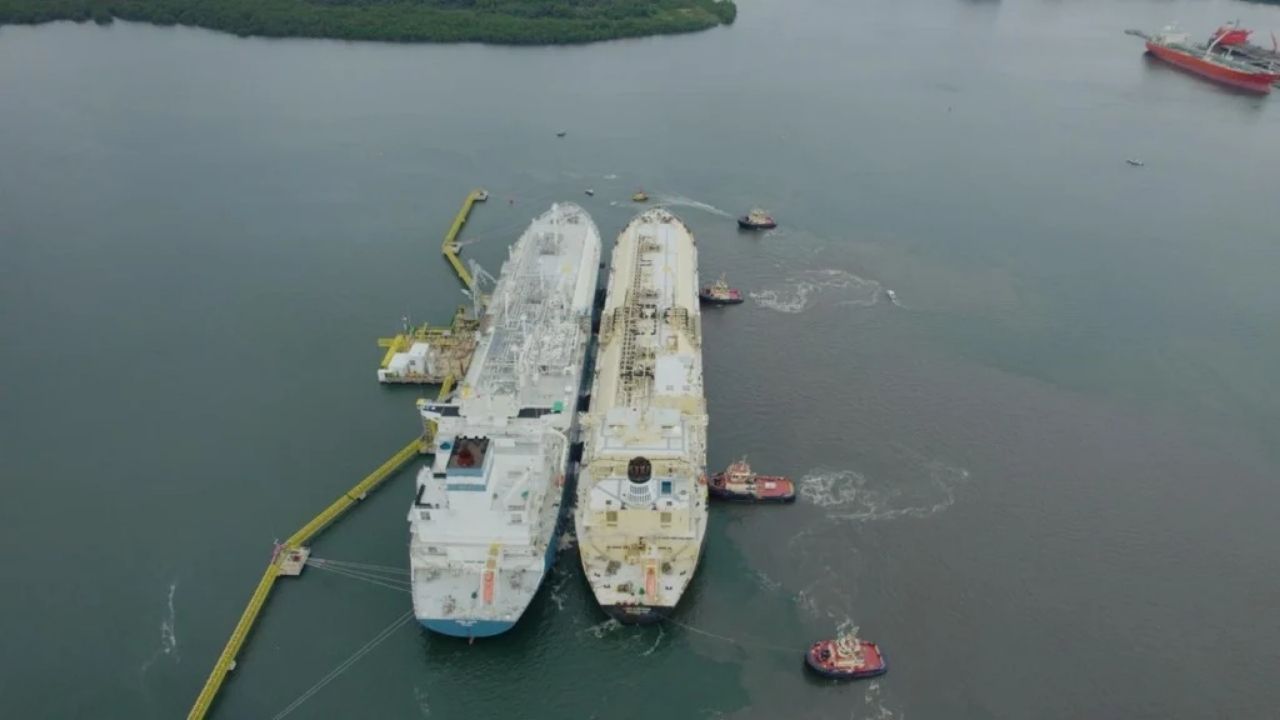
The ANP’s decision authorizes the connection of the TRSP to the transportation infrastructure, paving the way for the regasified gas at the terminal to be delivered to the network more integrally. The key point is that the approved arrangement does not create an exclusive route for a single agent but allows open access to multiple shippers.
-
Petrobras Explores Entry into Corn Ethanol Market, Aiming to Become a Biofuel Giant

-
Brazil’s $8.5 Billion Auction Secures New Power Plants to Prevent Peak Hour Energy Shortages
-
Why Gasoline Prices Remain Stable: How Petrobras’ Subsidies and Pricing Policies Control Fuel Costs in Brazil
-
SpaceX Plans 13 km Pipeline to Reduce Truck Reliance and Speed Up Starship Rocket Launches in the U.S.


In practice, the LNG terminal ceases to be just a receiving and regasification structure and gains a physical path to insert gas into the transportation system. This detail is both regulatory and logistical, as it defines how the imported input can circulate in a network that serves different market agents.
55-meter pipeline solves part of the problem
The approved connection is short in length but relevant in operational effect. The 55-meter section was designed to physically connect the São Paulo Regasification Terminal to Gasan I. From this connection, imported gas can be injected into the NTS system.
The planned capacity reaches 7.5 million m³/day. This volume gained importance because Edge plans to sell imported gas to thermal plants that won the 2nd Capacity Reserve Auction, whose first contracts begin to take effect in August. The authorization, therefore, comes at a sensitive time for the supply of gas to the electricity sector.
Approved solution was not considered the most efficient
Despite the approval, the regulatory analysis itself recognized limitations in the chosen alternative. Director Symone Araújo pointed out that the approved project does not represent the best logistical solution but functions as a possible response in the short and medium term given the existing regulatory constraints.
This is the most delicate point of the decision. The ANP authorized the route through Gasan I, but the controversy over Subida da Serra continues to prevent an integration considered more appropriate by those involved. The result is a viable solution, but surrounded by debate over efficiency.
Subida da Serra remains at the center of controversy
The Subida da Serra pipeline was built by Comgás and is at the center of a federal dispute between the ANP and the State of São Paulo. The issue involves its classification: whether it should be treated as a transport asset or remain under another regulatory logic.
This discussion is in the Supreme Federal Court. The authorization granted to Edge’s GNL terminal does not change the ANP’s understanding of Subida da Serra. In other words, the TRSP connection advances, but the main conflict over the pipeline’s classification remains without a definitive resolution.
Alternative through Gasan II could almost double capacity
The ANP’s technical area evaluated that, in an alternative scenario, the connection of TRSP to Gasan II via Subida da Serra could reach 14 million m³/day. This volume is almost double the capacity planned in the connection approved through Gasan I.
The difference helps explain why the topic gained momentum. If the alternative route would deliver greater capacity, the choice of the 55-meter pipeline appears as a pragmatic solution, but not necessarily ideal. The debate is not just about making the connection, but about which route best utilizes the existing infrastructure.
Technical restrictions weigh on the connection with Gasan I
The ANP’s Infrastructure and Movement Superintendency pointed out technical restrictions in the approved project. One of the points mentioned involves the movement of gas between Gasan I and Gasan II, due to the pressure difference between the networks.
This type of limitation is relevant because gas pipeline networks do not operate solely based on physical proximity. Pressure, capacity, flow direction, delivery points, and system integration influence the actual performance of the network. A short pipeline can unlock access, but it does not eliminate all network bottlenecks.
NTS System Faces Pressure in Gas Supply
The decision was also justified by the context of the NTS network. The network is experiencing a decline in national gas supply from the UTGCA in Caraguatatuba and bottlenecks in the Rio-São Paulo axis. Some of these issues are expected to be addressed only with the Japeri Compression Station, scheduled for August 2028.
Additionally, the network is affected by the entry of Bolivian gas at the interconnection with Gasbol. In this scenario, the TRSP interconnection can relieve some of the pressure on the integrated system. Even without being the most efficient route, the connection creates an additional source of gas for a pressured network.
Project Left Out of National Infrastructure Plan
The connection of Edge’s LNG terminal was left out of the first edition of the National Integrated Plan for Natural Gas and Biomethane Infrastructures, the PNIIGB. The plan was put up for public consultation by the Energy Research Company at the end of 2025, and its final version had not yet been approved, according to source information.
Even so, the ANP understood that it could grant the project, provided there was compatibility with sectoral planning and the efficient and shared use of existing infrastructures was not compromised. Decree 12.153/2024 provides for this possibility, but the case needs to undergo prior evaluation by the EPE.
Edge Seeks to Include Connection in PNIIGB
Edge requested the inclusion of the TRSP connection in the PNIIGB. The company also questioned, during the public consultation, the need and urgency of the South Pre-Salt Corridor by NTS, which in the view of the marketer competes with the TRSP as an infrastructure solution to compensate for the long-term decline of Bolivian gas.
This point shows that the dispute goes beyond a 55-meter project. What is at stake is the future design of gas infrastructure in Brazil, with different agents advocating paths to expand supply, reduce bottlenecks, and integrate import terminals into the transportation network.
Gas Market Observes Regulatory Effect of Decision
The approval of the connection interests the market because it involves three layers at the same time: imported gas supply, open access to the transportation network, and regulatory dispute over strategic assets. For thermal plants, marketers, and carriers, each decision by the ANP can alter the pace of contracting and delivery.
The LNG terminal also reinforces the role of regasification terminals in the country’s supply. In times of national supply decline or uncertainty about external supply, such structures can function as an energy security alternative, provided they are well connected to the system.
Decision opens the way, but does not end the dispute
The ANP’s authorization allows Edge to advance in connecting TRSP to Gasan I, but does not resolve the Subida da Serra controversy nor eliminate the technical limitations of the approved route. The case remains an example of how regulation, infrastructure, and energy strategy mix in the gas market.
The central point is that the decision unlocks a small-scale project but with significant consequences. A 55-meter pipeline can allow the entry of millions of cubic meters per day into the network, while exposing the complexity of planning infrastructure in a sector marked by federative disputes and logistical bottlenecks.
The LNG terminal in São Paulo now has approval to connect to the pipeline network, but the discussion about efficiency remains open. The connection via Gasan I can meet short-term demands, while the alternative via Subida da Serra keeps at the center of the debate the question of which path truly delivers more gas, more integration, and better use of existing infrastructure.
Do you think the country should prioritize quick solutions, even if they are not the most efficient, or wait for a larger and more integrated route? Leave your opinion in the comments about the impact of this decision on the Brazilian gas market.