Portuguese
  Spanish


Published on June 25, 2026, by the Channel Vibe de Dois, the video shows a container house under renovation in southern Santa Catarina, with sanding of the bodywork, phosphatizing, wash prime, Galv Fix green colonial paint, airless machine, PU on the moldings, portable energy, and care after an accident with a razor blade on the site.
The container house under construction in southern Santa Catarina reached a decisive stage when the rusty container underwent sanding, washing, application of anti-corrosive products, and green colonial paint. The footage was published on June 25, 2026, by the Channel Vibe de Dois.
More than showing the visual transformation of the structure, the video exposes technical points that usually remain out of the finished images of container houses: rust treatment, correct use of chemicals, sealing of openings, temporary energy on the site, equipment adaptation, and safety during the work.
Renovation started with the rusty bodywork
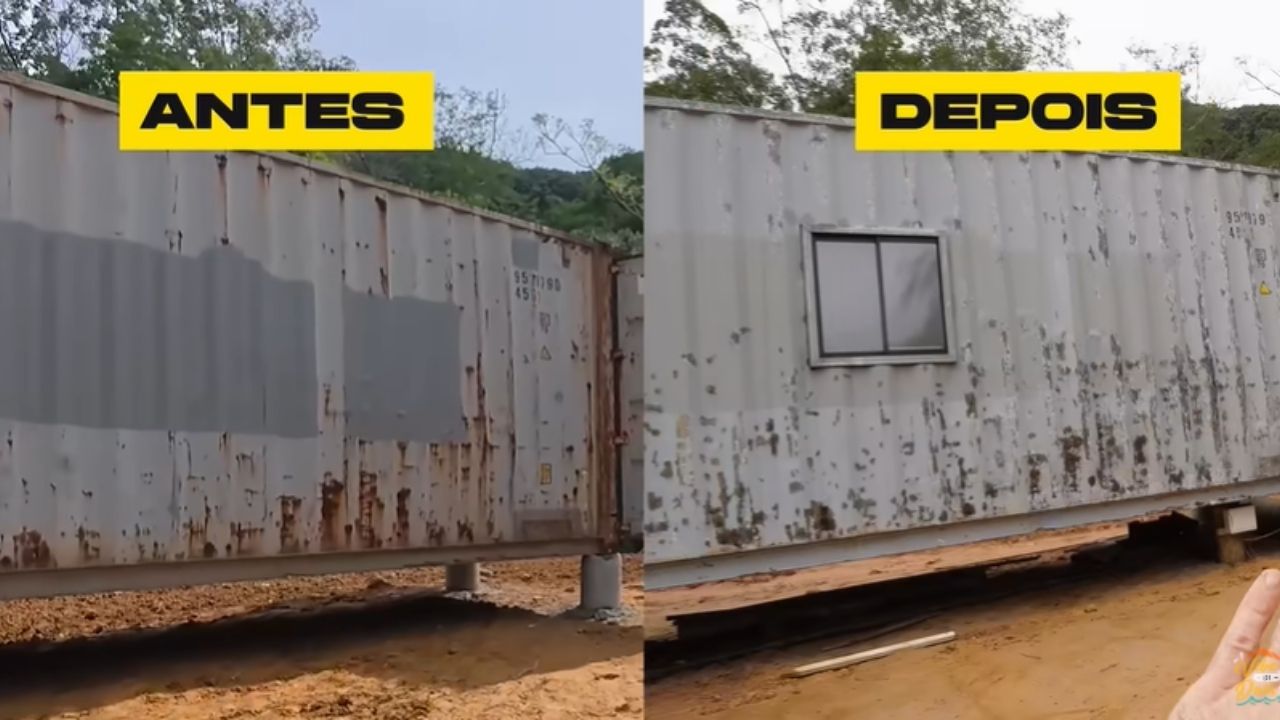
The first stage of the work was the external recovery of the container. The structure showed visible rust and an aged appearance, which required preparation before the final painting.
-
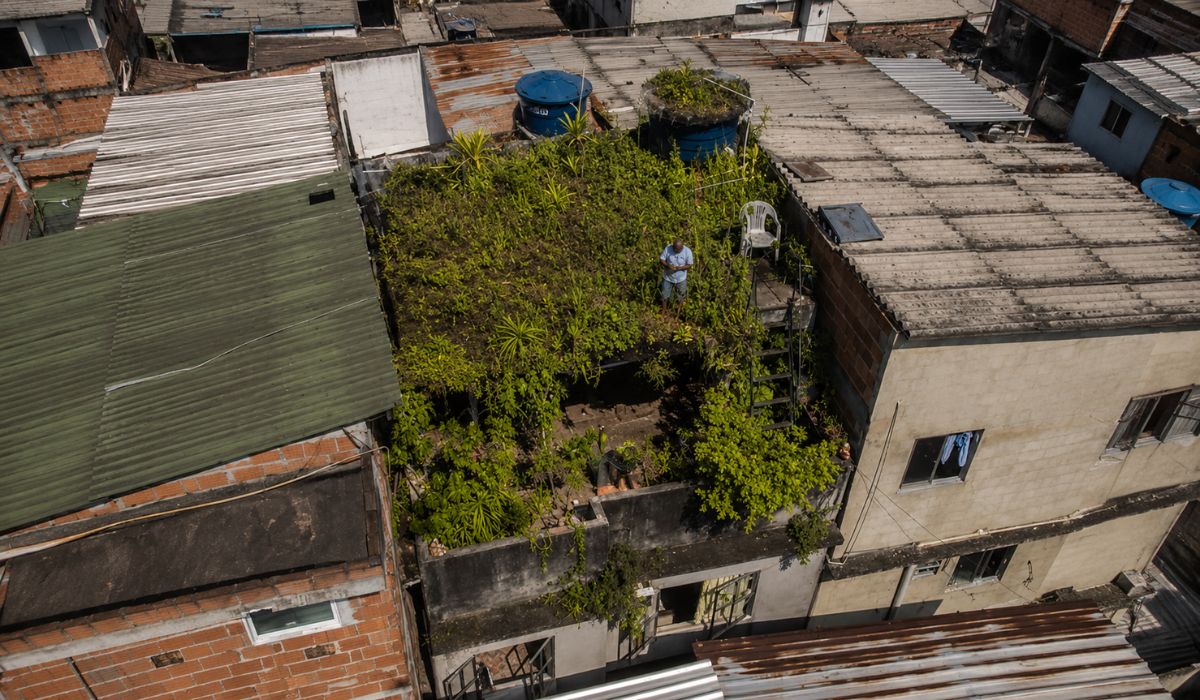
Rio de Janeiro Resident Transforms Home with Green Roof, Cutting Indoor Temperature by Up to 15°C and Offering a Simple Solution to Extreme Heat

-
How to Use Brazil’s New ID to Access Premium Features on Gov.br: A Step-by-Step Mobile Guide

-
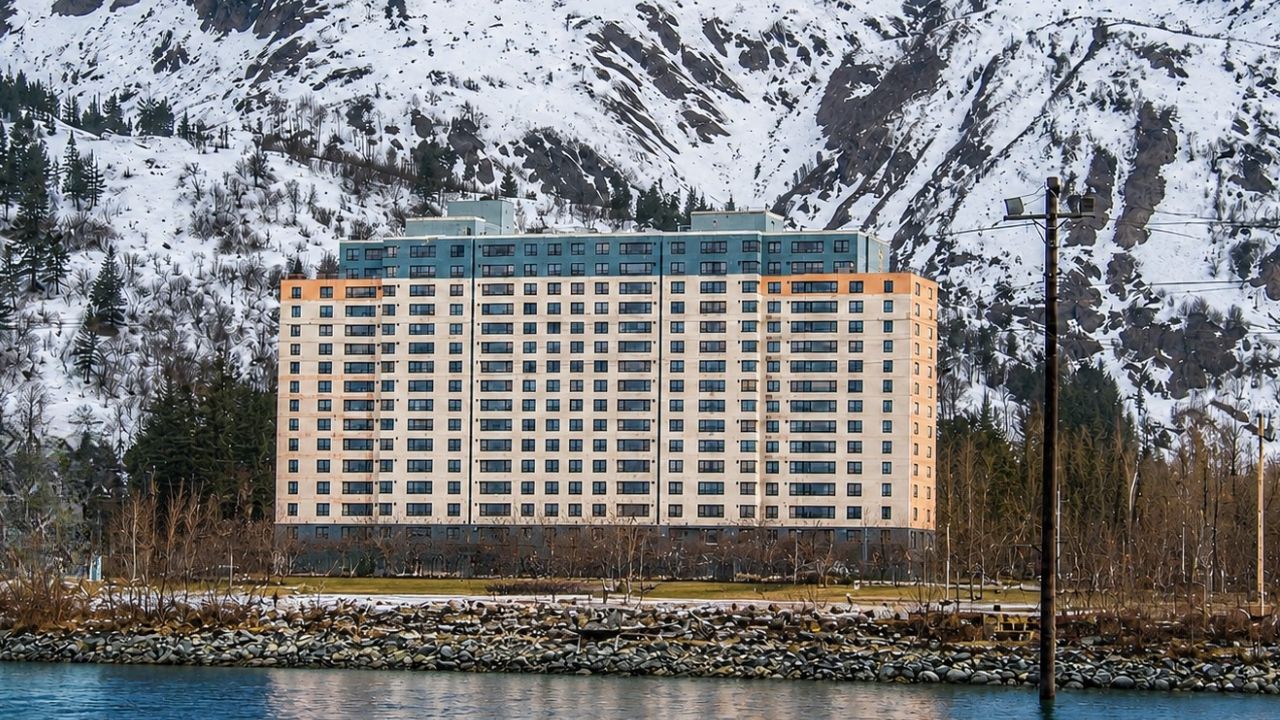
Alaska’s 14-Story Begich Towers Houses Nearly Entire Town, Including Post Office, Market, and School
-
Tiny Floating Home Combines 25 Square Meters, Electric Motor, Recycled Wood, and Button-Operated Roof


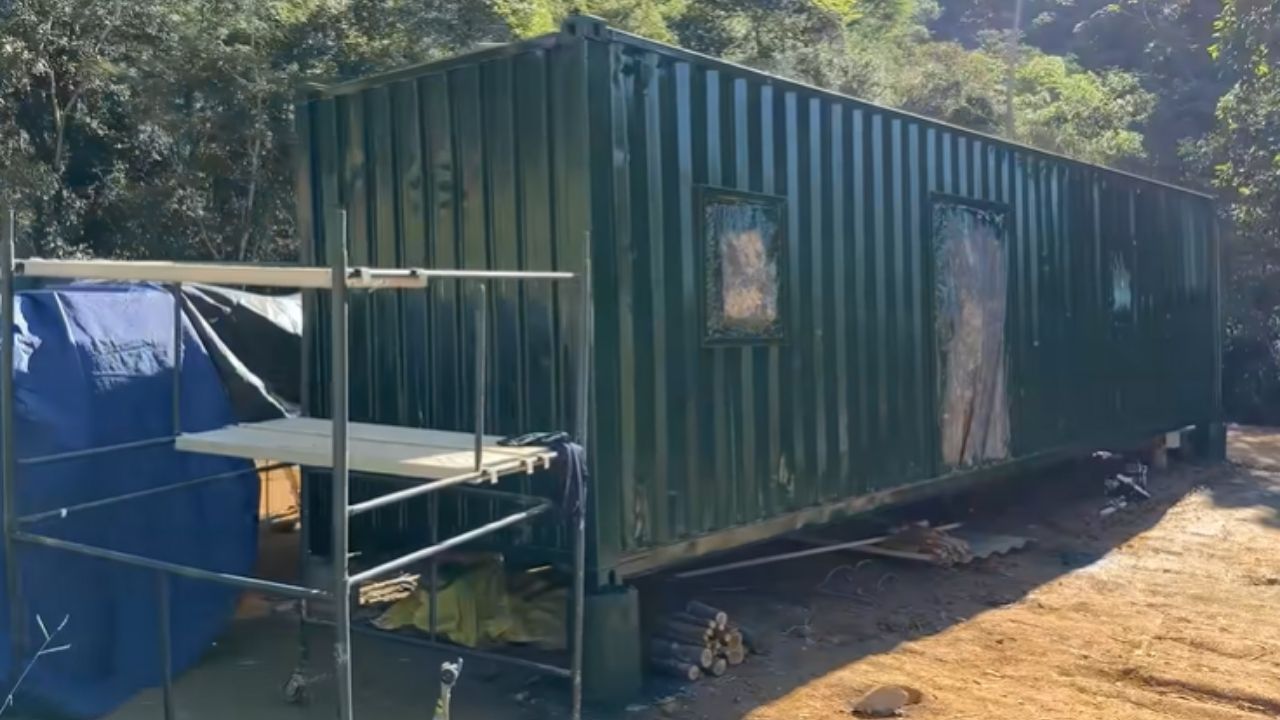
The process began with sanding the front part and one of the sides. In a container house, painting should not be treated merely as an aesthetic finish, because the protection of the bodywork directly influences the durability of the structure.
Sanding and washing were mandatory steps
After sanding, the surface was washed to remove residues before applying the chemical products. This care is important because dirt, dust, and rust remnants can compromise the adhesion of the subsequent layers.
The work was done in parts because the container was exposed to the elements, without cover or greenhouse. Thus, the strategy was to prepare one side, apply protection, and proceed to painting before the rust reappeared.
Phosphatizing Agent Used to Control Corrosion
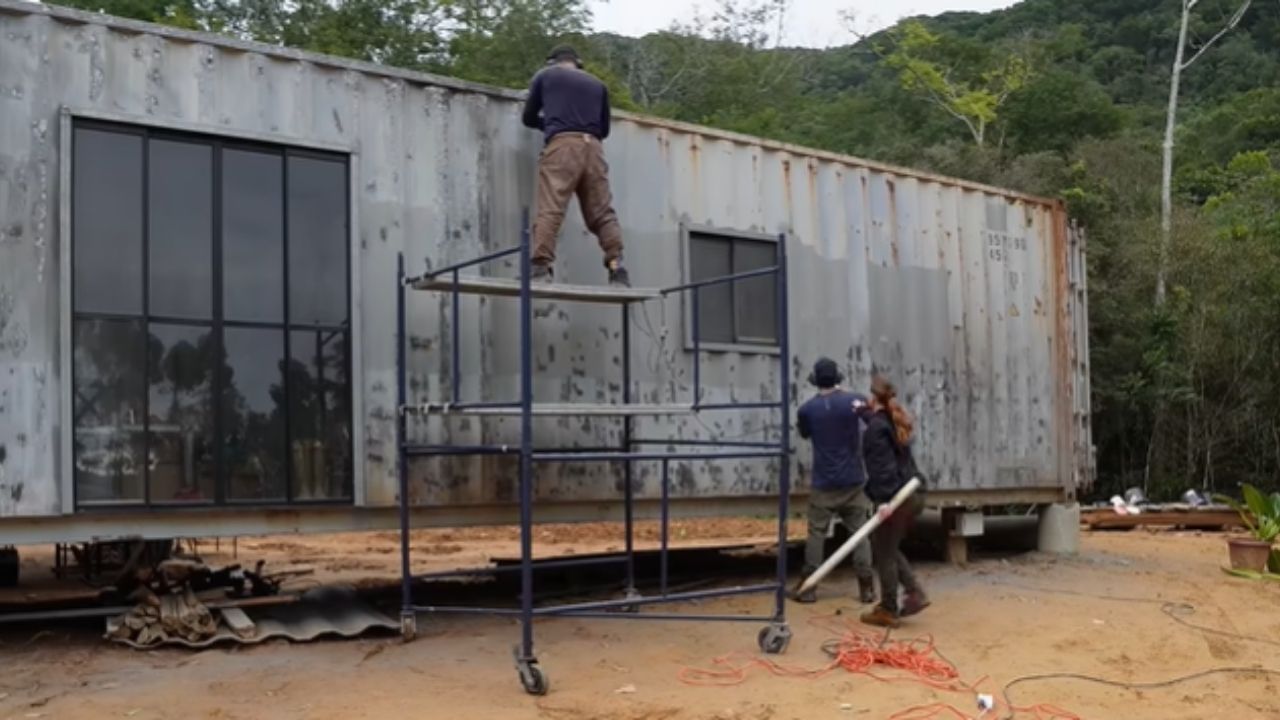
After cleaning, a 3-in-1 phosphatizing agent was applied, used to help remove, neutralize, and control rust. The product also creates a preparatory layer for the subsequent painting stages.
The application was done with a damp cloth, following technical guidance from Real Fix, the company mentioned in the video as the supplier of the products used in the renovation. The care prevented the liquid from excessively dripping through the container’s grooves and gaps.
Excess Product Could Cause Problems
The video highlights a relevant technical detail: in a metal structure full of grooves, the product should not be applied uncontrollably. If it drips and accumulates in internal points, it can have the opposite effect to the desired one.
Therefore, the application method was adjusted to the condition of the metal itself. This point shows that renovating a container requires reading the surface, not just following a generic painting sequence.
Wash Primer Used as Reinforcement
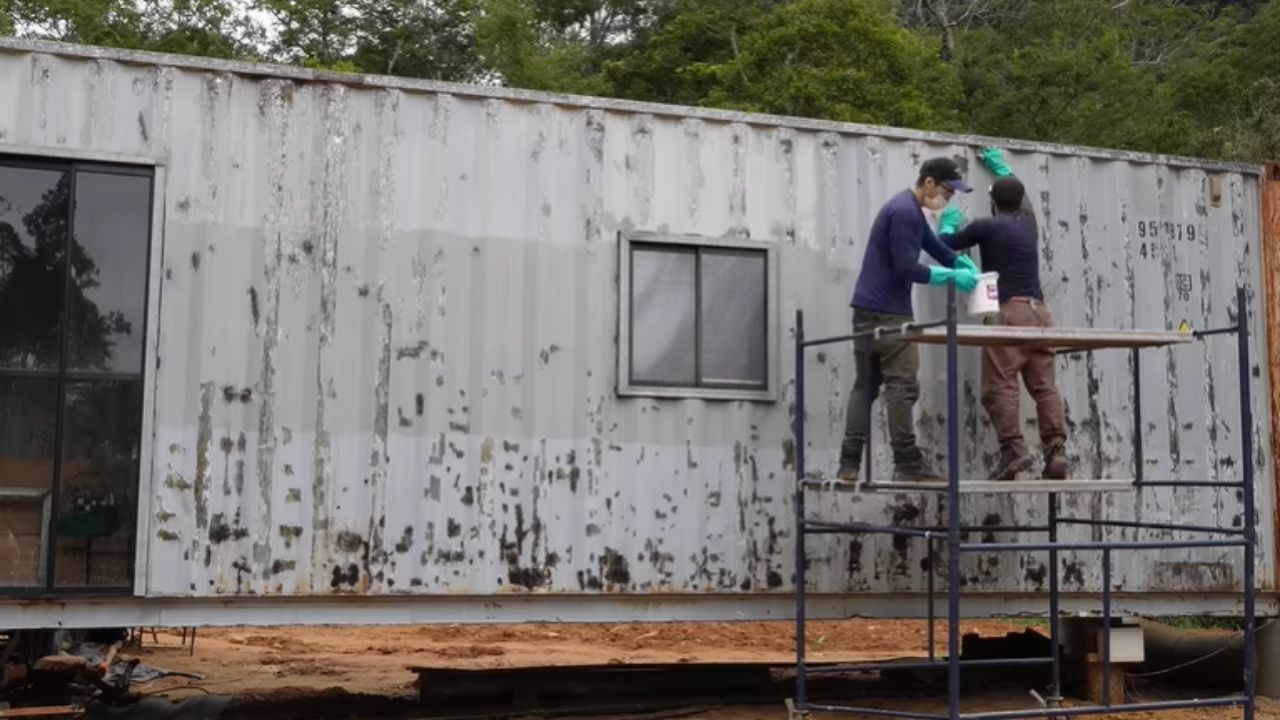
After the phosphatizing agent, the work received a phosphatizing wash primer with a catalyst. The purpose was to create an additional protective layer before the final paint, as the container was in an advanced state of oxidation.
The application also brought learning. Initially, the product was applied as if it were a regular paint, in a thicker layer, and ended up dripping. After technical consultation, the application was corrected to a thin layer, just as preparation.
Colonial Green Paint Changed the Look
The color chosen for the container house was colonial green. The paint used was Galv Fix, presented in the video as a product with finish, adhesion, and anti-corrosive protection for metallic surfaces.
After two coats, the visual change was immediate. The container no longer looked like an abandoned structure and began to take on the appearance of a home under construction, with better integration into the terrain’s vegetation.
Airless machine sped up the application
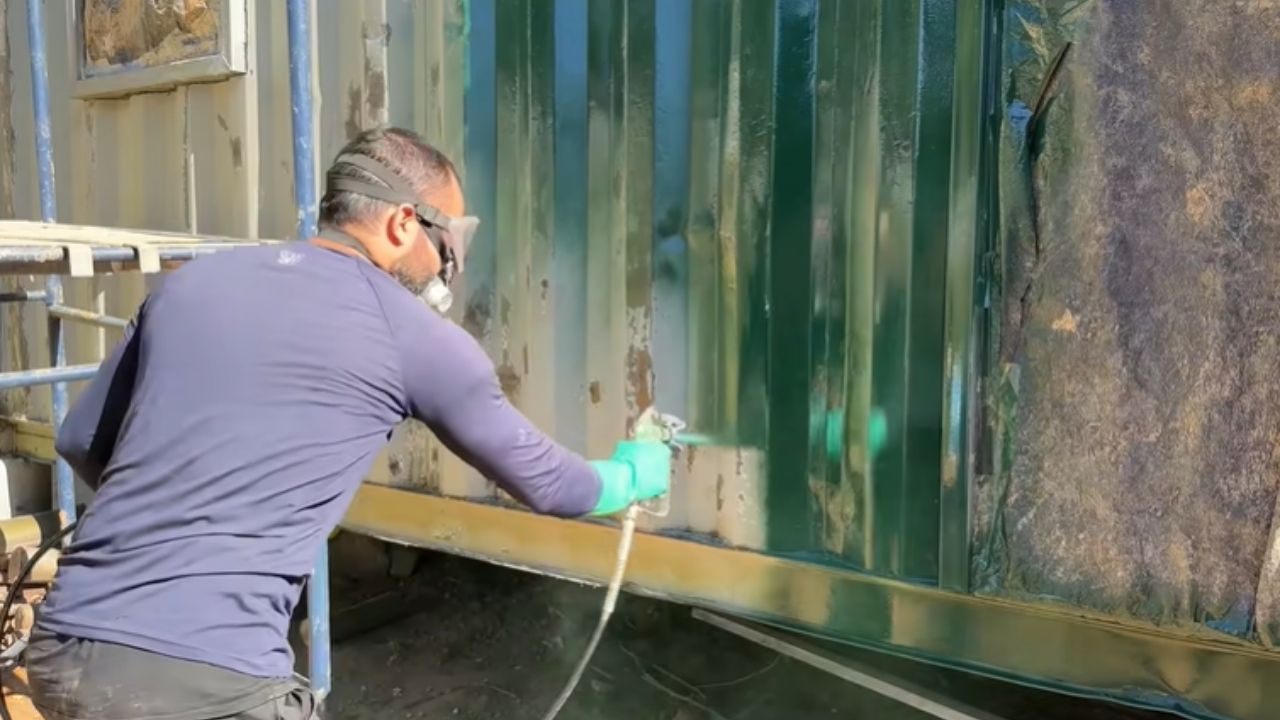
The painting was done with an airless machine, equipment that pressurizes the paint and allows application with a spray gun. The technique is usually faster than using a roller, especially on large surfaces like the side of a container.
Even so, the video shows that the equipment requires learning. The first passes were less uniform, but the result improved as the application progressed and the team adjusted distance, movement, and amount of paint.
Dilution and filtering of the paint required attention
Before application, the paint was mixed with a specific solvent. The video indicates dilution between 30% and 40%, following the guidance for the product used in the painting.
The mixture also went through a sieve before entering the machine. This step helps to avoid particles that could impair the functioning of the airless or affect the finish of the metallic surface.
Sealing of openings was done before the finish
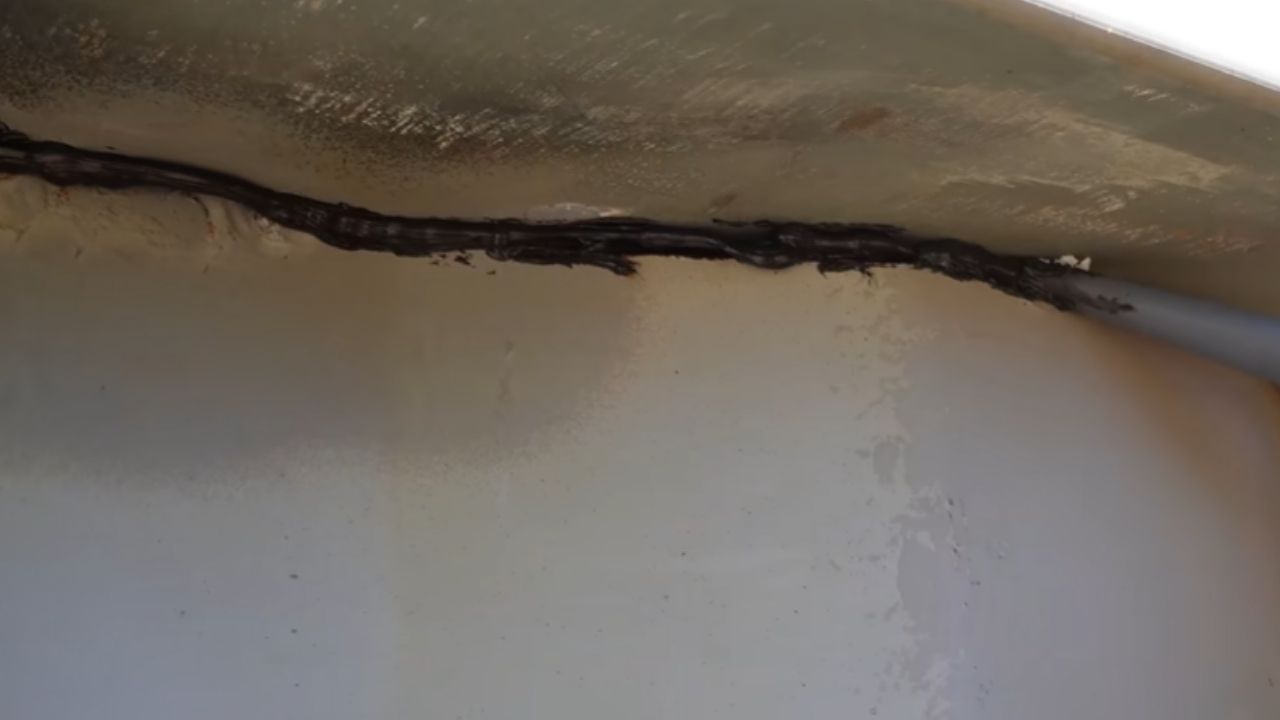
The renovation was not limited to painting. Before the final coat, the window frames received black PU between the sheet and the structure of the openings.
This point is important because a container house requires special attention to cuts, gaps, and joints. The opening of doors and windows alters the original structure and creates vulnerable points to infiltration, poorly sealed finishes, and localized corrosion.
Asphalt blanket also appeared in the process
The video shows that the internal part near the openings received an asphalt blanket. The mentioned function was to cover internal areas and help protect the frame regions.
The transcript does not detail the thermal insulation project, acoustic, structural calculation, or work licensing. Therefore, the safe focus of the article is on the stages shown: bodywork, rust protection, painting, sealing, and temporary infrastructure solutions.
Network energy was not yet available
One of the practical challenges of the site was the lack of network electricity. The land had a borrowed power point from a neighbor, but the distance reduced the voltage and limited the use of equipment.
This scenario directly interferes with the pace of the work. Without regular energy, a container house in a rural or remote area becomes dependent on temporary solutions for tools, bathing, lighting, and small external tasks.
Portable station became support on the site
To circumvent part of the problem, a portable energy station was used. The equipment allowed for 110 V or 220 V outputs, as well as USB connections and a 12 V system.
The station could also be recharged by different means, including energy drawn from the neighbor, solar panels, and the system of the Kombi used by the channel. In practice, it functioned as support for tasks in distant points of the land.
Shower required a solution outside the electrical network
The lack of energy also affected the shower. The video shows that a gas heater was installed as an alternative to the electric shower, which did not work adequately due to the low available voltage.
The equipment used gas to heat the water and a battery to start it. The solution shows a common need in works outside the network: to think about energy, hot water, and basic infrastructure before considering the dwelling ready.
Safety appeared as part of the work
The painting required a mask and goggles due to the paint fumes, described in the video as toxic. Scaffolding was also used to reach higher parts of the structure.
These details reinforce that the process is not simple. Renovating a container involves chemical products, metallic surfaces, power tools, height, cutting, sealing, and physical risk, especially when multiple tasks are performed simultaneously.
Cut with a razor blade interrupted the work


After the painting, an accident occurred during an external task. Anderson cut his arm while using a razor blade to cut nylon, as he was preparing to help with grass cutting and urea application.
The injury required medical attention and resulted in five stitches. According to the video report, the cut was 1 mm from the tendon, which led to restricted effort, medication for seven days, and care to prevent the stitches from opening.
Accident shows risk of improvisation
The episode doesn’t need to be treated as personal drama, but as a construction site warning. Simple tools, like a blade or box cutter, also pose risks when used in haste, distraction, or without proper support.
In a container house project, safety should accompany even the tasks considered small. Cutting nylon, cleaning, painting, sealing, scaffolding movement, and using electrical equipment are all part of the same risk environment.
Visual result does not end the renovation
At the end of the recorded stage, the front and one side of the container were painted with two coats of colonial green. The visual change was strong, but there were still pending details on frames, areas protected by tape, and future finishes.
This point avoids a misleading reading of the work. The painting gave the appearance of progress, but the renovation still depended on continuity, adjustments, and new stages to transform the metal structure into a usable dwelling.
Container house requires planning before aesthetics
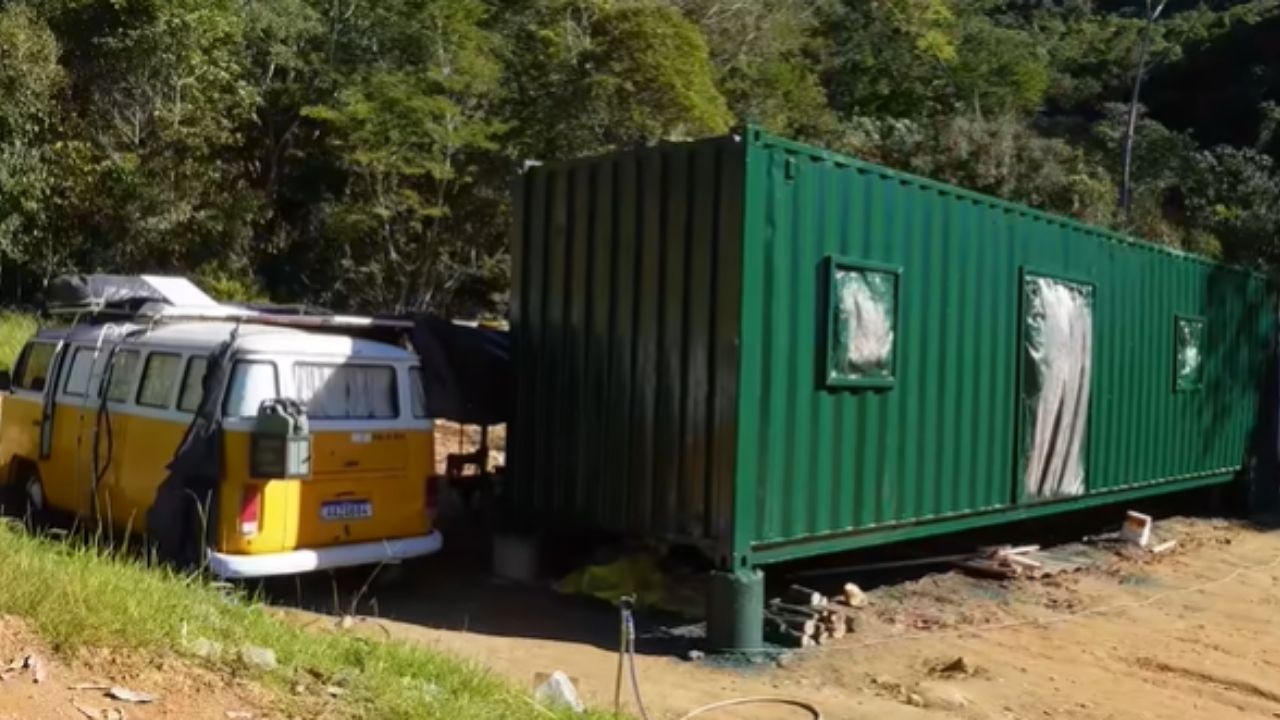
The case shows that aesthetics come after technical preparation. Before the final color, it was necessary to sand, wash, apply phosphatizing agent, correct wash prime error, dilute paint, use airless, seal frames, and deal with energy limitations.
Therefore, the container house should not be sold as a quick or simple solution. It can be an interesting construction alternative, but it requires care with corrosion, insulation, sealing, structure, safety, and basic infrastructure.
Container renovation is a project, not a shortcut
The transformation of the container in southern Santa Catarina shows that a container house can take shape from a reused metal structure, but the process involves technical steps that need to be respected.
The video from Canal Vibe de Dois provides a practical lesson: a nice paint job helps visualize the project, but it does not replace anticorrosive treatment, proper sealing, adequate energy, and safety on site.
Do you think a container house is a good housing alternative or do the technical challenges still weigh too much? Leave your opinion in the comments.