






 Portuguese
  Spanish


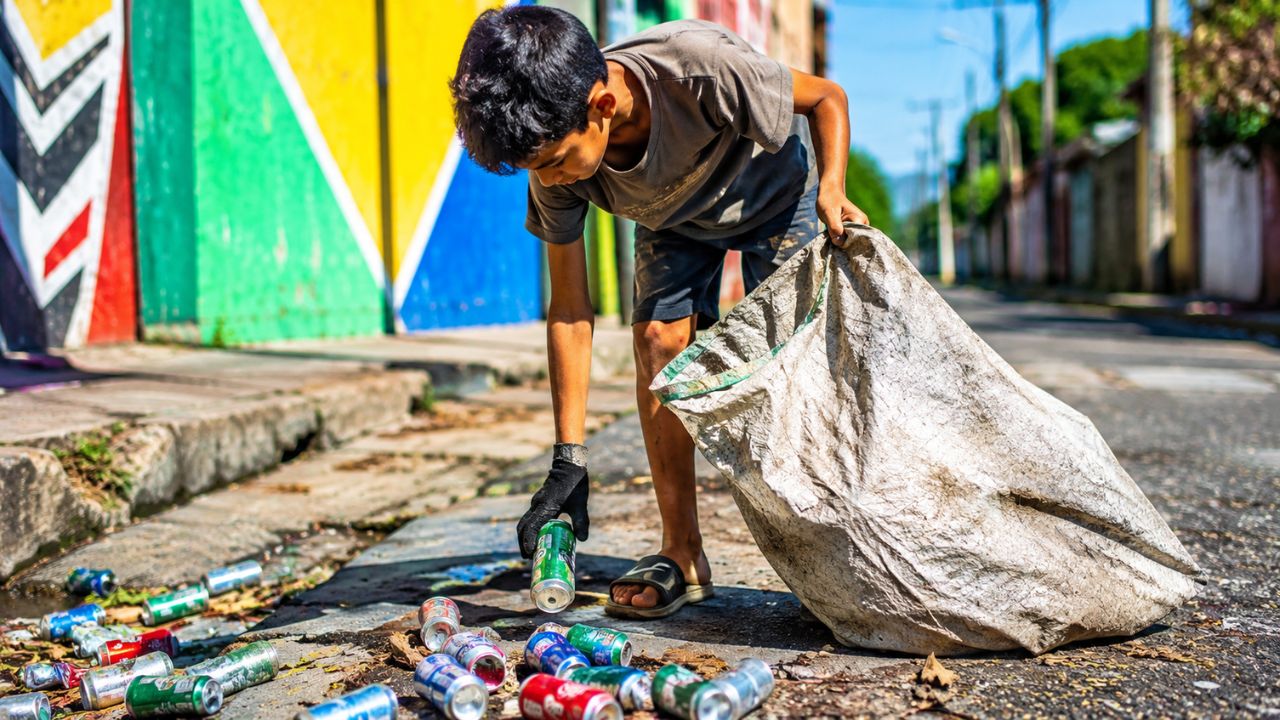

Discover the origins of Geraldo Rufino, the speaker and entrepreneur who rose from the Favela do Sapé to lead the vehicle recycling market.
Long before becoming one of the biggest names in Brazilian entrepreneurship, Geraldo Rufino lived a childhood marked by extreme poverty. Raised in the Favela do Sapé, in São Paulo, he started working at the age of 8 to help support his family.
After losing his mother at the age of 7 — a figure he considers his main mentor — he began seeking ways to survive alongside his siblings. Among the activities at the time were working as a charcoal bagger and collecting cans and recyclable materials in landfills.
Discover the Story of Geraldo Rufino
Even in the face of difficulties, Geraldo developed an entrepreneurial vision early on.
-
She Wasn’t the Chief Engineer, But She Led Key Decisions for One of New York’s Largest Bridges When Her Husband Fell Ill

-
Japanese Fan’s Emotional Reaction to Brazil Loss Goes Viral, But Behind-the-Scenes Reveal the Truth
-
As Homeownership Becomes Elusive in Brazil, Japan Faces a Silent Crisis with 9 Million Vacant Homes in Aging Villages

-
Teen Transforms Brazilian Dump Site into Playground, Wins $12.5K to Expand Project




After losing the money he had saved from selling cans, he and his siblings began creating small initiatives to generate income within the community.
Among the improvised businesses were:
- rental of carts built by hand
- cinema sessions organized in their own home
- a soccer field created to boost the local economy
These experiences helped develop skills that would later be fundamental in his business journey.
First job opened new opportunities
At 13, Geraldo landed his first formal job as an office boy.
The job served as a practical school of administration and business, allowing him to observe the routine of large companies and broaden his professional perspectives.
With the money saved, he began a series of investments that gradually increased his assets:
- purchase of a Beetle
- acquisition of a Kombi for freight services
- expansion to trucks used in cargo transportation

It was during this period that the foundation of the family’s future business was born.
The accident that changed everything
The origin of JR Diesel is directly linked to a crisis.
After an accident, the family transport company’s trucks were destroyed. Without insurance to cover the damages, the brothers needed to find a solution to avoid shutting down operations.
The alternative found was to dismantle the damaged vehicles and sell the parts that could still be used.
What began as an attempt to reduce losses ended up revealing a market opportunity. The demand for quality used components was high, giving rise to JR Diesel.
Growth and consolidation of JR Diesel
Founded in 1985, the company started its activities in a simple way but gradually expanded its operation.
Over the years, it became one of the main references in Latin America in the dismantling and reuse of trucks and heavy vehicles.
Currently, JR Diesel moves about R$ 50 million per year and operates with a focus on semi-new parts for trucks.
The company also stands out for adopting traceability standards, quality control, and specialized service.
Accelerated expansion in the 1990s
The 1990s marked an important phase of growth.
During this period, the company strengthened its relationship with fleet companies and began acquiring large lots from fleet renewals.
Among the advances implemented at the time are:
- complete dismantling of Mercedes-Benz trucks
- training and qualification of teams
- modernization of sales processes
- implementation of a structured inventory system in 1995
- expansion of cabin refurbishment services

These changes helped professionalize the operation and increase the company’s credibility in the market.
Partnership, bankruptcy, and restart
The growth led to the creation of JR Veículos, the result of a partnership with a manufacturer. The initiative expanded the group’s operations but ended up becoming one of the most challenging moments in its history.
In 2003, the manufacturer’s exit from the Brazilian market caused severe financial problems. Geraldo Rufino had invested around R$ 8 million in the project and accumulated a debt of approximately R$ 16 million.


The situation led both JR Veículos and JR Diesel to bankruptcy. Even in the face of difficulties, the family decided to stay in the business and begin a reconstruction process.
Technology propelled a new phase
After the crisis, the company focused efforts on modernization and operational efficiency.
In 2008, studies on international management models led to a broad transformation of internal processes.
The results were significant. According to the company, disassembly procedures that previously took between two and three days began to be completed in approximately two hours.
The change was made possible by adopting new technologies, equipment, and work methods.
Participation in the Dismantling Law
Another important milestone occurred in 2014 with the implementation of the Legal Dismantling Law. JR Diesel claims to have actively participated in the process of creation and adaptation to the new regulatory requirements.
Among the measures adopted are traceability systems integrated with Detran, ensuring greater control over the origin and commercialization of parts.
According to the company, the legislation has contributed to increasing the sector’s safety, reducing vehicle thefts, and encouraging more environmentally sustainable practices.

Geraldo Rufino: From an example of overcoming to a national reference
Besides business success, Geraldo Rufino has become a nationally known figure as a speaker, writer, and entrepreneur.
His journey is often cited as an example of overcoming, demonstrating how creativity, persistence, and adaptability can turn difficulties into opportunities.
Today, JR Diesel is a reference in the market for used truck parts, while the story of its founder continues to inspire entrepreneurs throughout Brazil.
Source: Portal 6 and JR Diesel


