Portuguese
  Spanish


Without major works or expensive technology, a basic maintenance campaign began to draw attention to the water wasted inside apartments. The story shows how forgotten faucets can represent millions of liters lost over time.
In Mumbai, India, Aabid Surti turned a common scene inside many homes into a mission repeated for years. He started visiting buildings, knocking on doors, and fixing leaking faucets without charging the residents.
The initiative, created in 2007 through the Drop Dead Foundation, gained momentum in Mira Road, in the metropolitan region of Mumbai. According to NDTV Swachh India and The Better India, the work has already helped save more than 20 million liters of water over 12 years.
The number is striking, but the strongest point of the story is the method. There was no million-dollar project, sophisticated machine, or large public structure. The savings came from dripping faucets, small parts replaced, and Sundays used to combat a waste that many people don’t even notice.
-
AI is Transforming the Job Market, but Expert Highlights 5 Human Skills That Will Become More Valuable Over the Next Decade

-
Microgreens Gain Popularity in Healthy Diets, Showcasing How Small Indoor Gardens Can Transform Home Routines
-
Luxury 80-room mansion in São Paulo, once valued at $15 million, sold for just $5.3 million at auction, now faces abandonment and potential demolition.

-
São Paulo Opens 14th “Vila Reencontro” with 94 Housing Units to Support 468 Vulnerable Residents




The Dripping Faucet Became the Start of a Campaign
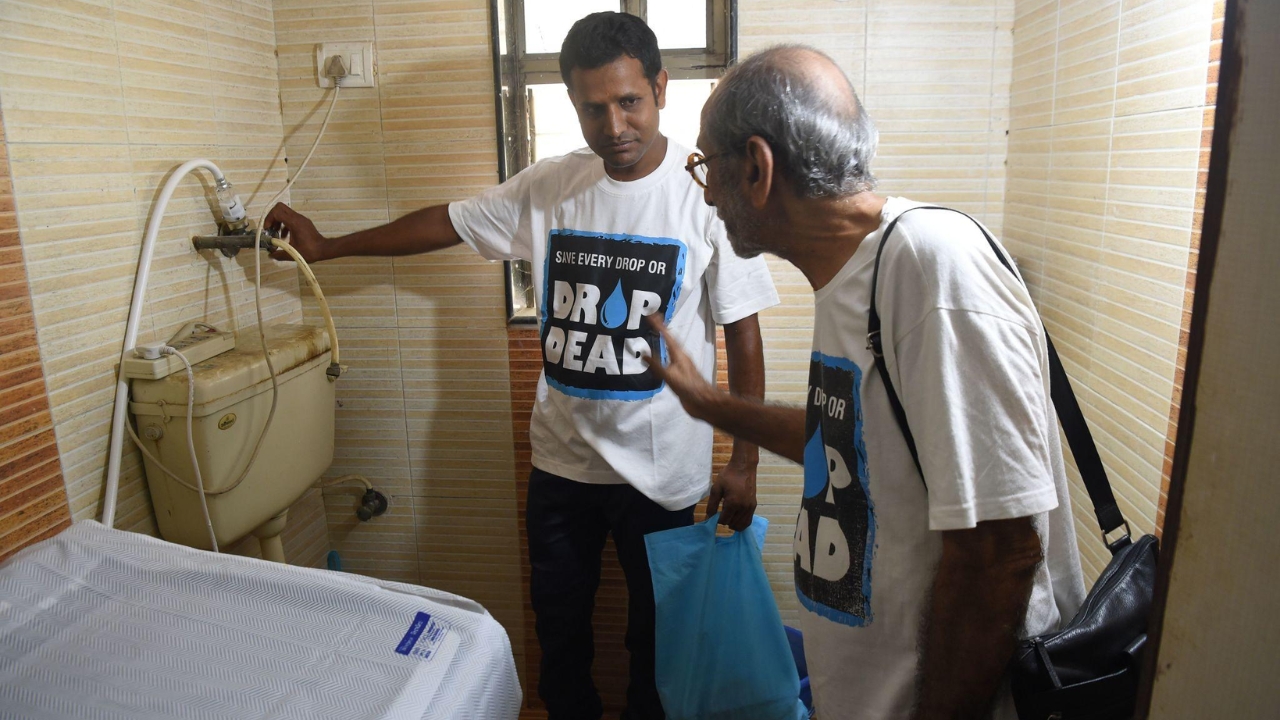
Aabid Surti’s story did not begin in a technical office, but inside a house. According to the BBC, he recounted hearing a dripping faucet in a friend’s house in 2007 and realized how that waste seemed too small to bother anyone.
The memory stirred an old recollection. Still according to the BBC, Surti grew up in difficult conditions in Mumbai and saw his mother queue at 4 am to get a bucket of water. The forgotten faucet, years later, showed the contrast between those who struggle to get water and those who let the loss run down the drain.
The idea took shape when he came across an estimate repeated in reports about his campaign: a faucet dripping one drop per second can waste about 1,000 liters of water per month.
It was this simple fact that gave strength to the Drop Dead Foundation. The organization’s motto, cited by the BBC and The Better India, is “Save every drop, or drop dead,” a direct phrase that sums up the logic of the campaign: save every drop before the problem grows.
How Aabid Surti’s Sunday Works
The work follows an almost artisanal routine. During the week, Surti seeks authorization from the building manager, distributes flyers, or posts notices to explain the visit. On Sunday, he arrives accompanied by a plumber and, on some occasions, a volunteer.
The team starts from the top floors and works their way down, apartment by apartment. The question is simple: is there any leaking faucet? When the resident allows entry, the plumber makes the repair on the spot.
The BBC reported one of these visits in a building on Mira Road, where Surti went through 56 apartments asking if there were leaks. The scene shows why the initiative works so well: the problem is small, domestic, and almost invisible, but it becomes significant when repeated in hundreds of homes.
What makes the initiative unusual is precisely the absence of complexity. It is not a solution distant from everyday life. It is a basic maintenance action, done persistently, that turns the dripping faucet into a public issue.
More than 20 million liters and a bill that keeps rising
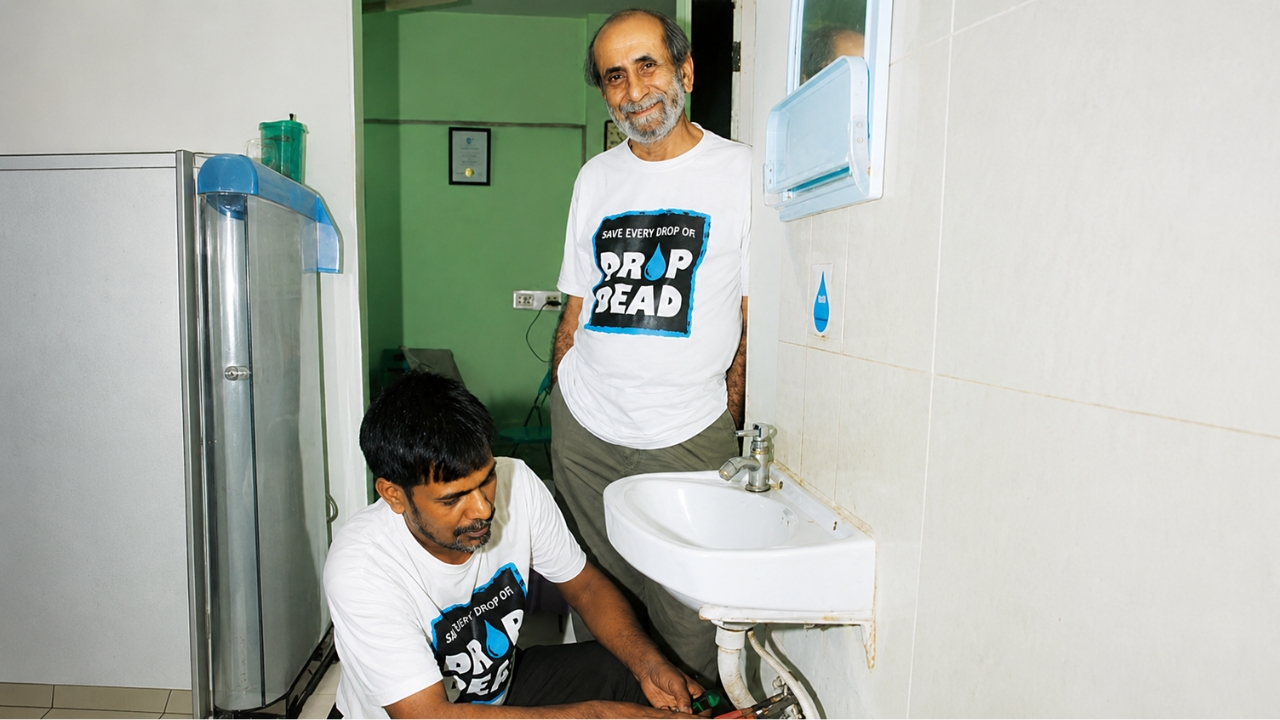
The figure of more than 20 million liters appears in reports by NDTV Swachh India and The Better India as an accumulated result over years of operation. The Drop Dead Foundation itself and the Free Press Journal later reported a higher update, speaking of about 30 million liters saved.
Therefore, the data needs to be treated with caution. It is not a detailed public audit but an estimate attributed to the foundation and reproduced by Indian media. Even so, the number reveals the scale of a type of waste rarely seen as a priority.
The impact also becomes clearer when observing the cost. According to NDTV Swachh India, Surti estimated a weekly expense of about 1,000 rupees, which could reach 4,000 or 5,000 rupees per month, considering plumber, transportation, parts, and team support.
The same report mentioned a donation of 11 lakh rupees made by Amitabh Bachchan to the foundation. Before that, according to the BBC, Surti also used the money from a literary award of 100,000 rupees to help sustain the initiative in the beginning.
An artist who chose to fix leaks
Aabid Surti was not only known for water. The Drop Dead Foundation itself presents him as a writer, cartoonist, painter, and author of extensive literary production. He was born in Gujarat, graduated from the Sir J. J. Institute of Fine Art, and published works in different formats.
The BBC also described him as an award-winning author, cartoonist, and artist. This detail changes the reading of the case. The story is not about a professional plumber who created a free service, but about an artist who saw a public cause in a domestic problem.
This contrast helps explain the reach of the campaign. Surti used a skill that doesn’t appear in pipes: the ability to tell a story. By turning a drop into a symbol, he made residents open doors for a repair that many delayed or ignored.
Mumbai and the Invisible Water Economy
The case gains even more weight because Mumbai deals with supply challenges, losses, and cuts. Reports like the one from Mid-Day have already addressed the losses of non-revenue water in the city, while recent news has again mentioned restrictions related to reservoir levels.
Surti’s initiative does not single-handedly solve an urban water crisis. It also does not replace public planning, infrastructure, or management of supply systems. But it points to a layer of the problem that lies inside homes, in loose faucets, small leaks, and the delay in calling someone to fix them.
This is where the story moves from an individual gesture to a larger message. A city can lose water in large pipelines, but it can also waste it drop by drop inside apartments. Aabid Surti showed that when waste seems too small to bother, it can be large enough to turn into millions of liters.