






 Portuguese
  Spanish


The rise of empty houses in Japan shows how an aging population, the departure of young people from rural areas, and the burden of inherited properties are changing entire villages, while outside buyers see an opportunity in old and cheap properties.
Japan faces a problem that seems unlikely in one of the most developed countries in the world: there are about 9 million empty houses spread across the territory. The data, highlighted by The Guardian and confirmed by the official Housing and Land Survey from Japan’s Ministry of Internal Affairs and Communications, shows that almost 14% of the country’s homes are unoccupied.
Behind the closed houses, the scenario is deeper. Villages are aging, young people are leaving rural areas, heirs avoid old properties, and foreigners are beginning to see an opportunity in properties that many Japanese no longer want to take on.
The number that turned empty houses into a national alert
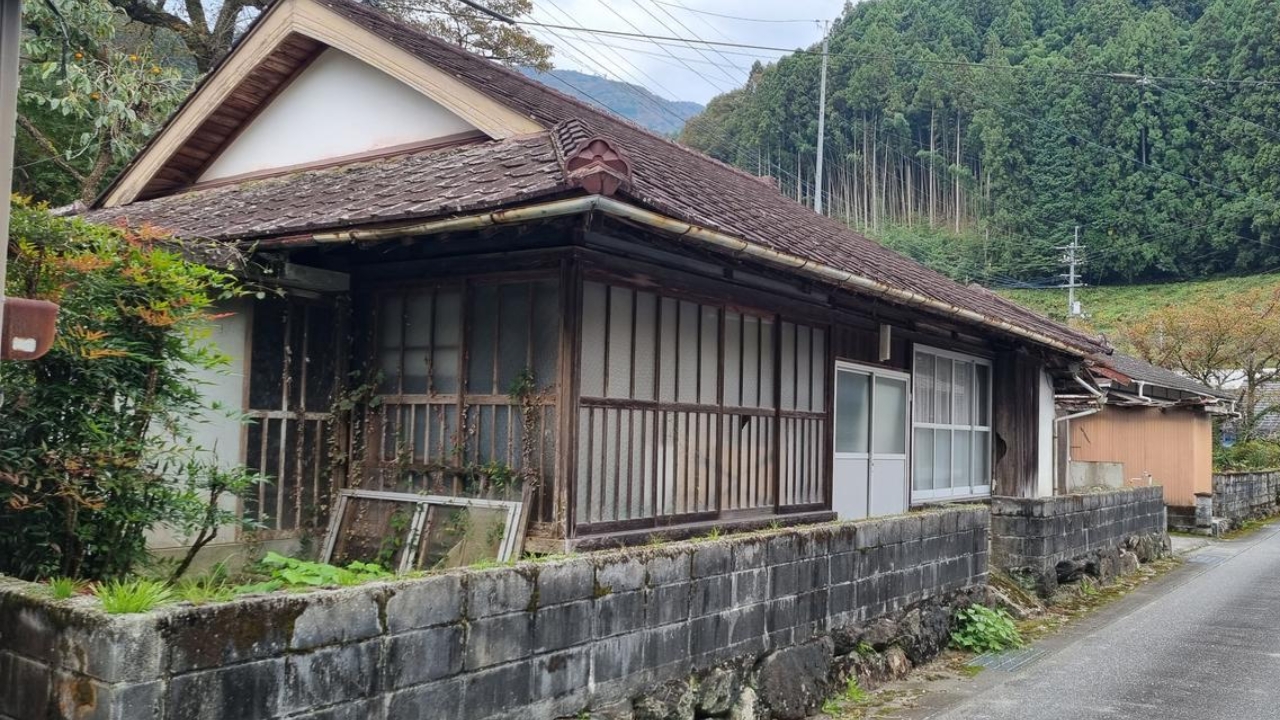
According to official data from 2023, Japan had approximately 9 million empty homes, up from 8.5 million recorded in 2018. The rate reached 13.8%, the highest level in the series.
-
Teen Transforms Brazilian Dump Site into Playground, Wins $12.5K to Expand Project

-
Elderly Man Who Experienced Water Shortages in Childhood Dedicates Sundays to Free Plumbing Repairs, Highlighting Hidden Household Waste

-
AI is Transforming the Job Market, but Expert Highlights 5 Human Skills That Will Become More Valuable Over the Next Decade

-
Microgreens Gain Popularity in Healthy Diets, Showcasing How Small Indoor Gardens Can Transform Home Routines



Nippon.com, when analyzing the numbers from the Japanese survey, highlighted that the total has practically doubled since 1993, when there were about 4.5 million empty properties in the country.
But there is an important difference. Not all these houses are abandoned or in ruins. The survey includes rental properties, properties for sale, second homes, and houses with no defined use.
It is this last category that is most concerning. There are about 3.9 million empty properties that are not for sale, not for rent, and do not appear as vacation homes. In practice, these are houses that have been left idle, often without clear maintenance and with no immediate destination.
Villages lose residents while properties lose function
The Guardian pointed to rural depopulation as one of the roots of the phenomenon. In many regions, children leave to study or work in big cities and do not return to live in family homes.
Over time, parents age, die, or start living in care institutions. The houses remain in the same place, but the family no longer has a practical connection to that region.
The Statistics Bureau of Japan shows the background of this change. In October 2024, Japan had 123.8 million inhabitants, declining for the 14th consecutive year. The population aged 65 or older reached 36.24 million people, equivalent to 29.3% of the country.
The crisis becomes even clearer when looking at the map. The population fell in 45 of Japan’s 47 prefectures, while only Tokyo and Saitama recorded an increase. In other words, the problem of empty houses is not just real estate-related. It reveals a country concentrating economic life in a few centers and emptying entire parts of the interior.
Heirs Refuse the Burden of Old Houses
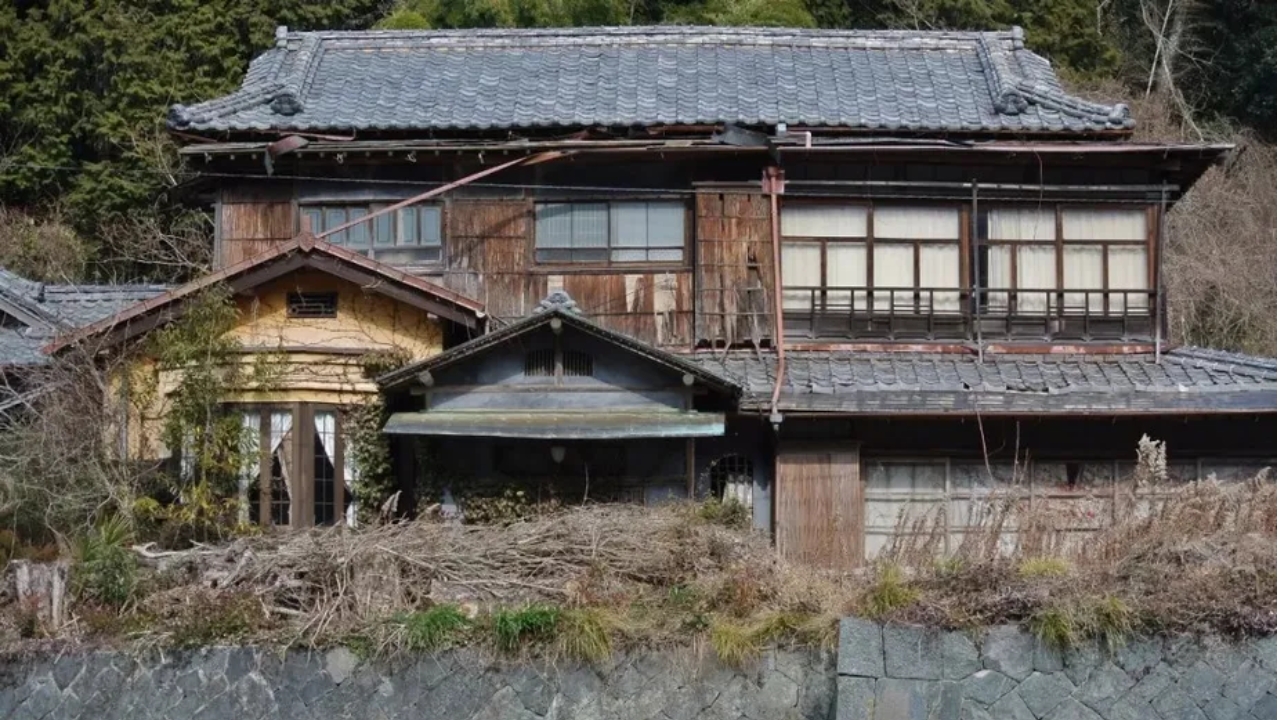
Inheritance is another central point. A study cited by Japan Spotlight indicated that more than 50% of the empty houses analyzed had been acquired through inheritance. Additionally, about 70% were built before 1980.
This means that many heirs receive old properties, requiring renovation, expensive maintenance, or even structural risk. Instead of becoming a desired asset, the house can turn into an expense.
The same survey cited by Japan Spotlight pointed out problems such as deformed roofs, tilted columns, and visible damage in a significant part of the empty properties. Among the most problematic properties, the proportion with deterioration exceeded 60%.
For many families, tearing down the house also doesn’t solve everything. The Institute for Social Vision Design explains that land with residential property can have a tax benefit in Japan. In some cases, removing the construction makes the land tax rise. Result: keeping an old house standing, even without use, may seem financially less painful than demolishing.
Government Tries to Act Before the House Becomes a Danger
Japan has already created mechanisms to deal with properties without maintenance. The law known as the Vacant Houses Special Measures Act allows municipal authorities to classify dangerous or unhealthy houses as problematic empty properties.
From there, municipalities can issue guidance, recommendations, orders, and, in extreme situations, intervene administratively. When the owner ignores formal recommendations, the property may lose tax benefits linked to the residential land.
In December 2023, a change expanded the government’s role by creating the category of poorly managed vacant houses. The idea is to act before the property becomes a more serious risk to neighbors, streets, and communities.
Since April 2024, Japan’s Ministry of Justice has also made it mandatory to register inherited properties. The heir must register the property within 3 years of learning about the inheritance. If they fail to do so without justification, they may receive a civil fine of up to 100,000 yen.
The measure attempts to tackle another issue: houses whose legal owner has died, but the property was never updated in the registry.
Foreigners see opportunity where locals see cost
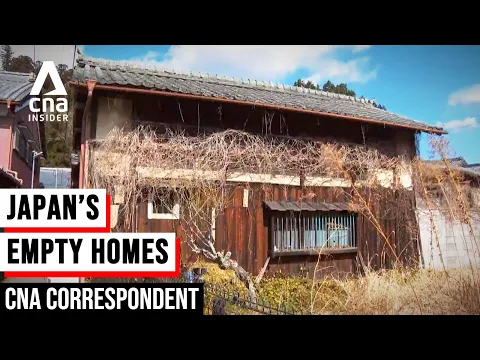

While some Japanese avoid old properties, foreigners have started to look at these houses with interest. The Guardian highlighted the search for akiya, the term used for vacant houses in Japan, especially kominka, traditional constructions that attract buyers interested in renovation, lodging, or vacation homes.
The weaker yen and the fascination with traditional properties help explain the demand. However, the opportunity has limits. Buying a cheap house does not mean solving the problem.
Architectural Digest noted that foreigners may face difficulty obtaining financing from Japanese banks, especially when they are not residents. Additionally, renovations can be expensive, there are properties with structural damage, and buying a house in Japan does not guarantee a visa or automatic residency rights.
There are also so-called akiya banks, municipal databases that list vacant properties available for sale, rent, or transfer. Real Estate Japan gathers links to these platforms by prefecture, showing how local governments try to connect unused houses with new interested parties.
A crisis that does not fit inside a house
Vacant houses also affect the surroundings. Business Insider, citing information from Nikkei Asia and the Japan Akiya Consortium, pointed out that deteriorated properties can reduce the value of neighboring properties and cause losses in the market.
There is also the risk of uncontrolled vegetation, pests, damage in weather events, collapse in earthquakes, and legal difficulties when the owner cannot be located.
The Japanese case shows that an empty house is rarely just an empty house. It can be a refused inheritance, a sign of aging, a reflection of urban concentration, a fiscal problem, and a real estate opportunity at the same time. In Japan, the 9 million uninhabited properties reveal a country where the silence of entire villages begins to weigh as heavily as the crowded buildings of large cities.


