





 Portuguese
  English
  Spanish
  4 min of reading
  0 comments


Exit Of Foreign Capital From The Brazilian Stock Market Raises Concerns And Affects Market Indices After Unexpected Measure By The US Government. Movement Brings Immediate Impacts To The National And International Financial Scenario.
The abrupt withdrawal of foreign capital from the Brazilian stock market gained momentum in the first half of July 2025, driven by an unexpected turn in the trade policy of the United States.
In the six days leading up to July 18, international investors withdrew 4.8 billion reais from B3, a movement that completely reversed the positive balance observed in the previous month and brought new challenges to the Brazilian capital markets.
Exit Of Foreign Capital And Impact On Global Stock Markets
This adverse scenario began to take shape on July 8, a day before then-President of the United States, Donald Trump, announced the imposition of a 50% tariff on all Brazilian imports.
-
Senate approves explosive measures that could cost R$ 263.7 billion and include rural refinancing, a minimum wage of R$ 13,662 for doctors and dentists, and special retirement for health agents.

-
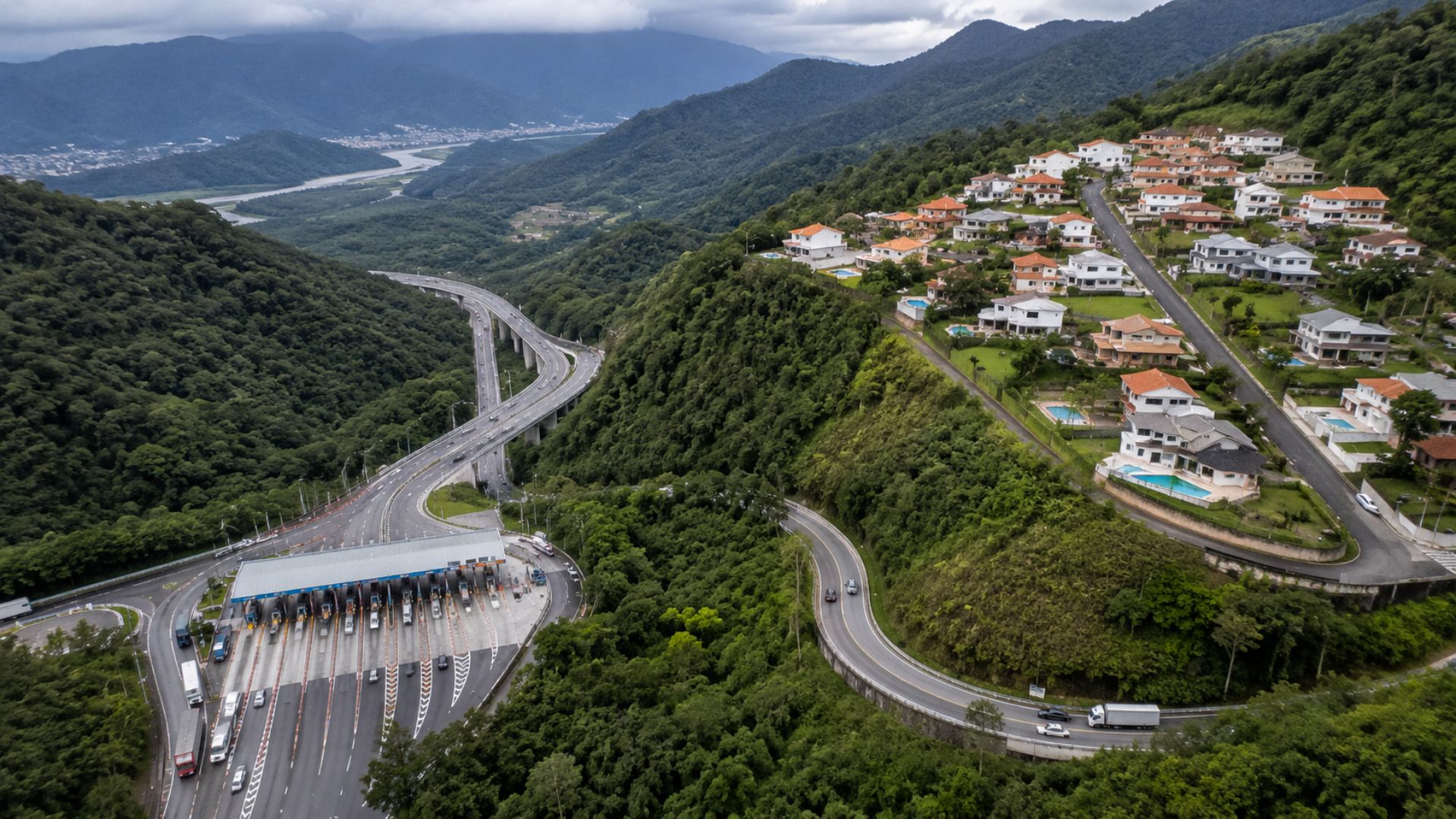
Residents are forced every day to pay R$ 24 in tolls and descend 16 km down a mountain to get home because all the turnarounds near the neighborhood have been blocked, and the nearest one is only down in Morretes.

-
São Paulo government announces R$ 76.9 million for urban infrastructure, and 28 cities in the Central region are included in the list of projects that may change streets, lighting, drainage, schools, leisure, health, and municipal services.

-
As the world closes in on conflicts, China has opened the vault in Latin America, with a record trade of 549 billion dollars in 2025, imports up by 27.6%, and nearly one million jobs, and stated at the Macau forum that it is here to stay in the region.



The immediate impact of the news was felt not only in Brazil but also in other global stock markets.
On the morning of the announcement, major US futures indices, such as Dow Jones, Nasdaq, and S&P 500, fell approximately 5%, highlighting the domino effect of the American decision on international markets.
Shift In Mood In The Brazilian Market
The Brazilian stock market, which had been experiencing strong optimism with external capital flows since early 2025, faced a drastic shift in mood.
In May alone, foreign investments had reached 10.5 billion reais, a mark not seen since December 2019.
However, following the announcement of tariffs, B3 began to record six consecutive trading sessions of international capital outflows, reversing the positive balance that had been accumulated in the month.
Now, the cumulative result for July already indicates a deficit of 3.5 billion reais, signaling a new cycle of caution among foreign investors.
Consequences For Strategic Sectors
Among the main reasons for the billion-dollar capital flight, analysts highlight the instability caused by the protectionist measures adopted by the United States.
The Brazilian production sector, especially export-oriented industries, has become a direct target of the new tariff barriers.
According to information from the Ministry of Economy, the potential impact could reach strategic segments such as agribusiness and the manufacturing industry, sectors that account for a significant portion of national exports to the US market.
Repercussions On The Exchange Rate And B3 Companies
The ripple effect of this decision goes beyond the boundaries of the Brazilian stock market.
The withdrawal of foreign capital directly affects the exchange rate of the real, which has begun to register depreciation against the dollar after a period of relative stability.
In the second week of July, the American currency surpassed the R$ 5.50 mark, driven by the search for safety in assets considered more secure in the face of an uncertain scenario.
The effects of the billion-dollar flight are also reflected in the behavior of companies listed on B3.
Various companies with significant international presence or strong dependence on exports have suffered substantial declines in their shares, as indicated by sector indicators during recent trading sessions.
Companies in the commodities, processed food, and metallurgy sectors were among the most affected, according to a report released by the Brazilian Association of Financial and Capital Markets Entities (Anbima).
Government Response And Prospects For Investors
For financial market specialists, this episode reinforces the importance of diversification of investments and thorough analysis of the global scenario when making strategic decisions.
According to consultants interviewed by economic outlets, the exit of foreign capital highlights how unexpected measures in international economic policy can quickly reshape the business environment in emerging countries, making risk management even more challenging.
Despite the magnitude of the shock, Brazilian economic authorities emphasize that the country continues to present solid fundamentals, with high international reserves and controlled inflation.
However, the outflow of external resources raises a red flag for the short and medium term, primarily concerning international confidence and the ability to attract new investments.
The federal government’s economic team, according to a statement released on July 18, 2025, indicated that it is closely monitoring the evolution of capital flows and is evaluating possible measures to mitigate impacts on the most sensitive sectors of the economy.
International Reaction And Monitoring By Global Bodies
In the international arena, the US decision to raise tariffs on Brazilian products was interpreted as part of a broader strategy to revise global trade relations, with possible repercussions for other emerging countries.
Organizations such as the World Trade Organization (WTO) and the International Monetary Fund (IMF) are monitoring the unfolding events, while affected governments seek diplomatic and commercial alternatives to reduce the impact of the measures.
Lessons For Investors And The Future Of The Brazilian Market
In light of this context, institutional and individual investors are evaluating scenarios and revising their strategies, attentive to the behavior of foreign capital.
For many, the billion-dollar flight from the Brazilian stock market following Trump’s decision serves as a warning about the volatility that can be triggered by sudden changes in the policies of major powers.
The scenario reinforces the importance of diversification, monitoring global trends, and the constant pursuit of qualified information when making investment decisions.
Amidst this instability and uncertainty, what do you think Brazil can do to regain the confidence of foreign investors and reduce the effects of this billion-dollar capital flight?





Be the first to react!