






 Portuguese
  Spanish


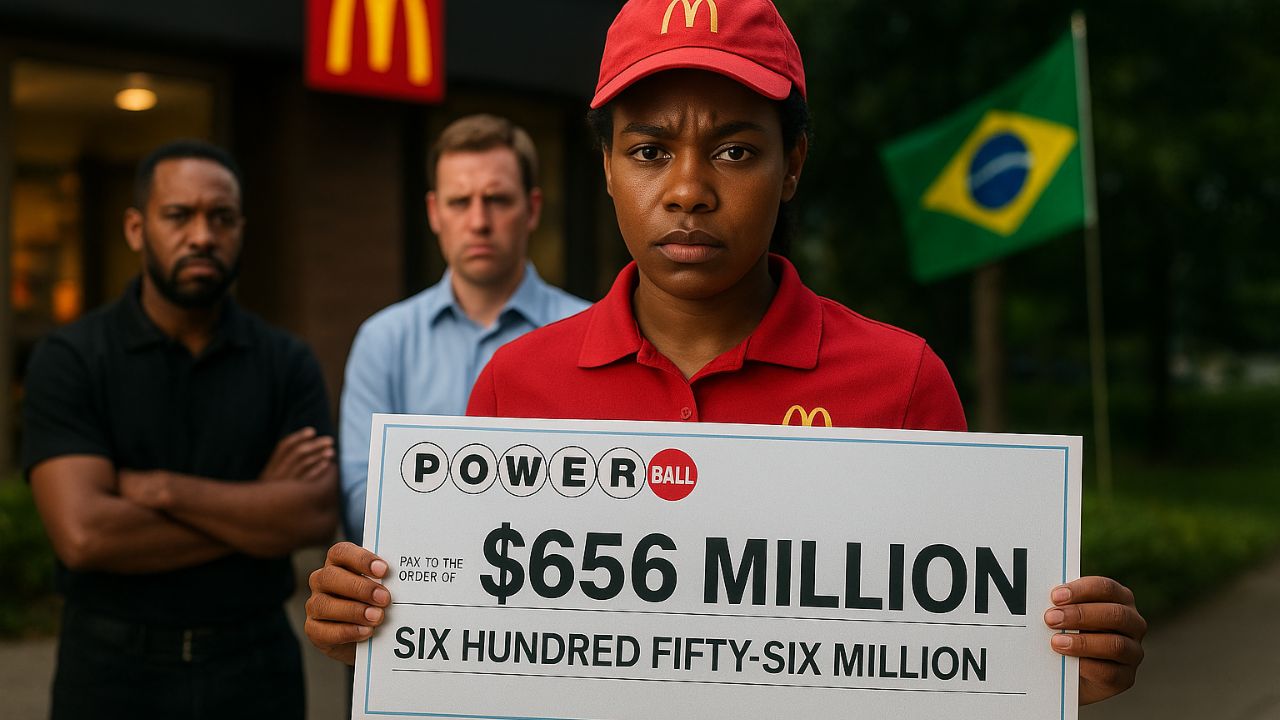


Mirlande Wilson Claimed She Won a US$ 656 Million Prize Alone, but McDonald’s Pool Colleagues Took Her to Court for Betrayal in the U.S.; Understand the Twist in the Case.
The claim of a McDonald’s employee that she winned a record prize of US$ 656 million in the Mega Millions lottery in March 2012, triggered one of the most controversial legal disputes over lottery pools in the United States. Mirlande Wilson, a single mother of seven and responsible for buying the tickets for a group of 16 coworkers in Milford Mill, Maryland, claimed that the winning ticket was a personal bet, separate from the collective effort. This statement shocked the group, which believed it was entitled to a share of the fortune, and quickly escalated into a lawsuit for breach of contract and fraud, receiving extensive media coverage.
The case took on public spectacle proportions, largely due to the policies of the Maryland Lottery itself. As highlighted by reports from The Baltimore Sun, the rules allowed winners to remain anonymous and had up to 182 days to claim the prize. This gap in information created the perfect environment for Wilson’s story, filled with accusations of betrayal and an unimaginable prize, to dominate the news. Without an official confirmation, the employee’s narrative became the main focus, transforming a workplace dispute into an international drama.
The Collapsing Narrative of Mirlande Wilson
The credibility of Mirlande Wilson’s story began to crumble rapidly due to a series of contradictory and erratic statements. Initially, shortly after the drawing, she reportedly told coworkers “we won”, suggesting a shared victory. However, her version changed dramatically when speaking to the press, insisting that the winning ticket was hers and had been bought separately, a widely circulated piece of information at the time. From that point on, the story became increasingly implausible.
-
Controversial 6-day Workweek Elimination in Brazil Faces Economic Criticism Over Productivity Claims

-
Itaú to Refund Customers After 14 Years of Unauthorized Credit Card Charges; Agreement Includes No Interest or Adjustments, Deadline by 2028, with Potential Impact of Up to $6.5 Billion

-
Brazilian Company Grows from Bartering Soap for Food to Producing 30 Million Units Monthly, Challenges Global Giants with $100 Million Revenue and Expands into Premium Cosmetics
-
Petrobras and Engeko’s New Investment Plan Promises Billions and Thousands of Jobs, Capturing Market Attention


The collapse of her narrative reached its climax in a bizarre press conference, organized alongside her attorney, Edward Smith Jr. In front of the cameras, Wilson remained silent and, crucially, did not produce any ticket. The situation worsened when her own lawyer admitted that he had never seen the alleged winning ticket and did not know if it actually existed. Shortly thereafter, Wilson changed the story again, claiming she had lost or could no longer find the ticket, destroying what remained of her credibility and strengthening her colleagues’ resolve to seek redress in court.
The Legal Battlefield and the Conspiracy Theory
On September 19, 2012, the dispute left the media sphere and officially reached the courts. Fourteen of Wilson’s colleagues filed a civil suit in the Baltimore City Circuit Court. The complaint, detailed by Courthouse News Service, was robust and included allegations of fraud, breach of contract, conversion of property, and unjust enrichment. The basis of the lawsuit was the existence of an oral contract, the informal pool agreement, which the employees claimed Wilson had violated by claiming the prize for herself.
However, the legal strategy needed a drastic shift when the Maryland Lottery announced the true winners. With confirmation that Wilson did not own the ticket, the lawsuit morphed into a bold conspiracy theory. The new allegation was that Wilson had orchestrated a fraud, recruiting the real winners, dubbed “The Three Friends”, to claim the prize on her behalf in exchange for a share of the profits. The centerpiece of this accusation, as reported by The Baltimore Sun, was a sworn statement from her boyfriend, Dominique Gourdet, who claimed Wilson confessed the scheme to him and said she “did not want to share the prize with the others at work, particularly with Hispanic workers”.
The Official Decision: The Maryland Lottery and “The Three Friends”
As the legal battle unfolded, the Maryland Lottery presented an official and verified counter-narrative. On April 10, 2012, the agency announced that the true winners had come forward: a group of three educators from the Maryland public school system who called themselves “The Three Friends”. Their story, released on the official website mdlottery.com, was the opposite of the chaos surrounding Wilson. They pooled money to buy 60 tickets, discovered their win, made copies, signed all of them, and kept the original in a safe before contacting financial advisors.
Their plans for the money were modest and centered around family: paying for their children’s college, paying off mortgages, and helping relatives. All claimed they intended to continue working in their schools. This image of humble and responsible winners served as a powerful antidote to Wilson’s media saga. The lottery’s confidence in their verification was so high that their spokesperson, Carole Everett, upon learning of the lawsuit, “laughed out loud”, dismissing the conspiracy theory as “wishful thinking”. According to The Baltimore Sun, she stated that the verification process was even more rigorous than usual, and for the lottery, the case was closed: “The Three Friends” were the only true winners.
The Inevitable Failure of the Lawsuit
From the outset, the lawsuit filed by McDonald’s employees faced insurmountable obstacles. One of the early setbacks, documented by Courthouse News Service, was when a judge denied a request for a temporary restraining order to freeze Wilson’s assets, due to procedural issues. However, the fate of the case was sealed the moment the Maryland Lottery officially awarded the prize to “The Three Friends”. Without the possession of the money by the defendant, there were no assets to claim.
The only hope for the plaintiffs was to prove the complex conspiracy theory, a nearly impossible legal burden. They would have to demonstrate that a rigorous investigation by a state agency was a sham, relying solely on second-hand statements from Wilson’s boyfriend. Given the lack of concrete evidence and the absence of a prize to be divided, the case was doomed to fail, likely being dismissed for failing to present a plausible claim. The saga that began with the hope of having winned a prize ended without a verdict, simply fading away due to lack of grounding in reality.
A Lesson on Trust and Evidence
The case of the McDonald’s lottery pool in Maryland serves as a cautionary tale about how the mere illusion of wealth can destroy trust and work relationships. Legally, it reinforces the huge difference between a “moral right”, which the coworkers felt they had, and a “legal right”, which requires concrete evidence. In the end, the dispute was not about the money, which was never in Wilson’s possession, but about the chaos generated by a false claim, amplified by the media. The true cost was the lost trust, a reminder that in high-stakes pools, documentation is not a formality, but the guardian of truth and friendship.
Have you ever participated in a work lottery pool? Do you think a written contract is an overkill or a necessity to avoid problems? Leave your opinion in the comments, we want to know your experience.





Usually I do not read article on blogs however I would like to say that this writeup very compelled me to take a look at and do so Your writing taste has been amazed me Thanks quite nice post