






 Portuguese
  Spanish


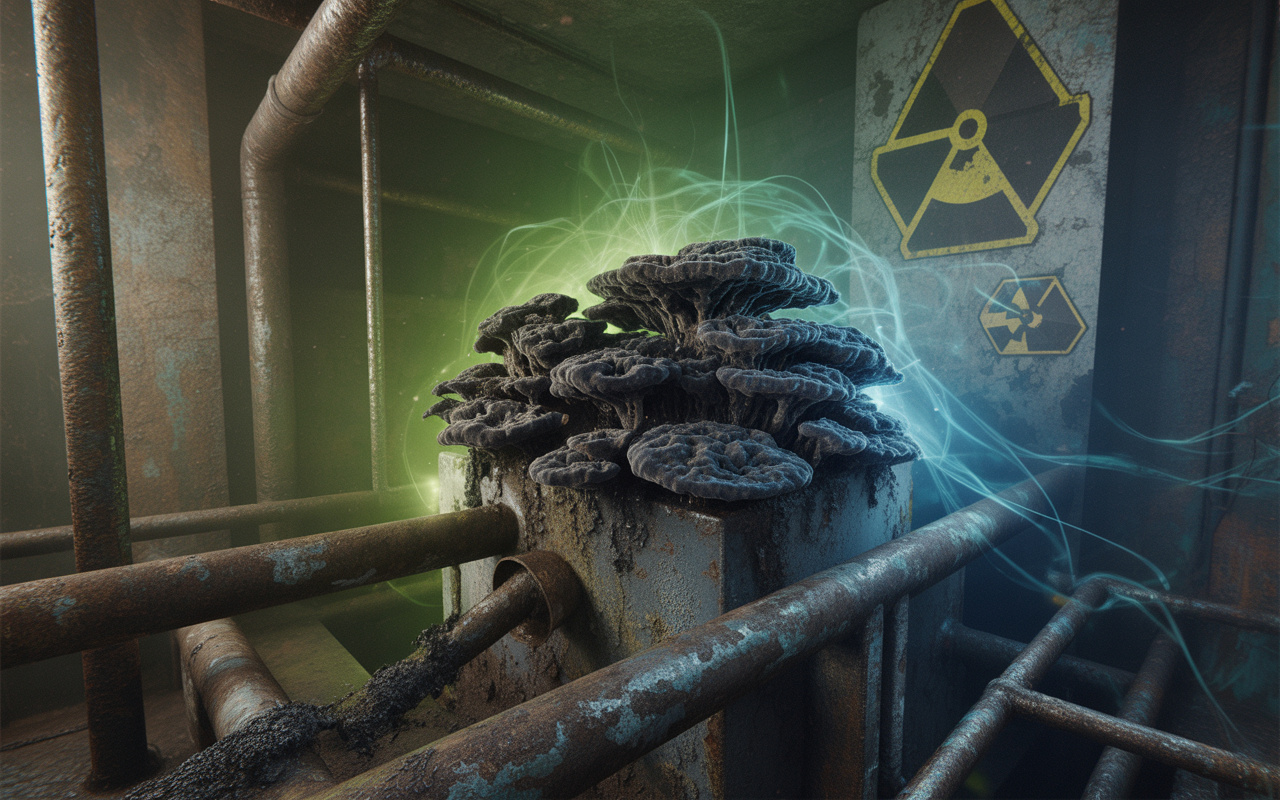


Mushroom Discovered in the Chernobyl Reactor Grows Under Intense Radiation, Uses Melanin to Convert Ionizing Energy and Challenges Known Limits of Life.
Few people imagine that, in the heart of one of the most hostile environments ever created by humans, life not only resists but seems to actively adapt. In 1986, after the largest nuclear accident in history, reactor 4 of the Chernobyl plant was sealed off as a practically dead zone, with radiation levels capable of destroying tissues, damaging DNA, and making any complex organism unviable. Yet, just a few years later, scientists began to notice something unexpected growing on the internal walls of the destroyed reactor: colonies of dark, dense, and metabolically active fungi thriving where nothing else should exist.
This finding was not just curious. It opened one of the deepest discussions in modern biology about how far life can go, what energy sources it can exploit, and whether the limits we know are, in fact, universal.
The Fungus That Grows Where Radiation Should Kill


The first scientific records emerged in the 1990s, when researchers analyzing the interior of the Chernobyl reactor identified highly melanized fungi, including species such as Cladosporium sphaerospermum, Cryptococcus neoformans, and Wangiella dermatitidis.
-
James Webb Telescope Uncovers Unexpected Clues on Mysterious Moon, Potentially Redefining Planetary Origins

-
$1.5 Billion Sleipnir Vessel Transforms Ocean into Floating Construction Site with 12 Hybrid Engines and Capacity to Lift 20,000 Tons

-
23 Years After Tragedy, Brazil’s Alcântara Space Center to Launch New Suborbital Rocket in 2026 with South Korean SEBIT Project Targeting Near-Space Tests
-
Entrepreneur Turns Neighbor’s Coffee Grounds Waste into Eco-Friendly Pellets, Earning Up to $40,000 Monthly in Brazil


These organisms were not just surviving extreme ionizing radiation: they were growing directly toward the radioactive sources, something that completely contradicted the expected behavior for living beings.
While most organisms try to flee from radioactive environments, these fungi seemed to do the opposite. Subsequent experiments confirmed that, in high-radiation environments, their growth was faster than in normal conditions.
The phenomenon came to be described as “radiotrophy,” an intriguing parallel to photosynthesis, but using ionizing radiation instead of sunlight.
Melanin: From Protection to Metabolic Tool
The key point of this extreme adaptation lies in melanin, the same pigment known for giving color to human skin. In the Chernobyl fungi, melanin not only acts as a protective shield against cellular damage.
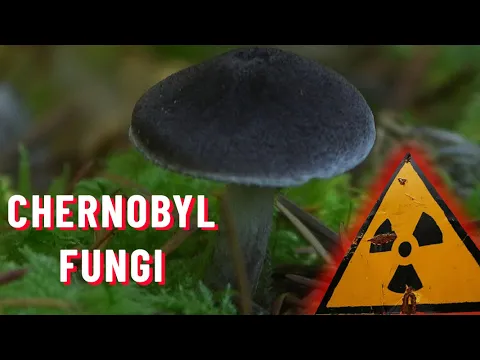
Studies published in journals such as PNAS and Physical Biology demonstrated that the melanin in these organisms undergoes structural changes when exposed to ionizing radiation, increasing its ability to transfer electrons.
In practice, this means that melanin acts as an energy intermediary. Radiation interacts with the pigment, alters its electronic state, and facilitates chemical reactions that fuel cellular metabolism. This is not about “eating radiation” in the literal sense, but about using the energy released by it to sustain basic biological processes, something never observed so clearly in complex organisms before this case.
This mechanism helps to explain why these fungi not only tolerate radiation but seem to benefit from it in environments where other energy sources are scarce.
The Extreme Environment of the Chernobyl Reactor
To understand the magnitude of this discovery, it is necessary to assess the scenario. Inside the damaged reactor, radiation levels exceeded hundreds of times the limits considered lethal for humans in many areas.
Moreover, it is a nutrient-poor environment, with variable temperatures, irregular humidity, and almost total absence of light.
Despite this, the fungi formed thick biofilms on internal surfaces, growing slowly but continuously. This indicates not only resistance but functional adaptation to an environment that combines intense radiation and energy scarcity.
Scientists realized that these organisms did not just appear there by chance. Melanized fungi had already existed in naturally radioactive environments, such as deserts and high-altitude regions, but Chernobyl served as an involuntary real-scale experiment, accelerating the selection of extreme characteristics.
Laboratory Evidence and Scientific Validation
The hypothesis that these fungi use radiation as an energy source was not limited to field observation. In the laboratory, samples of Cladosporium sphaerospermum were cultivated under different levels of radiation.

The results showed a measurable increase in metabolic rate and biomass in irradiated environments compared to non-irradiated controls.
Research conducted by institutions such as Albert Einstein College of Medicine and NASA confirmed that the melanin in these fungi exhibits altered electronic properties after exposure to radiation, reinforcing the idea of an active biochemical mechanism, rather than just passive tolerance.
These studies are considered robust because they combine on-site observations, molecular analyses, and controlled experiments, something rare in research involving extreme environments.
Implications for Biology and Beyond Earth
The discovery of the radiotrophic fungi of Chernobyl had immediate impact on astrobiology. If terrestrial organisms can use ionizing radiation as an indirect energy source, this drastically expands the types of environments that can be considered habitable beyond Earth.
Planets and moons with surfaces exposed to high levels of radiation, such as Mars or Europa, are now viewed in a new light. Life, at least in microbial forms, might not only survive but explore these conditions.
The NASA even tested the growth of Cladosporium sphaerospermum on the International Space Station, observing its behavior in microgravity and under cosmic radiation, reinforcing the practical interest in the phenomenon.
Possible Technological Applications
Beyond the philosophical and scientific implications, concrete applications are being studied. One involves using these fungi as biological barriers against radiation, especially in space environments.
Melanized biofilms could act as living shields, absorbing some of the ionizing radiation more efficiently than traditional materials, with less mass.
Another line of research explores the use of these organisms in bioremediation of areas contaminated by radiation, helping to stabilize surfaces and reduce the dispersion of radioactive particles. There are no ready-made solutions yet, but accumulated data indicate real potential.
What Chernobyl Revealed About the Limits of Life
The case of the Chernobyl fungi forces science to reevaluate an old premise: that radiation is merely a destructive agent. For these organisms, it became part of the energetic environment, something integrated into metabolism.
This does not mean that radiation is “good” for life in general, but it shows that, at microbial scales and under extreme evolutionary pressure, biology can find pathways that seem unlikely at first glance.
The destroyed reactor, a maximum symbol of technological failure and environmental risk, has unexpectedly become one of the most surprising natural laboratories in history.
The lingering question is both disturbing and fascinating at the same time: if life can adapt to a destroyed nuclear reactor, what other environments considered impossible might, in fact, be alive without our knowledge?


O ser humano SEMPRE achando que tudo tem de ser de acordo com ele próprio.Já tá mais do que desmistificado que “nossa imagem e semelhança” só serve pra sentir vergonha de quem somos no planeta.
Cheiro de IA do começo ao fim do texto. Tempos sombrios.