






 Portuguese
  Spanish
  4 min of reading
  0 comments


Homemade Technique with Aluminum Foil Promises to Boost Wi-Fi Signal in Homes, but Recent Studies and Tests Point to Important Limitations for Those Seeking a More Stable and Faster Connection in Different Environments.
Users seeking a stronger Wi-Fi connection often resort to popular homemade tricks found online, the most well-known being the use of aluminum foil around the router.
The promise of this method is simple: to extend the signal range and improve navigation, especially in areas with shadow zones.
However, practical results and recent scientific studies indicate that the benefits of this hack are limited and can diverge significantly from initial expectations.
-
Son finds father’s forgotten notebooks and helps scientists solve the mystery of a 55-million-year-old marine fossil that remained unanswered for almost three decades.

-
Sailor sails alone from Panama to Cuba carrying just over US$ 7,000 in food, medicine, and baby formula, spends hours at Santiago de Cuba customs, and delivers everything to Cáritas, linked to the Catholic Church, to distribute to the population.

-
In the middle of a forest in the USA, a couple transforms over 1,500 recycled tires, bottles, cans, and clay into an ecological mansion, builds 90% of the house with their own hands, and puts the nearly 7-acre self-sustaining refuge up for sale for $1.3 million.

-
Cutting board created in the Netherlands uses material made by microorganisms, measures 30 x 20 cm, and aims to eliminate microplastics that can end up in food during daily preparation.




The portal TechTudo conducted practical tests to evaluate the effectiveness of the trick, and its conclusions served as the basis for the information in this text.
How Aluminum Foil Works on Wi-Fi
Aluminum foil is known for its conductive properties and for reflecting electromagnetic waves, the same ones that transmit Wi-Fi data through the environment.
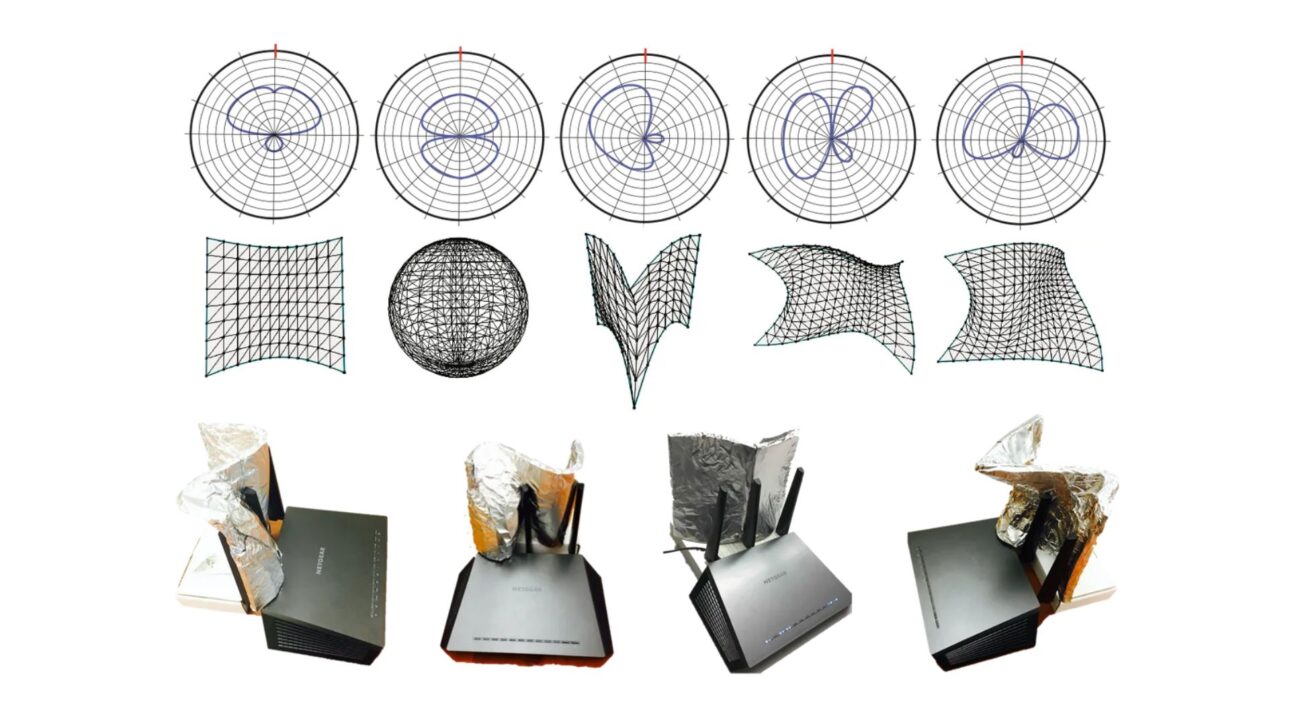
According to experts, when positioned behind the router, this material can act as an improvised directional antenna, altering the path of the waves and concentrating the signal in a specific direction.
However, this approach has clear limitations.
Unlike professional equipment, such as directional antennas made with precise calculations and suitable materials, aluminum foil does not have a defined structure to ensure consistent performance.
In addition, factors such as the shape of the mold, positioning, and even irregularities of the material interfere with the results.
The scientific explanation behind this hack is based on wave physics studies, but there is no consensus on its real efficiency in common residential environments.
Obstacles such as walls, furniture, and other electronic devices can deflect or absorb part of the signal, making it difficult to perceive an improvement just by using aluminum foil.
Results of Practical Tests with Aluminum Foil
To evaluate the effectiveness of this method, practical tests were conducted in different residential environments, using signal intensity measurement apps like iWifi.
In the first experiment, conducted about 4 meters away from the router, the signal intensity showed a slight improvement: without the aluminum foil, the recorded value was -48 dBm; with the material, it reached -43 dBm.
Technically, the closer to 0, the better the Wi-Fi intensity.
Additional tests, conducted at greater distances, such as on a balcony 15 meters from the router, also showed variations.
Without the hack, the intensity dropped to -98 dBm, while with aluminum foil it reached -85 dBm.
Despite indicating a positive difference, the numbers fluctuated a lot, highlighting the natural instability of the wireless signal, especially in home environments.
When analyzing data transmission speeds, the results were even less conclusive.
The download speed showed unpredictable variations, sometimes increasing, sometimes decreasing with the application of aluminum foil.
On the other hand, the upload speed demonstrated a more consistent improvement, likely due to less interference and reduced bandwidth usage compared to download.
Even so, the gains were not sufficient to ensure significantly better navigation.
All this data and observations were collected from the experiments conducted by TechTudo.


What Science Says About Aluminum Foil on the Router
References to scientific experiments, such as those conducted by Dartmouth College in the United States, suggest that metallic coatings can indeed optimize the direction of wireless network signals.
However, these studies were conducted with devices designed in 3D printers, utilizing rigid plastics covered with aluminum sheets and molded with precision.
These supports have calculated angles and shapes to reflect the waves efficiently, which does not occur when only using a piece of aluminum foil molded manually.
In other words, even though the physical principle of redirecting waves is valid, the practical application in homes, solely with aluminum foil, is far from replicating the effects obtained in a laboratory.
There is no public evidence that the homemade technique provides a considerable improvement in Wi-Fi performance for most users.
Summary of Test Results
The main data collected during the measurements show that although aluminum foil can change the direction of the Wi-Fi signal in some cases, the gain in intensity tends to be small and subject to instabilities.
In environments with multiple obstacles or long distances, the result tends to be even more unpredictable.
For those seeking stability, speed, and coverage, solutions recommended by professionals remain the safest and most efficient.
In the current context of connectivity, the search for homemade alternatives to boost Wi-Fi reflects the importance of quality internet access.
However, is it worth insisting on hacks, or is it time to invest in proven and accessible methods to ensure truly stable and fast browsing?







Be the first to react!