Portuguese
  Spanish


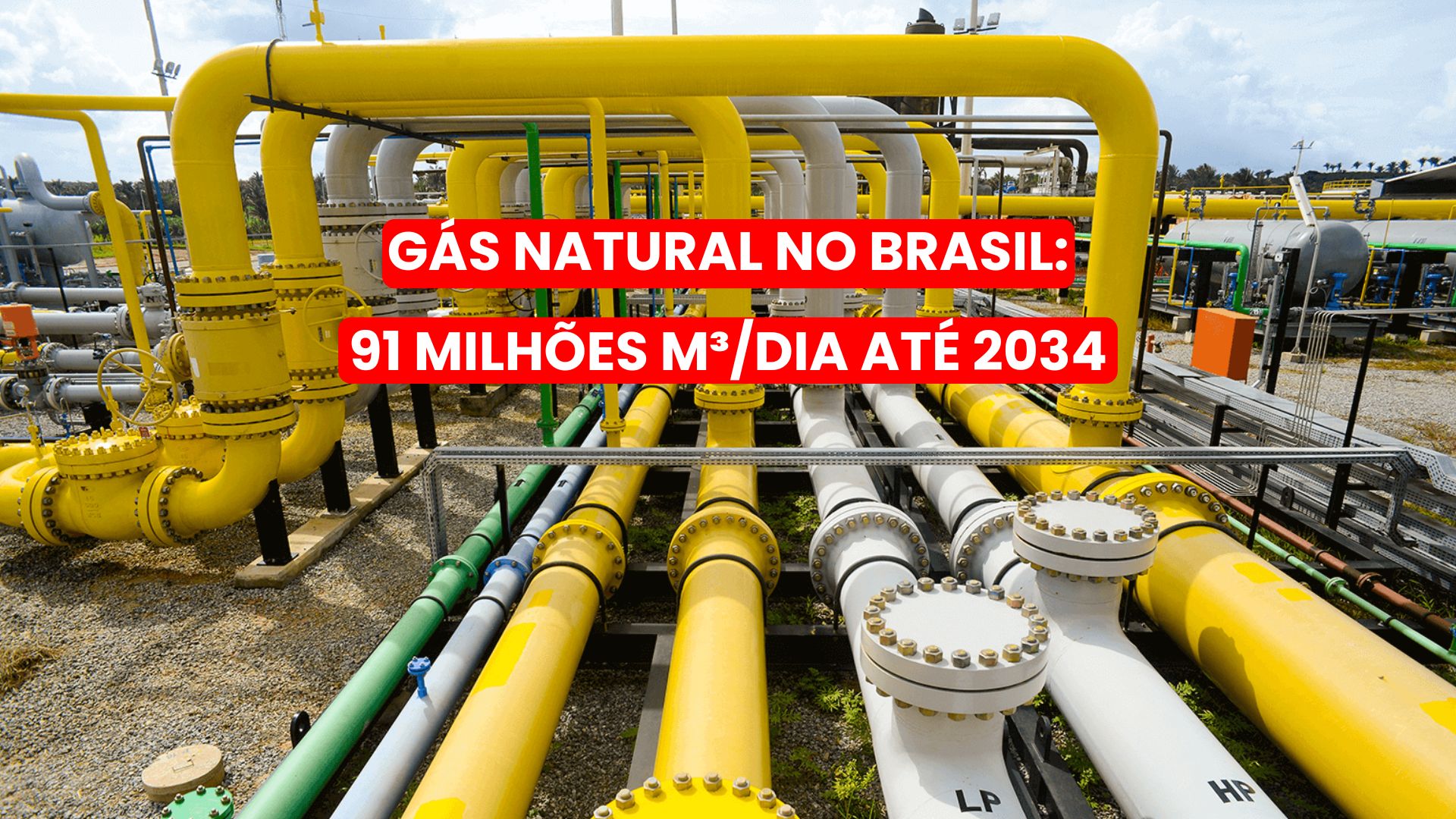

Natural Gas in Brazil Is Expected to Expand Significantly by 2034, with Production Driven by Pre-Salt and According to PDE 2034 Projections
Natural gas in Brazil is expected to reach a net supply of up to 91 million m³/day by 2034, according to projections from the Ten-Year Energy Expansion Plan (PDE 2034), developed by the Ministry of Mines and Energy and the Energy Research Company (EPE). This growth is mainly driven by pre-salt exploration, which remains the main source of national production.
The scenario indicates a strategic milestone for the country, promoting greater energy security, reducing dependence on imports, and strengthening the energy matrix with a focus on low-carbon sources. In this article, we explore the current landscape, projections, challenges, and opportunities related to natural gas production in Brazil.
Current Landscape of Production in Brazil and PDE 2034 Projections
The PDE 2034 projects that gross natural gas production is expected to reach 315 million m³/day by 2034, with a peak expected at 316 million in 2031. From this total, the net supply — which deducts reinjection, flaring, and internal consumption — is estimated at approximately 134 million m³/day.
-
Petrobras Explores Entry into Corn Ethanol Market, Aiming to Become a Biofuel Giant

-
Brazil’s $8.5 Billion Auction Secures New Power Plants to Prevent Peak Hour Energy Shortages
-
Why Gasoline Prices Remain Stable: How Petrobras’ Subsidies and Pricing Policies Control Fuel Costs in Brazil
-
SpaceX Plans 13 km Pipeline to Reduce Truck Reliance and Speed Up Starship Rocket Launches in the U.S.


However, more conservative scenarios suggest the possibility of reaching 91 million m³/day, considering market adjustments, infrastructure limitations, and internal consumption.
Currently, production in Brazil is around 150 million m³/day, while the net supply is close to 43 million m³/day.
The Growth of Pre-Salt and the Impact on Natural Gas Supply
The pre-salt will continue to be the main source of production in Brazil, accounting for about 80% of gross production and approximately 60% of net supply by 2034. This region concentrates high productivity fields and robust investments, ensuring that the extracted natural gas contributes directly to domestic supply and the international market.
The growth of the pre-salt not only increases supply but also improves the efficiency of the Brazilian energy system by integrating new extraction technologies and logistics for output. Investment in infrastructure, such as pipelines and terminals, is crucial for the expansion of the pre-salt to result in a real increase in net natural gas supply in Brazil.
Infrastructure and Logistical Challenges
To achieve the projection of 91 million m³/day, investment in transportation and storage infrastructure is essential. Strategic projects include the green corridor linking Santos (SP) to São Luís (MA), with an investment of R$ 5.7 billion.
Projects such as PRE-SALT ROUTE 3 and Project RAIA, with output capacities of 18 million m³/day and 16 million m³/day, respectively, are critical to meet the growing demand. Without these investments, a significant portion of pre-salt production could be bottlenecked, limiting the increase in net supply to the market.
The expansion of infrastructure is also essential for supplying consumer sectors such as thermal power plants, industries, and households. Efficient logistics ensure that production growth translates into available energy and more competitive prices for the country.
Natural Gas in Brazil and Its Contribution to the Energy Matrix and Sustainable Transition
The natural gas in Brazil plays a strategic role in diversifying the national energy matrix. Currently, the country heavily relies on hydropower, but the complementarity of natural gas allows for supply stability, especially during dry periods.
- Gas-fired Power Plants: contribute to meeting peak demand and ensuring the reliability of the electric system, serving as an efficient backup source.
- Emission Reduction: compared to coal and oil, natural gas emits less CO₂, helping Brazil meet greenhouse gas reduction targets.
- Integration with Renewable Energies: by providing firm energy, gas allows for greater penetration of solar and wind, which are intermittent, strengthening the energy transition.

Impacts of Natural Gas Production in Brazil
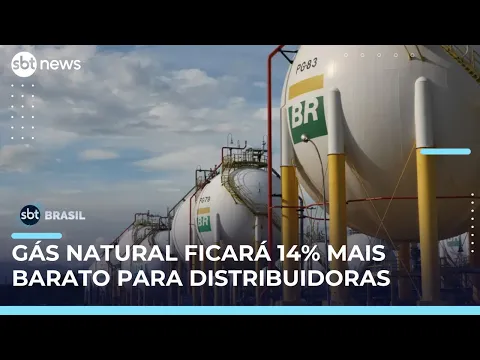
The increase in production in Brazil and net supply has significant impacts on the economy and energy security:
- Reduction of Import Dependency: currently, the country still relies on imports to meet about 40% of domestic demand, especially during periods of low production.
- Stimulus to the Private Market: with the opening promoted by the Gas Law of 2021, new players are entering the sector, generating greater competitiveness and attracting investments.
- Regional Development: pipelines and terminals stimulate the local economy, creating direct and indirect jobs.
- Energy Transition: natural gas, with lower carbon emissions compared to oil and coal, strengthens the clean energy matrix, serving as a transitional element to renewable energies.
Challenges for the Expansion of Natural Gas in Brazil
Despite optimistic projections, there are challenges that may limit growth:
- Gas Reinjection: used to increase oil recovery and reduce CO₂ emissions, it decreases the volume available to the market.
- Delays in Projects: the expansion of pipelines, terminals, and processing infrastructure depends on complex schedules and regulatory approvals.
- Price and Demand Fluctuations: volatility in the international market and variations in domestic consumption can impact the profitability of new investments.
- Regulatory Aspects: adjustments in legislation or changes in gas pricing policy may affect the sector’s attractiveness.
Prospects for the Future of Natural Gas in Brazil
The projection of a net supply of up to 91 million m³/day by 2034 reinforces the strategic role of pre-salt and PDE 2034 in consolidating the sector. For Brazil to achieve these numbers, a joint effort between government, private companies, and regulatory agencies will be necessary.
The advancement of production in Brazil strengthens energy security, reduces imports, and generates competitiveness in the domestic market. Moreover, it opens opportunities for export and integration of the country into the global energy landscape, especially in the context of the transition to a low-carbon matrix.
Continuous monitoring of projections, execution of infrastructure projects, and maintaining stable incentive policies will be crucial for the full potential of natural gas to be realized. Consolidating an efficient market, with growing supply and competitive prices, contributes to sustainable economic development and energy stability in Brazil over the next 15 years.