Portuguese
  Spanish




Study led by Lancaster University calculates that gases used to replace CFCs generated 335.5 thousand tons of TFA, a “forever chemical,” between 2000 and 2022.
According to Lancaster University, scientists have calculated for the first time that the compounds used to replace CFCs, along with certain anesthetic gases, were responsible for about 335.5 thousand tons of trifluoroacetic acid, or TFA, deposited from the atmosphere onto the Earth’s surface between 2000 and 2022. The work was published in the journal Geophysical Research Letters and indicates that this load continues to grow because some of these gases remain in the atmosphere for decades before breaking down.
The data is noteworthy because TFA is treated as a “forever chemical”. Lancaster University itself highlights that the replacement of CFCs helped protect the ozone layer but also created a persistent byproduct that was not fully considered when these chemical swaps were adopted. According to the study, the annual production of TFA from these sources could still peak sometime between 2025 and 2100.
What is TFA and why it concerns scientists
According to Lancaster University, trifluoroacetic acid is a small fluorinated molecule that is part of the broad family of PFAS, a group of substances known for their environmental persistence. The reason for the alert lies precisely here: once formed, TFA does not easily break down in the environment, dissolves easily in water, and is difficult to remove by conventional treatment systems.
-
Iraq floats and sinks under an arm of the Euphrates 10 giant concrete boxes of 46,000 tons and 125 meters each to assemble a 2.4 km submerged tunnel and open a new land route between Asia and Europe.

-
Scientists use more than 20,000 artificial birds and solar speakers to “trick” seabirds, reactivate nesting routes, and revive a colony on an island that seemed abandoned.

-
She spent 73 years breathing inside an iron lung, survived the aftereffects of polio, and became the last woman in the United States dependent on the equipment before dying at 78 years old.
-
Brazilian students created a $1 filter using pine bark, cotton, and 3D-printed parts to clean cassava wastewater, reduce the toxicity of a hazardous waste, and transform contaminated water into biofertilizer.



This means that the compound enters the water cycle and continues circulating for long periods. Instead of disappearing relatively quickly, it can be transported by rivers, groundwater, rain, and snow, expanding its reach and permanence in different environments.
How CFC substitutes became a persistent pollutant
According to Lancaster University, researchers used an atmospheric chemical transport model to estimate how much TFA is generated when gases like HCFCs, HFCs, and certain anesthetics degrade in the atmosphere. These compounds have been adopted over the past decades as alternatives to CFCs, which destroyed the ozone layer.
When these gases rise into the atmosphere and undergo chemical reactions, part of them transforms into TFA, which then returns to the surface dissolved in rain or deposited directly from the air. According to the study, emissions from these substitutes have increased the global deposition of TFA by about 3.5 times, from 6,800 tons per year in 2000 to 21,800 tons per year in 2022.
TFA Pollution Now Appears Even in the Arctic
According to Lancaster University, one of the most concerning points of the study is that TFA is not confined to the regions where the gases are emitted.
Since some of these compounds have a long lifespan in the atmosphere, they can be transported over long distances before decomposing, which helps explain the increasing presence of TFA in remote areas like the Arctic.
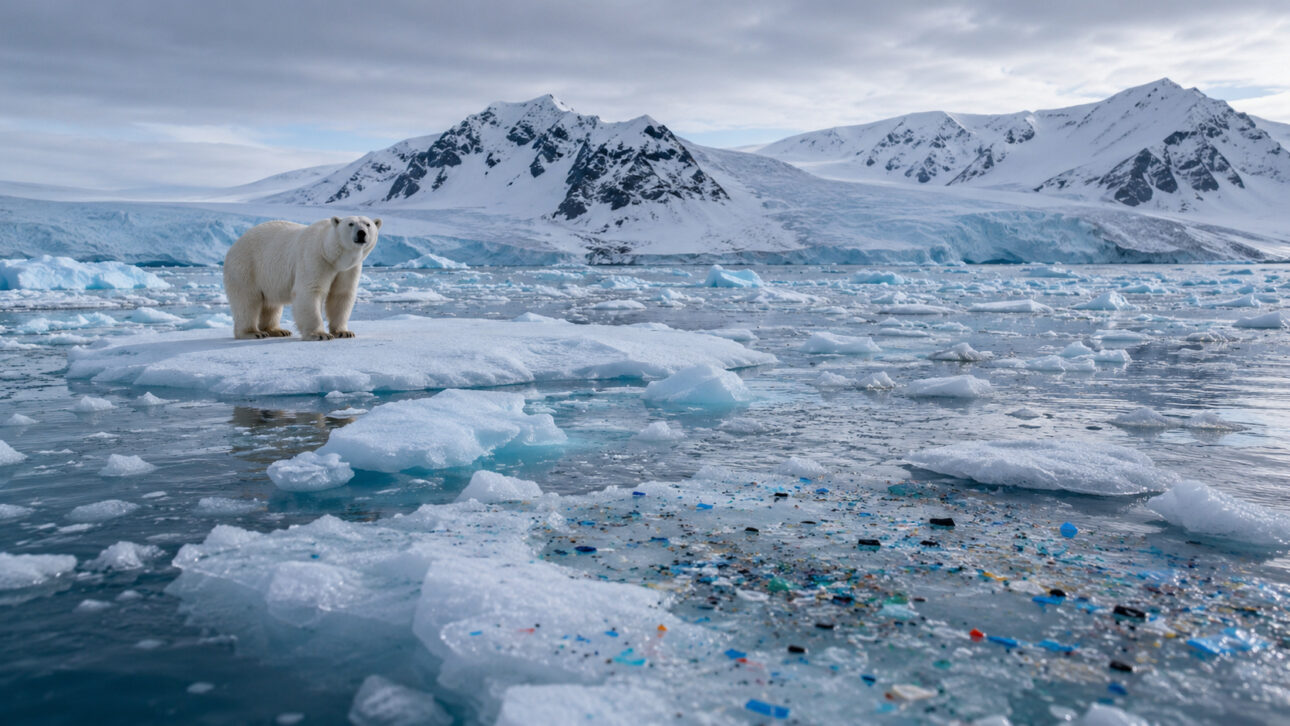
The university itself states that the model indicates that practically the entire observed trend of TFA deposition in the Arctic can be explained by these CFC substitute gases. This reinforces that it is not a localized problem but a global process, with consistent signs of increase in different monitored regions.
The Solution for the Ozone Layer Created a New Chemical Problem
The study also carries a broader environmental lesson. The Montreal Protocol, signed in 1987, is seen as one of the most successful environmental agreements in history because it helped put the ozone layer on the path to recovery.
But, according to Lancaster University, the replacement of CFCs with less destructive compounds for the ozone did not fully consider the environmental fate of the products generated when these substances degrade.

In other words, the solution to a major environmental problem ended up making room for another. The gases that helped contain the advance of the hole in the ozone layer also began to fuel an invisible and persistent TFA rain, which the planet cannot easily eliminate.
Scientists advocate for more monitoring and caution about long-term impacts
According to Lancaster University, the authors of the study state that it is urgent to expand the monitoring of TFA in the environment.
The work points out that the substance has the potential to remain in circulation for a long time, but also makes it clear that the long-term environmental and health consequences still need to be better understood.
This means that the warning is strong, but does not authorize definitive conclusions about all future impacts. What is already clear, however, is that TFA is becoming one of the most important examples of how the replacement of industrial compounds needs to be evaluated in full cycle, including the behavior of by-products formed decades after their release.