






 Portuguese
  Spanish


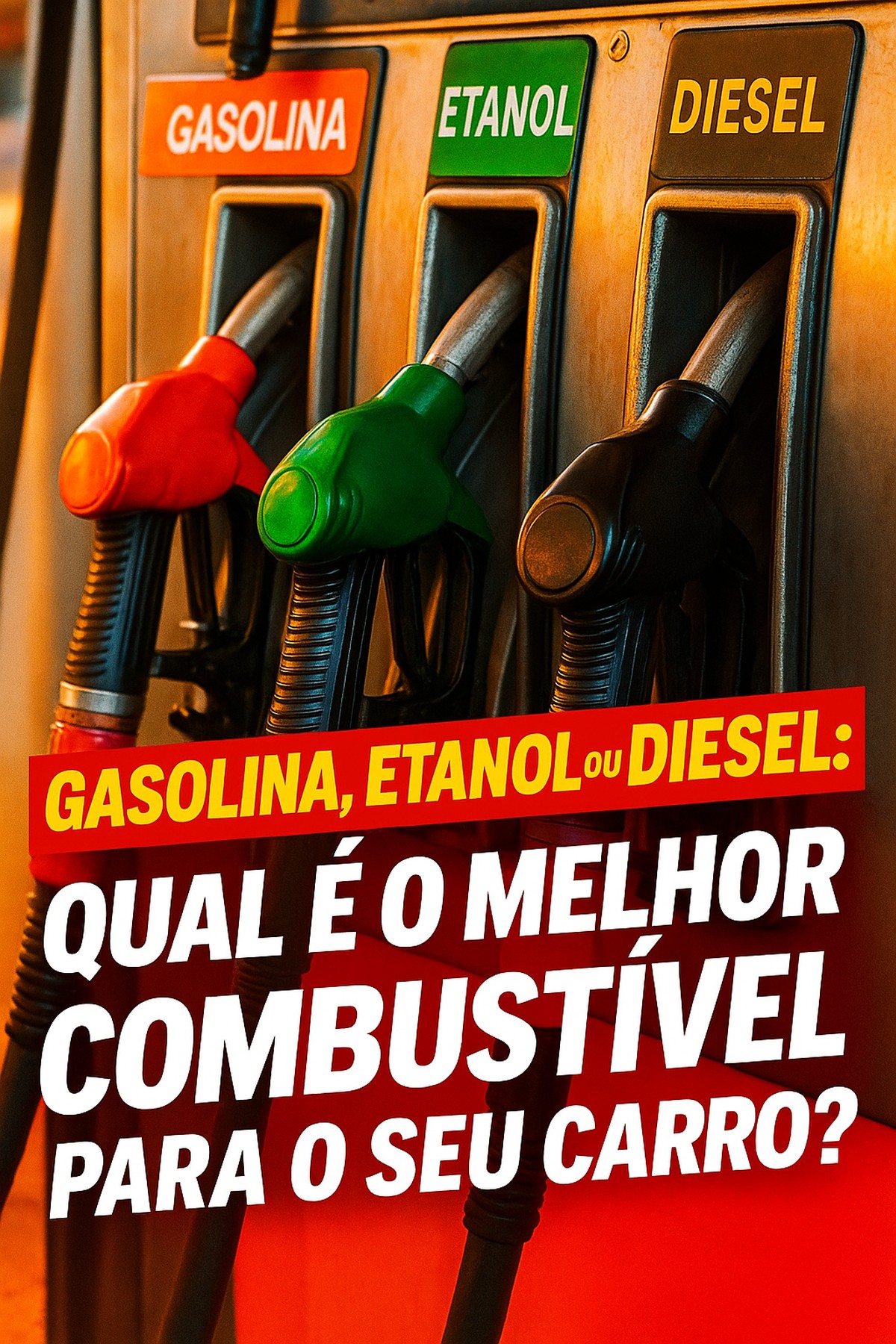


Compare Gasoline, Ethanol, and Diesel and Discover Which Is the Best Fuel for Your Car in 2025. See Advantages, Disadvantages, and Tips for Saving!
Choosing between gasoline, ethanol, or diesel may seem simple, but this decision directly impacts your wallet, the car’s performance, and even the environment. If you have ever found yourself uncertain when refueling, this guide will help you understand which option is really worth it for your lifestyle.
Gasoline: The Most Popular Choice
Gasoline is still the most used fuel in Brazil — and for good reason. It has good range, is easy to find, and works well in almost all climates.
✅ Positive Points:
-
End of the Affordable Car Era: Fiat Argo 1.0 2026 Offers 14.7 km/l Efficiency and Easy Maintenance, but $18,000 Price Raises Cost-Benefit Concerns

-
Honda XR 300L Tornado Special Edition 2026: Off-Road Focused Motorcycle with 293.5cc Engine, 24.3 HP, Priced at $6,200
-
Indian Government Offers Up to $1,000 Incentive for Drivers to Swap Old Cars for Electric Vehicles

-
Tesla Begins Testing Two-Seater Autonomous Robotaxi Without Steering Wheel or Pedals, Featuring Onboard Safety Monitor


- Goes further per liter than ethanol
- Available at any gas station
- The additive version helps keep the engine clean
❌ Negative Points:
- Derived from petroleum (i.e., more polluting)
- Prices tend to be unstable
When to Use: Ideal for those who drive frequently in the city and seek a balance between performance and practicality.
Ethanol: Sustainable and More Powerful
Made from sugarcane, ethanol is a renewable fuel and less polluting. Furthermore, it often makes the car “quicker” in acceleration.
✅ Positive Points:
- Much more ecological than gasoline
- 100% national production
- Slightly higher power
❌ Negative Points:
- Yields about 30% less per liter
- Can make it harder to start the car on cold days
- May not be worth it, depending on the price
Golden Tip: Only fill up with ethanol if it costs up to 70% of the price of gasoline. Do the math before filling the tank!
Diesel: Savings for Heavy Drivers
Diesel is the right choice for those with a pickup, van, or large SUV who often go on the road. It has high efficiency and the engine lasts longer.
✅ Positive Points:
- Excellent autonomy
- Lower consumption than gasoline or ethanol
- Engines last longer
❌ Negative Points:
- More polluting than the others
- Diesel vehicles are more expensive
- Only permitted in commercially or specifically used vehicles
When to Use: Ideal for those who travel a lot, transport cargo, or have a car prepared for diesel.
Which One to Choose, Then?
The answer depends on how you use your car. See the summary:
| Fuel | Best For Those Who… | Efficiency | Average Price | Sustainable? |
|---|---|---|---|---|
| Gasoline | Use the car frequently in the city | High | Medium–High | ❌ |
| Ethanol | Want to save and pollute less | Low | Low | ✅ |
| Diesel | Drive long distances with cargo | Very high | Low/Long term | ❌ |
Quick Tips
- Use additive gasoline if you want to take better care of the engine.
- Check fuel apps that show where it’s cheaper to fill up.
- Always do the 0.7 calculation if you are in doubt between gasoline and ethanol.
- Prefer ethanol if you value the environment and the price is reasonable.
There is no one-size-fits-all fuel — there is the best for you. Assess your usage type, compare prices, and choose what makes the most sense in your daily life. Your car (and your wallet) will thank you!





Todos cada dia mais caros