






 Portuguese
  Spanish
 9 min of reading
  4 comments


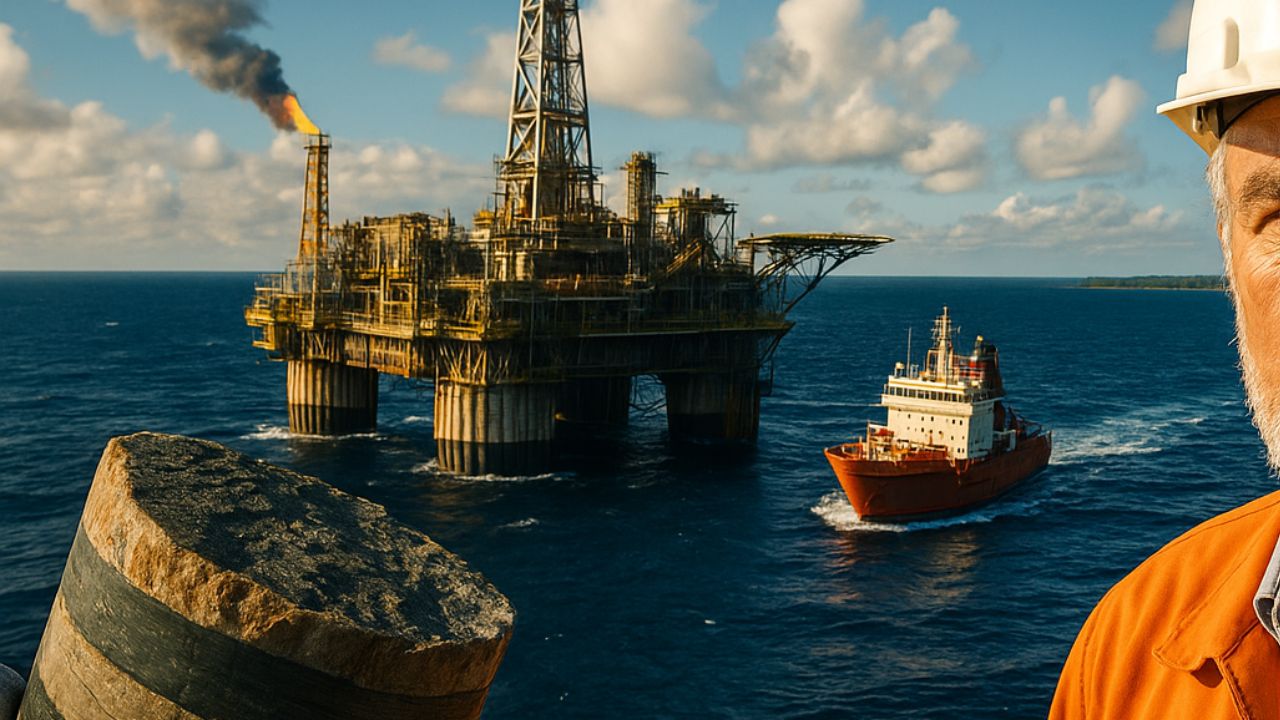


Geophysicist Reveals the Inside Story of How Brazil Found the Pre-Salt, Warns That Pre-Salt Production Will Start to Decline from 2027, Explains the Role of the Equatorial Margin in New Oil Production in Brazil, and Shows How Royalties Could Make Amapá the Richest State in Brazil
Over the past few decades, Brazil found the pre-salt and changed its own energy trajectory. A discovery that was not by chance, but the result of the silent work of geophysicists, engineers, and teams on board ships that scour the seabed in search of oil signals.
Now, with pre-salt production approaching its peak and an oil production in Brazil that could begin to decline as early as 2027, the country faces a crossroads: either it opens a new frontier in the equatorial margin and creates conditions to have the richest Amapá in Brazil, or it returns to relying on imports and increasingly expensive fuel.
Next, you will understand how Brazil found the pre-salt, why there is a production curve that will inevitably decline, and what the strategic weight of the equatorial margin is for the future of oil production in Brazil.
-
Oil production grows in Rio, but reserve replacement raises a warning sign

-
Petrobras is expected to complete the drilling of the Morpho well in the Foz do Amazonas in August 2026, the first well in the Equatorial Margin, an oil frontier that the ANP estimates at more than 30 billion barrels and could redraw the map of Brazil.

-
Oil returns to the center of concerns with tension between the US and Iran

-
IEA reduces forecast for global oil demand in 2026 after impacts of the Middle East crisis
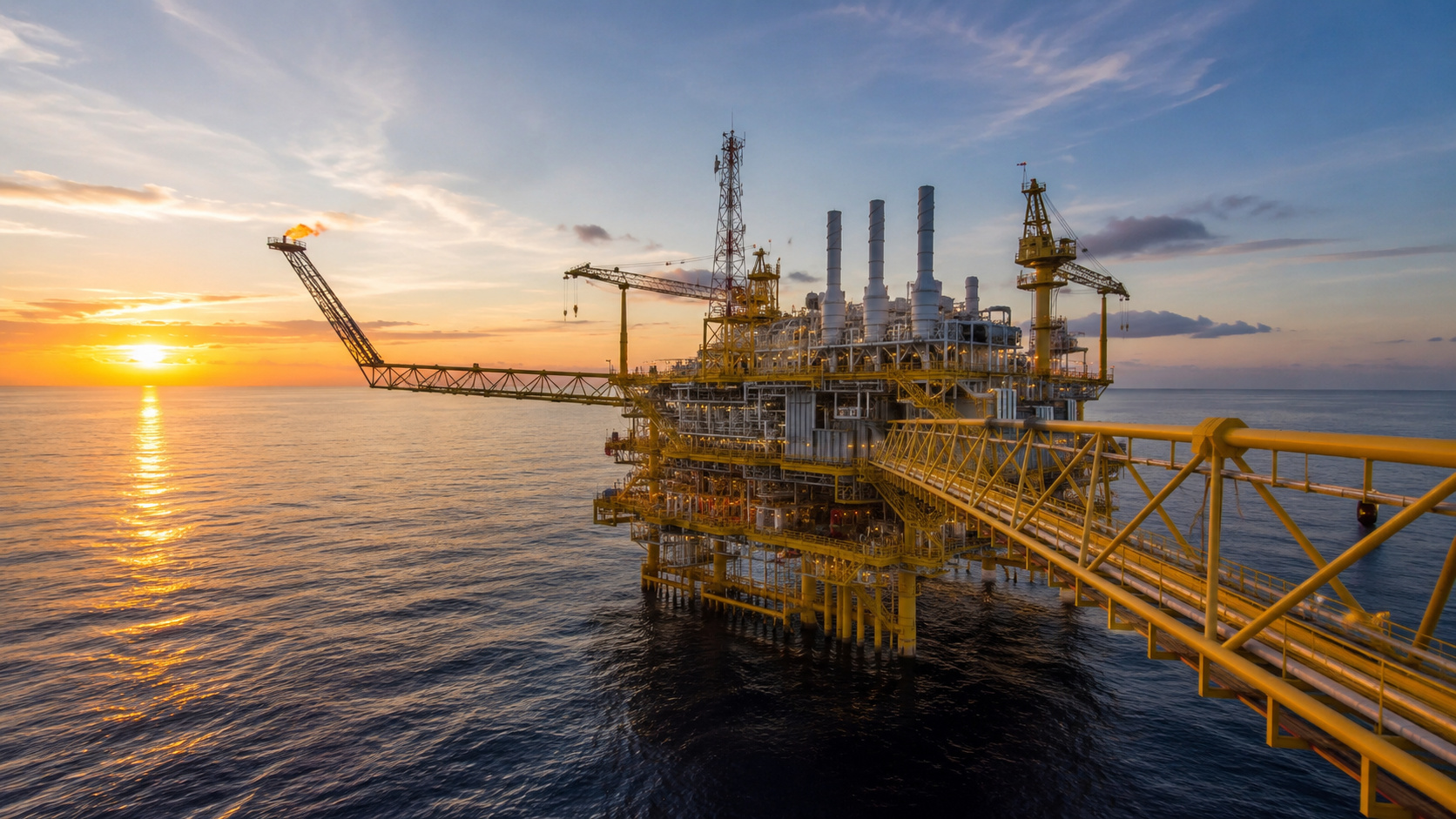


Geophysics, Ships, and Data: How Brazil Found the Pre-Salt
Before talking about wealth, royalties, and the possible richest Amapá in Brazil, it is necessary to go back to the origin of it all. The geophysicist who tells this story started with a degree in geophysics, the field that studies the Earth’s physics: volcanoes, earthquakes, the planet’s internal structure, and also the resources that generate wealth, such as minerals, water, and, of course, oil.
He graduated at the end of 1999, precisely when Petrobras’ monopoly on oil was broken. The opening of the sector attracted dozens of foreign companies, and by the year 2000, about a third of the world fleet of seismic data acquisition ships was on the Brazilian coast, but there were almost no trained professionals to operate these systems.
It was in this scenario that he boarded a data acquisition ship. These ships fire air bubbles into the water, generating waves that pass through the layers of the subsoil and return to long cables filled with sensors. By analyzing how these waves reflect, geophysics can determine where there is water, where there is gas, and where there are oil reservoirs.
Years later, he learned: the data he helped acquire was precisely what was used for Brazil to find the pre-salt. It was not luck. It was cutting-edge technology in an extremely challenging environment.
Salt, Artificial Intelligence, and a Hidden Reservoir


The challenge of Brazil finding the pre-salt is that the oil is under a true mountain of salt. In Brazilian pre-salt areas, this salt layer can be about 2 to 3 kilometers thick, several kilometers below the seabed.
This salt poses a dual problem. First, when it comes to visibility. When seismic waves pass through the salt layer, they lose energy and are attenuated. The signal that returns to the sensors arrives very weak. Visualizing what is below the salt is like trying to see through thick, foggy glass.
Secondly, when it comes to drilling. The salt behaves like a plastic material: if you open a space, it “closes” again, like gelatin. Petrobras needed to develop specific drilling technologies in salt, cementing the well as it progressed, building an internal “wall” so that the hole would not collapse.
Given this scenario, the team that participated in the pre-salt discovery turned to artificial intelligence techniques when they were still in their infancy in the oil industry, back in the early 2000s. The idea was to use algorithms to improve the quality of seismic data degraded by salt and try to interpret what was hidden beneath the layer.
The result was what the whole world already knows: Brazil found the pre-salt, identified a huge system of oil reservoirs in ultra-deep waters, and managed to turn this discovery into large-scale production.
Production Curve, Recovery Factor, and the Pre-Salt Clock
Every major reserve follows a similar logic. First comes the discovery, then the development of the fields, the increase of pre-salt production to a maximum level, and finally, the decline.
This happens because it is not possible to extract 100% of the oil from a reservoir. There is a recovery factor, which is the percentage of oil that can effectively be extracted with the technologies available. In the case of the Campos Basin, for example, this factor is around 28%: less than 30% of what is underground becomes produced oil.
Oil production in Brazil follows this logic. The Campos Basin had its peak and began to decline. The pre-salt emerged as the new great frontier, creating a “bridge” between the decline of the old production and the growth of a new oil province.
However, the clock is also ticking for pre-salt production. According to the geophysicist, the decline phase of the pre-salt curve begins around 2027. This means that, from then on, the daily extracted volume tends to decrease. If nothing replaces this production, the oil production in Brazil as a whole will begin to shrink.
He summarizes the problem directly: if the country allows the curve to decline without having a new production “anchor,” dependence on imports will surge and pump prices could explode. That is why, after Brazil found the pre-salt, the next step must be to find the next great frontier.
Equatorial Margin: The New Frontier That Could Change Everything
This new frontier already has a name and location: equatorial margin. It is an extensive band of sedimentary basins in the north of the country, off the coast of Amapá and other states, with geological characteristics similar to neighboring areas where Guyana is experiencing an oil production boom.
In the geophysicist’s view, the equatorial margin is an opportunity the size of the pre-salt – or even greater. He emphasizes that discoveries in Guyana multiplied the country’s GDP in a few years, precisely because of oil. If something similar happens on the Brazilian side, the impact on oil production in Brazil and on revenue will be enormous.
This is where the expression richest Amapá in Brazil comes in. As the fields in the equatorial margin are located in the projection of the Amapá coast, production royalties would go to the state. With the full exploration of this frontier, Amapá has the potential to become, in terms of per capita revenue, the richest Amapá in Brazil, with a tax base comparable to or greater than that of states that are today much more industrialized.
Not by coincidence, federal deputies and local leaders are closely monitoring every step of the discussion on licensing, the environment, and exploration in the equatorial margin, keeping an eye on the future royalties that could reinforce both the state budget and the capacity for investment in infrastructure, health, and education.
The Crossroads: Environment, IBAMA, Petrobras, and the Risk at the Mouth of the Amazon
If the equatorial margin could guarantee the future of oil production in Brazil and help make richest Amapá in Brazil a reality, why does the topic generate so much controversy?
The sensitive point is the environmental risk. The area of the equatorial margin is relatively close to the mouth of the Amazon River, a region of enormous ecological relevance. In the event of a serious accident, such as a large oil spill, there is fear that ocean currents could carry the oil to the mouth and, potentially, upriver, causing a disaster of large proportions.
Petrobras, on the other hand, argues that its simulations indicate the opposite: in modeled spill scenarios, the currents would tend to carry the oil the other way, without reaching the mouth of the Amazon.
In this context, the conflict lies between:
- environmental agencies, such as IBAMA, worried about preventing any elevated risk to the Amazon and the northern coast
- Petrobras and the government, pressured by the need to ensure that oil production in Brazil does not enter a free fall after the peak phase of pre-salt production
- local governments and parliamentarians who see in the equatorial margin the chance to see the richest Amapá in Brazil, with royalties financing a structural transformation in the state
The geophysicist warns that the decision is not simple, but also reminds us that failing to decide is, in practice, opting to reduce oil production in Brazil, increasing dependence on imports in an unstable global scenario.
Royalties, Oil Cities, and the Cascade Effect of Production
When Brazil found the pre-salt, the main beneficiary in royalties was the Santos Basin, joining the Campos Basin. Municipalities like Macaé and Campos dos Goytacazes became symbols of so-called “oil cities,” with budgets boosted by production revenues.
These royalties do not just benefit companies and large investors. Landowners with onshore production receive shares, municipalities compete for the projection of fields off the coast, and entire states reconfigure their budgets.
In the case of the equatorial margin, the logic repeats itself: robust production in this region changes the scale of transfers to the north of the country. If the projects move forward, the richest Amapá in Brazil ceases to be just a catchphrase and becomes a plausible scenario, in line with what happened in other countries that had their economies reshaped by oil.
At the same time, the geophysicist reminds us that the sector experiences cycles of euphoria and crisis. He cites the sharp fall in oil prices around 2015–2016, when the cost of producing a barrel in the pre-salt was higher than the selling price, which led to the temporary halt of projects until technology became cheaper and the market adjusted.
Oil, Energy Matrix, and Dependence on Derivatives
Even with the debate on renewable energies and changes in the energy matrix, the specialist highlights an uncomfortable and unavoidable point: it is not just fuel that depends on oil.
Gasoline, diesel, and aviation kerosene may, in part, be replaced by electrification or new technologies in the long term. However, plastics, electronic components, synthetic fibers, packaging, and a myriad of everyday products remain deeply linked to the oil chain.
He makes a simple exercise: look around the environment you are in right now. A good part of what you see has a direct or indirect origin in oil derivatives. This means that, even with a slow transition in transportation, there will be substantial demand for oil for a long time.
Therefore, the discovery of the pre-salt and the possible opening of the equatorial margin are not just “short-term bets,” but decisions that define the country’s role in the global supply and in the balance of oil production in Brazil in the coming decades.
What Is at Stake from 2027 Onwards
Summarizing the equation that the geophysicist presents:
- Brazil found the pre-salt and ensured a phase of strong production growth
- This pre-salt production is expected to enter decline from 2027
- Without a new frontier, oil production in Brazil risks falling sharply, increasing internal costs and dependence on imports
- The equatorial margin emerges as the best candidate to replace and expand this production, with the potential to transform the richest Amapá in Brazil into a reality built on royalties and investments
- The decision involves a delicate balance between environmental risk, energy needs, and regional development
In other words, the moment when Brazil found the pre-salt was the chapter that took the country out of a scenario of greater vulnerability. Now, how the country will handle pre-salt production, the opening of the equatorial margin, and the future of oil production in Brazil will define whether this story will be one of continued wealth or loss of prominence.
And what about you, what do you think: should Brazil prioritize the exploration of the equatorial margin to ensure oil production in Brazil and make the richest Amapá in Brazil a reality, or should it curb these plans due to environmental risks in the Amazon region?






O que precisa na verdade é a humanidade em geral, é procurar fazer um bom planejamento familiar e baixar a taxa de fecundidade no planeta Terra pq do jeito que está população está crescendo tão rápido, que esses encontros pra discutir aquecimento global, não vai resolver nada, enquanto não chegar uma conclusão que esse aquecimento global está no crescimento da população mundial.
O povo do amapá ficará na mesma pobreza e os ricos mais ricos ,pura ilusão.
Aqui não e Noruega ,que usa para investir em educação,além disso ,o amapaense e direita,desenvolver e divisão de renda é pauta da esquerda,acorda povo.
O BRASIL precisa e muito explorar este e outros petróleo conforme elaborou e progetou o fantástico e sucesso do Pré-sal. lembre-se progresso e responsabilidade ambiental e Social combina com qualidade de vida e equilíbrio financeiro tanto na iniciativa privada quanto na iniciativa pública.