






 Portuguese
  Spanish


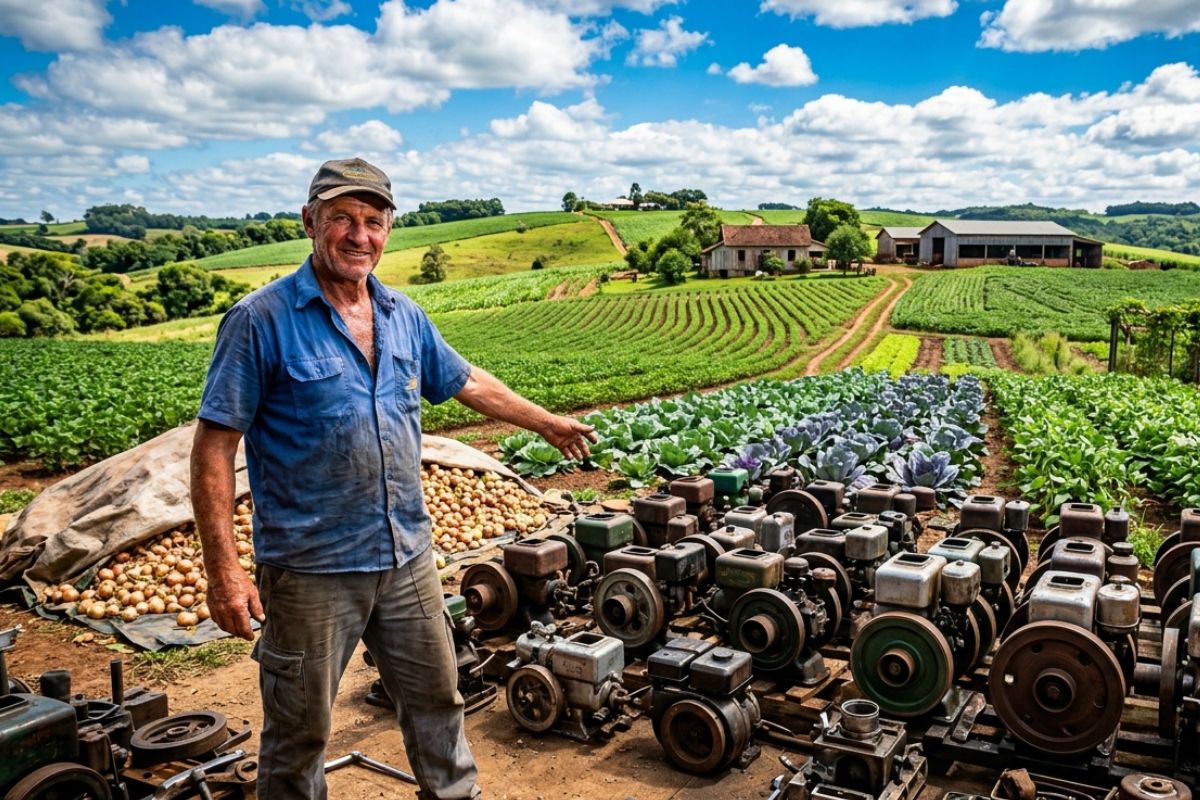

In Ribeirão Matilde, in the interior of Atalanta, the producer maintains the routine in the field with beans, onions, cabbage, honey, soybeans, and corn, and shows how planting everything became a strategy to avoid depending on a single crop
In the interior of Atalanta, in Ribeirão Matilde, a farmer summarizes his own logic of survival in the field with a simple phrase: plants everything. Beans, onions, cabbage, honey, soybeans, and corn coexist on the same property, in a constant attempt to balance costs, climate, and price.
The family’s history also helps explain their persistence. The producer is the grandson of a German who fled the war in the early last century, crossed the sea by ship, and, after passing through Braço do Norte, arrived in the region still in the 1920s. The work started with little, continued with much struggle, and today remains at the same pace, even when a harvest reduces income.
The origin of the family and the arrival in Atalanta

The family narrative begins with the grandfather coming from Germany, fleeing the war, and first settling in Braço do Norte. Later, the move to the current region would have occurred in 1928, in a directionless movement, seeking land and a chance to start over.
-
Producer receives news and had to cull almost the entire herd, bounced back with the help of compensation, and is now producing 450 liters of milk per day in SC.

-
Quail Eggs Reveal a “Secret Code” on Their Shells Explaining Unique Patterns and Colors

-
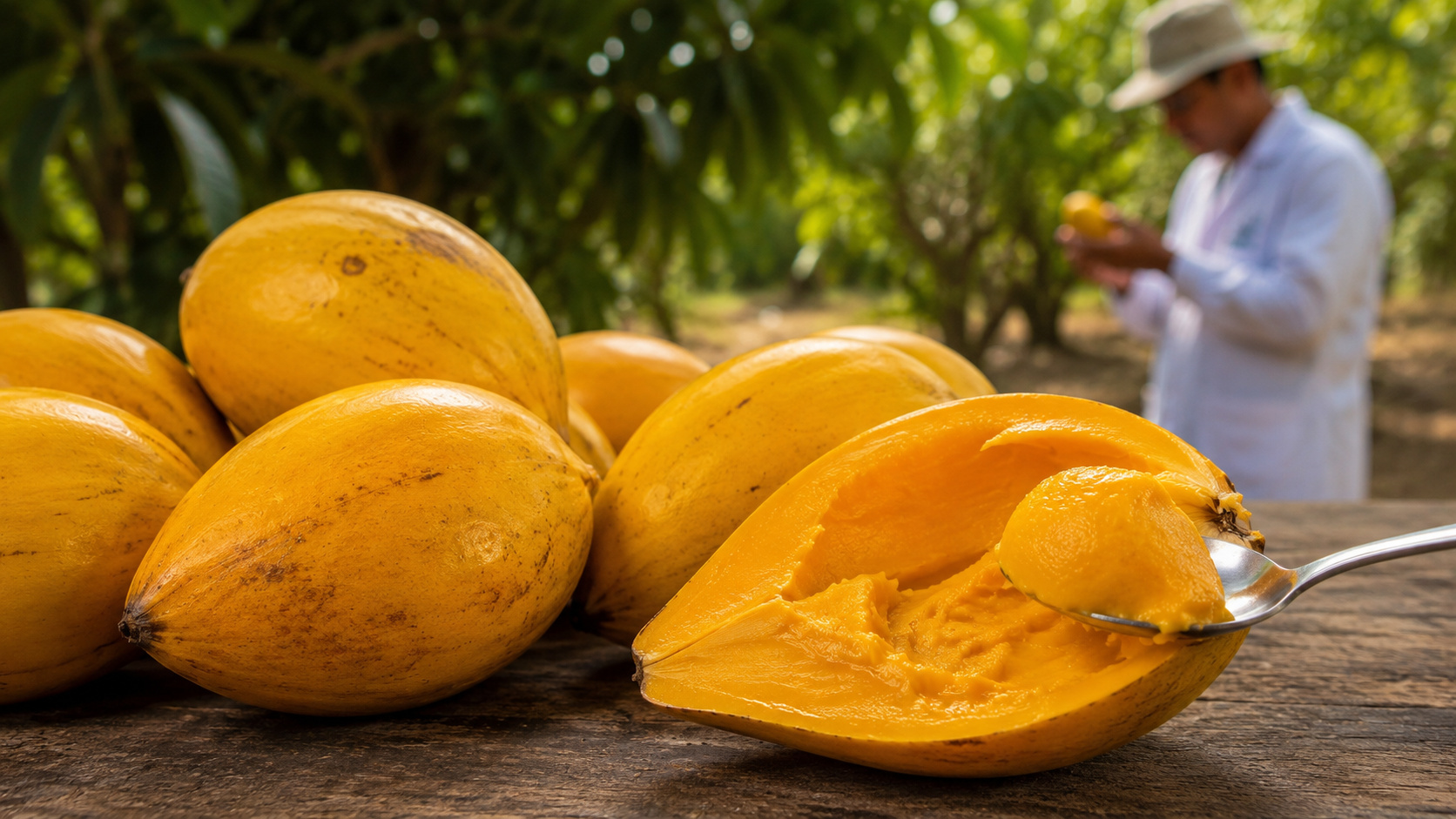
Rare Tropical Fruit Canistel, with Egg Yolk Color and Caramel Flavor, Gains Interest from Researchers and Small Producers in Brazil
-
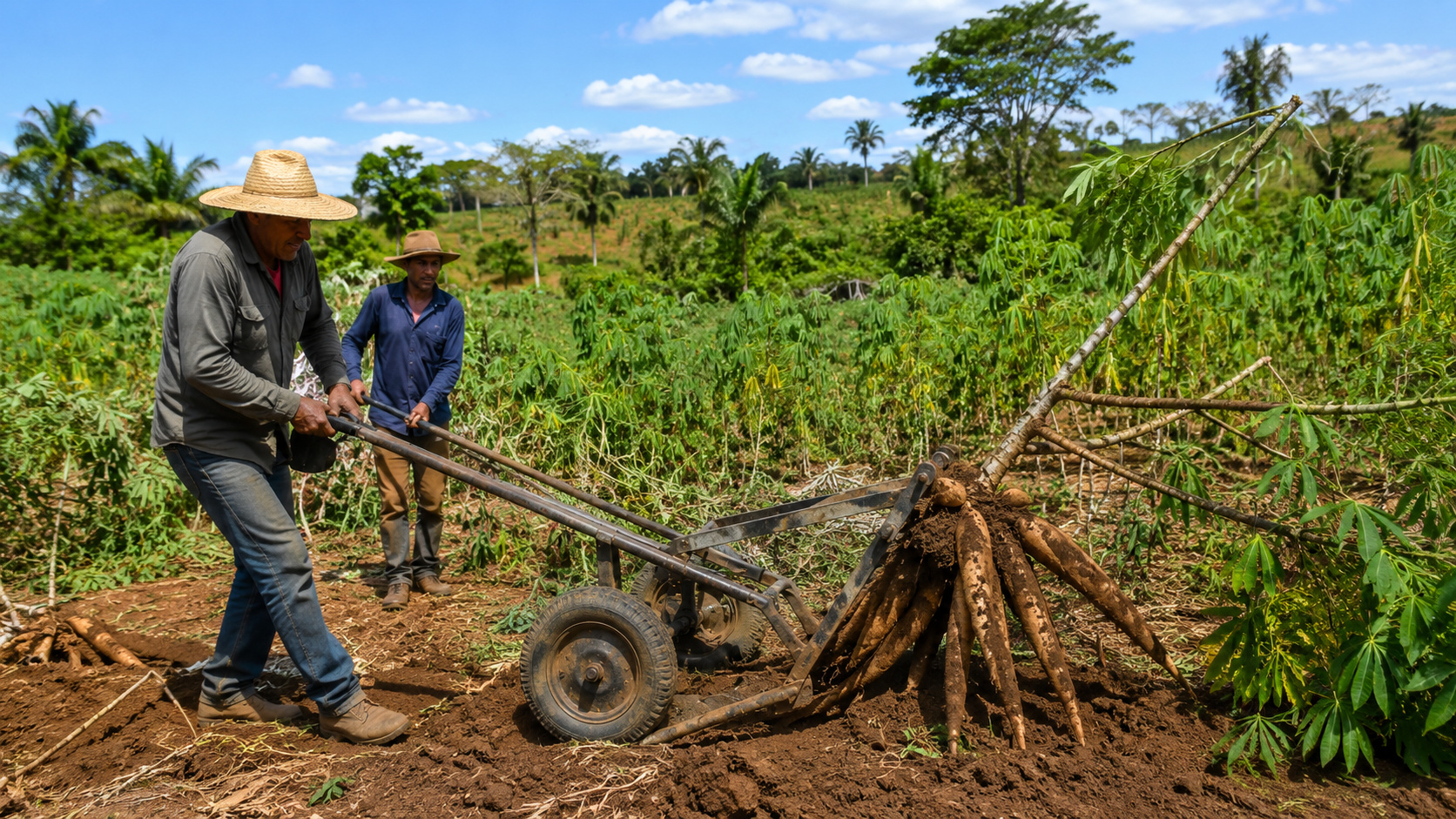
Brazilian Farmers Develop Wheeled Metal Lever to Ease Cassava Harvesting Without Heavy Machinery


The arrival was marked by difficulty. Without food, without production, and with little structure, the initial survival came from a small patch of potatoes left by the previous resident. The adaptation, according to the testimony, required clearing land with an axe, cutting down brush, making a burn, and planting the basics, such as corn and beans.
Hard work, losses, and the role of the older brother
Another strong part of the story involves the producer’s father, Irineu, who passed away on October 5, 2021. Before that, the family already carried the memory of a difficult period when the father died young, and the older brother, Augusto, took on the responsibility of running the household and raising the siblings.
The work was day and night, with ingenuity, cassava, and a demanding routine during frost seasons. The idea that remains is clear: the family did not have an “easy” start and advanced in the field with continuous effort.
“Plants everything” as a strategy to avoid going broke in the field
In the current property, the phrase plant everything appears as a practical rule. The producer explains that you can’t “put all your eggs in one basket.” When one crop fails, another needs to absorb part of the loss and keep the wheel turning.
This logic becomes even more evident when onions come into the conversation. Even with production considered good, the price plummeted, resulting in losses. Diversification, therefore, becomes a buffer: beans, cabbage, honey, soybeans, and corn serve as support to keep expenses covered and allow for a fresh start in the next harvest.
The impact of onions and loss per hectare
The heaviest point of the report is the onion. Production was said to be good, but the price was described as “terrible,” with sales far below costs. The producer states that the production cost was around R$ 1.40 to R$ 1.50 per kilogram, while sales occurred at much lower levels, with losses varying according to the type of box and classification.
He calculates an average loss of about R$ 25,000 per hectare this harvest. The previous year also saw a loss, around R$ 12,000, according to the report. The feeling is one of accumulated pressure, because the accounts don’t add up and the debt needs to be pushed forward with renegotiation.
Climate, disease, pesticide, and the risk of reducing planting
Besides the price, there is fear of a rainier climate and the increasing difficulty of management. The producer describes that, with excessive rain, onions tend to become more “soft,” with more disease, and applications become difficult to make at the right time. Each new pest becomes a new cost, and there is no “cheap product” for onions.
He says he intends to reduce the area, citing concerns about the climate and the difficulty of maintaining quality, especially during critical periods like September and October, when the plant is larger and more sensitive.
Beans, cabbage, soybeans, and corn as support for the property
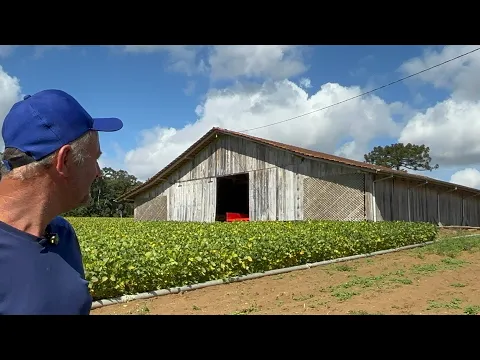

While onions tighten, other crops emerge as a breath of fresh air. Beans are treated as a strong product of the property, including direct sales to consumers, with prices mentioned in the report of R$ 6 per kilogram for black beans and R$ 10 for red beans.
Cabbage enters as a crop with a shorter cycle, with a considered lower cost, and a price that varies according to the buyer. Soybeans appear as a bet that “needs to have good production” to compensate. Meanwhile, corn is part of the annual planning and is also linked to management and irrigation during dry spells.
More than 60 engines and a collection that became a brand of the property

In the middle of the farm, a detail stands out: the collection of engines. The producer is described as someone who has more than 60 engines, all functioning, along with machines like bean beaters and threshers.
He explains that the collection started with an engine that was already in the family, then came the second, and the interest grew because each engine “works differently,” has a different roar, and its own behavior. There are stationary engines, different models, and a clear concern for originality and maintenance.
Honey, bees, and the care with pesticides near the hives
Bee farming appears as another source of income and also as an environmental thermometer. The producer reports having about 20 to 25 hives, with strong families and honey production, sold at R$ 25 per kilogram.
He also comments on the care with pesticides, recalling that some products used in the past were dangerous for bees and are no longer allowed today. The presence of bees becomes a sign of balance, and honey is another piece in the plan of someone who plants everything.
Sheds, irrigation, and space to store onions
The structure of the property is also expanding. The producer talks about sheds, measurements, and the construction of areas for implements and storage. One point mentioned is the need for space to store onions, as those who can hold the product longer can get a better price later, but this requires structure.
In this scenario, the phrase plants everything stops being just a way of speaking and becomes a method. Diversifying is what allows one to continue, even when one year becomes a headache and the next needs to start from scratch.
In the end, the same idea remains that the producer repeats as advice: you can’t give up easily, you have to keep “fighting” as long as there is health and the ability to work.
In your opinion, plants everything is the safest path for the small producer or does it still make sense to bet heavily on one crop when the price is good?


