






 Portuguese
  Spanish
  4 min of reading
  0 comments


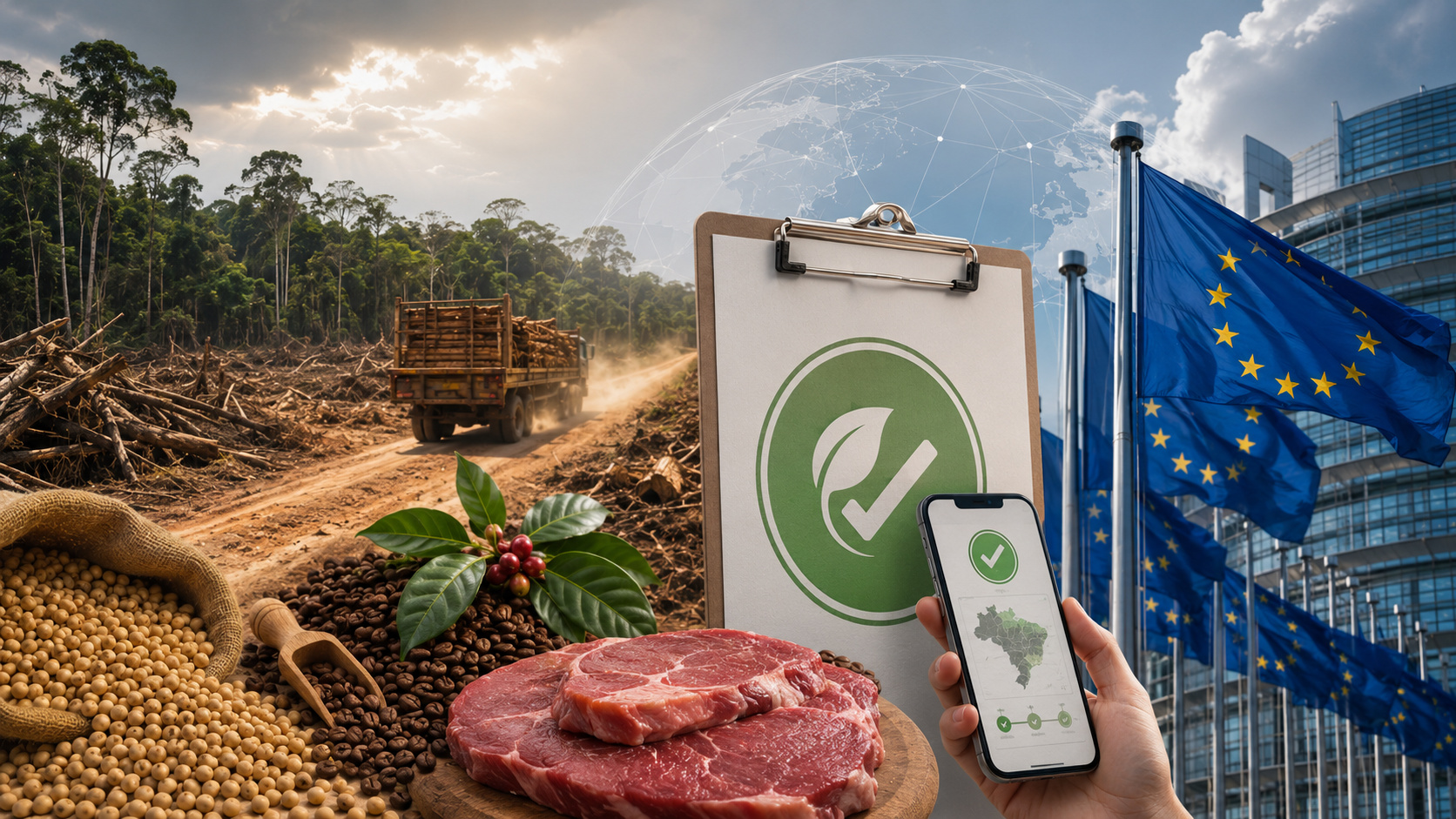
New anti-deforestation system of the European Union starts in December 2026 and requires traceability of soy, meat, and coffee from Brazil.
From December 30, 2026, the European Union begins to apply the new anti-deforestation rule for large and medium-sized companies. The rule, known as EUDR, requires that products such as soy, beef, coffee, cocoa, wood, rubber, and palm oil are proven to be deforestation-free to enter or leave the European market.
For Brazil, the impact can be significant because the rule targets precisely strong products of the national export agenda. Reuters and Greenforum reported that the Brazilian government asked the European Union to postpone and review the EUDR, arguing that it could affect almost one-third of Brazilian exports to the bloc, including soy, meat, coffee, cocoa, rubber, wood, and derivatives.
Europe will require proven origin of soy, meat, and coffee
The new rule changes the logic of exportation. It will not be enough to prove that the product legally left Brazil. To sell to the European bloc, companies will have to demonstrate that the merchandise did not come from deforested areas after December 31, 2020.
-
Low-Demand Brazilian Beef Offal Gains Popularity Abroad: Indonesia Purchases $19.5 Million, Boosting Revenue and Reducing Waste

-
Soy Expansion in Former Brazilian Savanna Sparks Water and Land Conflicts in Major Agricultural Frontier
-
Mexican Pest Threatens U.S. Cattle Herds at Historic Lows, Potentially Boosting Brazilian Beef Exports as Burger Prices Soar

-
Avocado Boom for European and U.S. Markets Fuels Water Crisis in Drought-Stricken Chilean Region


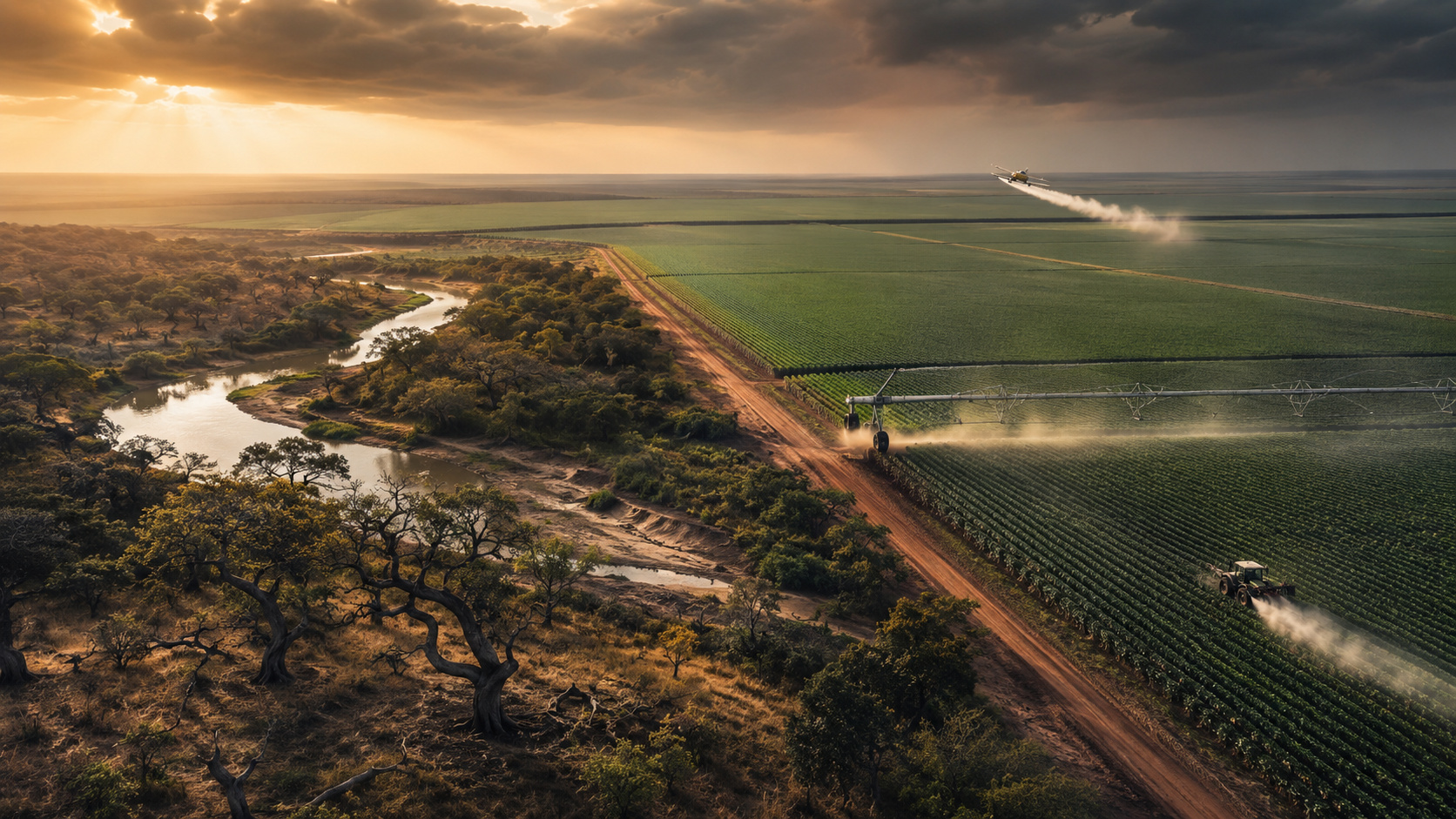


The requirement also involves geolocation data of the productive areas and a due diligence statement, a document in which the operator assumes that they verified the origin, assessed risks, and proved compliance before placing the product on the European market.


In practice, Europe creates a kind of environmental passport for commodities. Soy, meat, and coffee will need to carry not only an invoice and commercial documentation but also traceable proof of the production origin.
Rule may affect almost one-third of Brazilian exports to the European Union
The Brazilian warning is not small. According to Reuters, the government stated that the legislation could affect about US$ 15 billion in Brazilian exports, within a group of products that totaled US$ 46.3 billion in 2023.
This places the EUDR at the center of the trade relationship between Brazil and the European Union. The new rule does not target just one specific sector, but several sensitive chains in agriculture and the forest-based industry.
The problem is that these chains have different degrees of traceability. Coffee and soy may be easier to map in some cases, but cattle farming is more complex because the animal can pass through different properties before reaching the slaughterhouse.
Legal deforestation in Brazil can also become a barrier in Europe
One of the most controversial points is that the European rule works with its own benchmark. Products associated with areas deforested after December 31, 2020, may face blockage in the European market, even when the opening of the area occurred within Brazilian environmental rules.
This point explains the reaction of the Brazilian government, which classified the measure as unilateral and punitive, according to Reuters. The criticism is that the European Union starts to impose its own environmental criteria on international trade, without necessarily considering all the legal differences between producing countries.
For the producer, this creates a delicate situation: being compliant in Brazil may not be enough to sell to Europe.
Cattle farming may be one of the most pressured chains
Beef tends to face one of the most difficult adaptations. Unlike a crop with a more direct origin, cattle can be born on one farm, raised on another, fattened on a third, and only then proceed to slaughter.
With the EUDR, slaughterhouses and exporters will have to strengthen controls over the origin and history of the chain. The challenge is not just knowing where the animal came from at the time of slaughter, but reducing risks linked to indirect suppliers.
This can increase costs, raise documentary requirements, and favor companies that already have robust tracking systems.
Postponement gave time, but did not relieve pressure on Brazilian agriculture
The European Union has already postponed the EUDR schedule. The current deadline starts on December 30, 2026 for large and medium-sized companies and on June 30, 2027 for micro and small companies.
The postponement does not dismantle the rule. It only gives more time for companies and governments to organize systems, data, and compliance processes.
For Brazil, the countdown continues. Exporters who cannot prove deforestation-free origin may lose access to the European market, even having a product competitive in price, volume, and quality.
Traceability has become the new frontier of agricultural trade
The EUDR shows that the global food trade has entered a new phase. Previously, productivity, price, and logistics were the major differentiators. Now, proven environmental origin has also become a market condition.

Brazilian agribusiness continues to be a global powerhouse. But, starting in December 2026, selling soy, meat, and coffee to Europe will require more than just producing a lot: it will be necessary to prove, with data, that each shipment does not carry deforestation at its origin.
The message is clear. Those with traceability sell. Those without may be left out.





Be the first to react!