Portuguese
  Spanish


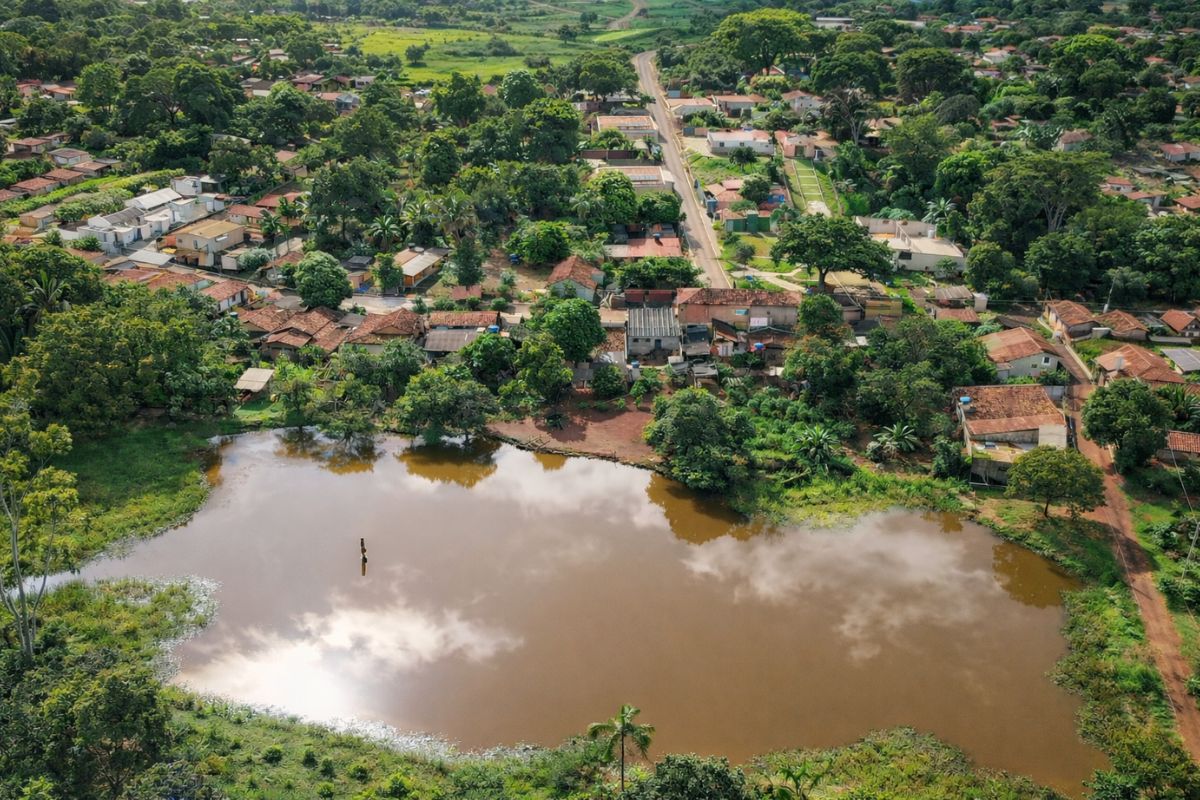

In Frutal, the Bandeira Mining Site Became a Village Stopped in Time: Prohibited Mining, Rare Diamonds, and Simple Houses Preserve the Memory of Wealth
The mining was once the promise of a life change for those who arrived at the Bandeira Mining Site in Frutal, in the west of Minas Gerais, almost on the border with São Paulo. The village was born from the sparkle of diamonds found in the 1940s, attracting people from many places and became synonymous with quick hope.
But time turned the page. With environmental laws, mining was prohibited in 2002, activity declined, part of the population left, and the place began to carry a silence typical of those who witnessed the peak and then saw everything diminish.
Where the Bandeira Mining Site Is and How the Village Changed

The Bandeira Mining Site is a rural community linked to the municipality of Frutal. The city hall is about 20 km away, and the feeling for those who arrive is of a more hidden and forgotten place, although still maintained by the residents themselves.
-
In the city that the market called “road cockroach,” between Balneário Camboriú and Florianópolis, he launched a planned neighborhood worth R$ 1 billion with a marina for 90 boats and sold 80% of the lots in the first phase in 1 week.

-
At a depth of 5,000 meters, where there is no sunlight, researchers found ancient DNA preserved in the mud of the South Atlantic and discovered signs of organisms that did not match known records.

-
At 77 years old, a retired woman who never tires of learning completes her second degree in design in Ceará and moves people by revealing the help of her 98-year-old mother in the final project.
-
China’s masterstroke: a plant capable of regrowing even when buried by sand helps to recover more than 7,300 hectares of desert with 5 million seedlings, roots over 10 meters deep, and rainfall below 150 mm per year.


In the central square, what appears is a contrast: a simple, small space, but well-kept, with benches, shade, a playground, and even exercise equipment. At the same time, there is an abandoned building that stands out as the main sign of visible deterioration.
The Discovery of the Diamond and the Beginning of Mining
The origin of mining is told as a family story. A relative known as Uncle Zico, named Aladin, supposedly crossed a stream, saw a shiny stone, and took the find to the family in Planura. The grandfather recognized it as a diamond, and the news became the trigger for the formation of the village.
In the beginning, the structure was minimal. There were no real houses, only shacks, and the work was hard, with carts and animals to pull gravel. Later, with more people arriving, trucks, commerce emerged, and the village gained substance.
Why So Many Simple Houses in a Place with a Reputation for Wealth

A question that arises during the visit is straightforward: if there were so many diamonds, why didn’t the place become a millionaire’s village? The accounts of residents compare the mining to a game of chance. Those who find a good stone tend to spend, believing they will find another soon after.
The problem is that reality does not match the illusion. Many people find a valuable stone and then spend months or years without finding another, and without saving what they earned, they end up returning to the same situation. Some saved up and stabilized, but many lived going from mine to mine without actually getting rich.
The environmental marks and the reason for the end of mining
Outside the central area, the harsher part of the story appears: craters, cliffs, and signs of excavation. In the final period, according to residents, it was no longer just the miner with a sieve and wheelbarrow. Large machines began to operate, removing soil, taking it to wash in the river, and leaving a more aggressive impact.
The result was the tightening of restrictions. Mining was eventually banned, and according to reports, buyers linked to the activity were even arrested at the time. From then on, the village needed to reorganize under a different logic.
How residents live today and what still keeps the village standing
After the end of the mining, daily life began to depend on other sources. Residents mention work in a nearby orange juice factory, in sugarcane plantations, and also in neighboring cities like Planura. Frutal appears as a reference for services, education, and commuting.
The village has a school from 1st to 9th grade. For high school, students commute to Frutal, and for college, they also need to leave. In terms of health, there is a basic unit with a doctor once a week, and for emergencies, there is transportation for care outside.
A small village, with empty houses and fishing tourism


The Bandeira Mining has dirt roads and many simple houses, some closed and even for sale, but still owned. The region is also used by those who enjoy fishing, as the Rio Grande is less than 3 km away, according to reports.
There are also curiosities from everyday life, such as residents talking about running water without charge, linked to a spring and an artesian well, as well as orchards and abundant planting that “yields everything.”
What remains as memory and what became a symbol of abandonment
In the square, the closed building of the Catholic Church has become a portrait of what has been lost. The roof may have collapsed, the space was closed due to risk, and time did the rest. Still, the place remains a meeting point, with outdoor parties happening whenever possible.
The mining may have ended, but it continues to organize the memory of the place. For those who have lived there for decades, the village is less about wealth and more about belonging, routine, and a way of life that has endured even after its peak.
Do you think the Garimpo do Bandeira should invest in memory tourism of the mining or bet on other activities to attract people back?