






 Portuguese
  Spanish
  5 min of reading
  0 comments


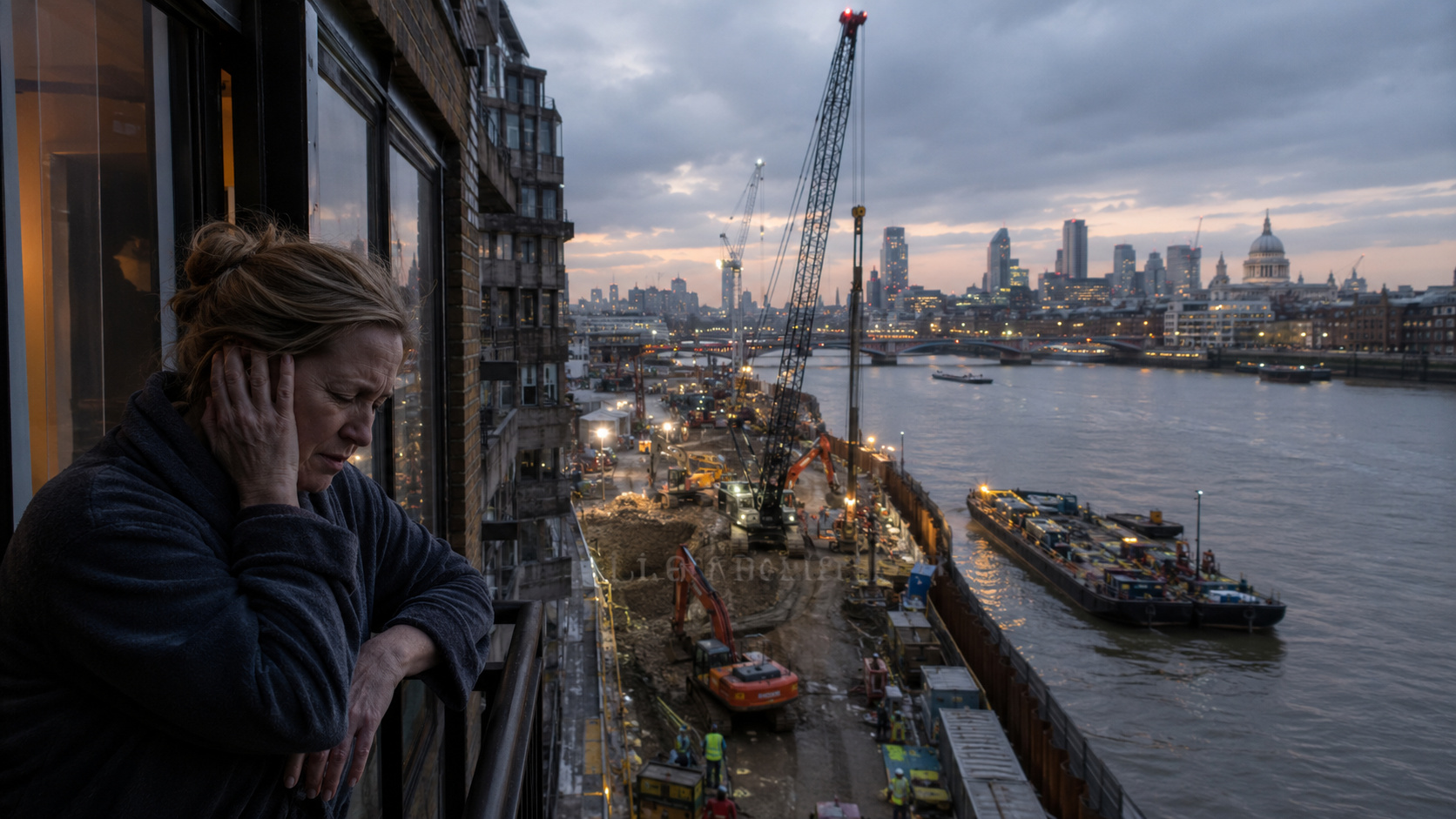
London’s super sewer went into operation to reduce pollution in the Thames, but the billion-pound project also left a decade of noise, vibration, trucks, barges, and wear and tear for residents who lived next to the construction sites
The giant underground project, costing £5 billion, began operating in London with the promise of cleaning the Thames and reducing sewage discharge into the river. The Thames Tideway Tunnel has already prevented 5.5 million tonnes of sewage from reaching the water.
The investigation was published by Southwark News, a local newspaper covering news from Southwark. The case shows the other side of a major sanitation project: the environmental gain for the entire city came with years of noise and disruption for those living near the construction sites.
The tunnel is 25 km long and connects Acton, West London, to Abbey Mills, Newham. The structure was created to intercept sewage overflow from 34 discharge points among the most polluting along the Thames.
-
Survivor of 1966 SS Daniel J. Morrell Shipwreck in Lake Huron Recounts 38-Hour Ordeal in Extreme Cold

-
The Greatest Hoax in World Cup History? The Film That Denied Brazil’s 1958 Victory and Exposed How Fake Evidence Can Seem Convincing on TV
-
Fake South Korean Online Stores Offer Shopping Thrill Without Spending Money or Receiving Products
-
The War of Jenkins’ Ear: How a Severed Ear Sparked One of the 18th Century’s Most Unusual Conflicts


London’s Super Sewer was created to hold sewage before it reached the Thames
London’s super sewer functions as a large underground tunnel that receives part of the sewage that could previously go directly into the Thames during system overloads. In simple terms, it acts as a barrier before the waste reaches the river.


The project was designed to retain 95% of the effluents that were previously discharged into the Thames. This figure explains why the project was treated as one of the largest sanitation works in the United Kingdom.
The environmental impact is already evident in the reported operational data. The system held back 5.5 million tonnes of sewage, a volume that would otherwise flow into the river in a city marked by an old and heavily strained system.
25 km Tunnel Crosses London and Connects Important Areas of the Sewage System
The Thames Tideway Tunnel is 25 km long and crosses London beneath the city. It connects Acton, West London, to Abbey Mills, Newham, creating a structure invisible to most of the population.
The tunnel also connects to the Lee Tunnel, an existing 6.9 km structure. This connection helps the system operate together and expands its capacity to retain sewage before it reaches the Thames.
Thames Water is expected to take over management when testing is completed later this year. Until then, the system undergoes evaluations in storm conditions, when water volume increases and demands more from the structure.
Bermondsey Residents Lived Years with Noise on Their Doorstep
For some Londoners, the super sewer appears as an important environmental project. For residents near the Chambers Wharf construction site in Bermondsey, it also became a reminder of years of noise, vibration, and disruptions.
The project brought machines, trucks, barges, and intense movement to residential areas. The result was a heavier routine for those living near the works, even without receiving the same immediate benefit that the city saw in the river.
This point makes the case more complex. The infrastructure serves London as a whole, but the inconvenience was concentrated in specific communities, who felt the daily cost of an underground project that almost no one saw.
Southwark News Detailed the Project’s Numbers and the Burden of Local Disruptions
Southwark News, a local newspaper covering news from Southwark, reported the project’s key figures, such as the £5 billion investment, 25 km of extension, 34 discharge points intercepted, and 5.5 million tonnes of sewage already blocked.
The publication also recorded the local impact at Chambers Wharf, Bermondsey. Residents reported years of disturbance with work happening near their homes and backyards.
This contrast places the project at the center of a debate about territorial justice. The question is direct: when a project benefits the entire city, who should bear the burden of noise, loss of peace, and daily wear and tear?
Tideway CEO celebrated the operation and cited a new testing phase
Tideway CEO, Andy Mitchell, celebrated the completion of the system’s final connection. He stated: “With this final connection complete, the super sewer is fully operational and protecting the Thames.”
He also explained the next phase of the project. “Our next step is to test it in storm conditions, which is why we are closely monitoring the weather forecast, and we will do this over the coming months.”
The statement shows that the system is already operational but is still undergoing an important verification phase. Storm tests serve to observe how the tunnel reacts when the network receives more water and needs to operate under higher pressure.
Work began in 2016 and involved over 20 deep shafts in London
Work began in 2016. The first boring machines entered the underground in 2018, the main excavation was completed in 2022, and the final system integration occurred last autumn.
The construction involved over 20 deep shafts spread across London. Some of these shafts had a width comparable to the dome of St Paul’s Cathedral, which demonstrates the scale of the intervention carried out beneath the city.
The project required an alliance of major infrastructure companies and marked a decade of excavations. For engineering, it was a monumental project. For residents near the construction sites, it was also a long period of daily inconvenience.
Promise of a cleaner river exposes the social cost of major urban works
London’s super sewer promises to improve the water quality of the Thames and drastically reduce the presence of sewage in the river. The system’s operation represents an important environmental advance for the British capital.
At the same time, the case reveals a common problem in major urban works. The benefit is collective, but the direct impact often falls on those living next to the construction sites, with noise, vibration, trucks, and community wear and tear.
The £5 billion structure already protects the Thames and is expected to continue testing before final management by Thames Water. Still, the story leaves a simple lesson: sanitation, mobility, and infrastructure are not just engineering figures, as they also affect the lives of ordinary people.
When a project improves the lives of millions but transforms the routine of some residents for years, what should be the fair limit between urban progress and local suffering? Leave your opinion in the comments and share this post with those who follow infrastructure and environmental topics.





Be the first to react!