






 Portuguese
  Spanish


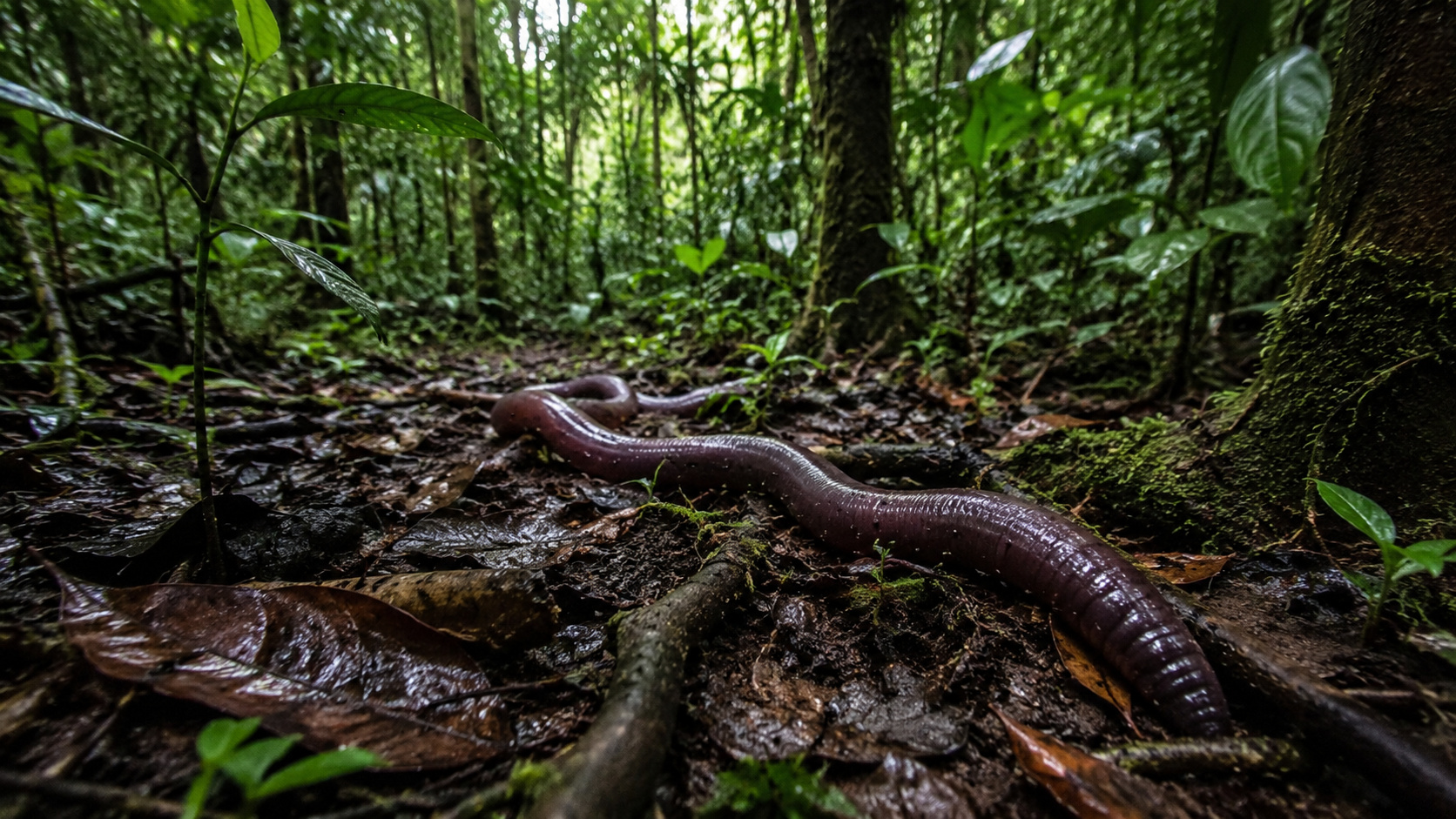

Subterranean species transform organic waste into nutrient-rich humus and help protect the Amazon soil
The giant Amazonian earthworms impress with their size and the ecological role they play away from human eyes.
These annelids, linked to the genus Rhinodrilus, can reach up to 2 meters in length and live in deep galleries where moisture favors their survival.
Despite being almost invisible, these animals help keep the forest healthy by transforming organic matter into fertile humus, rich in essential nutrients.
-
Brazilian YouTube Sensation “Galinha Pintadinha” Celebrates 20 Years, Amassing 65 Million Subscribers and $700 Million in Annual Revenue

-
Fifth-grader’s Project Turns Used Cooking Oil into Over 160,000 Gallons of Biodiesel, Cuts CO₂ Emissions, and Inspires Law in Rhode Island

-
Started with $80 at 17 Selling Used Clothes, Now Aiming for $18 Million with a Network of 50 Thrift Stores

-
17-Year-Old Develops Free App to Prevent Hot Car Deaths, Launches National Campaign in the U.S.




What are the giant Amazonian earthworms like?
The giant earthworms spend most of their lives underground.
Therefore, they are considered true natural soil engineers.
Their movement alters the structure of the soil and favors the balance of the Amazonian ecosystem.
These underground galleries preserve moisture and create internal pathways in the forest soil.
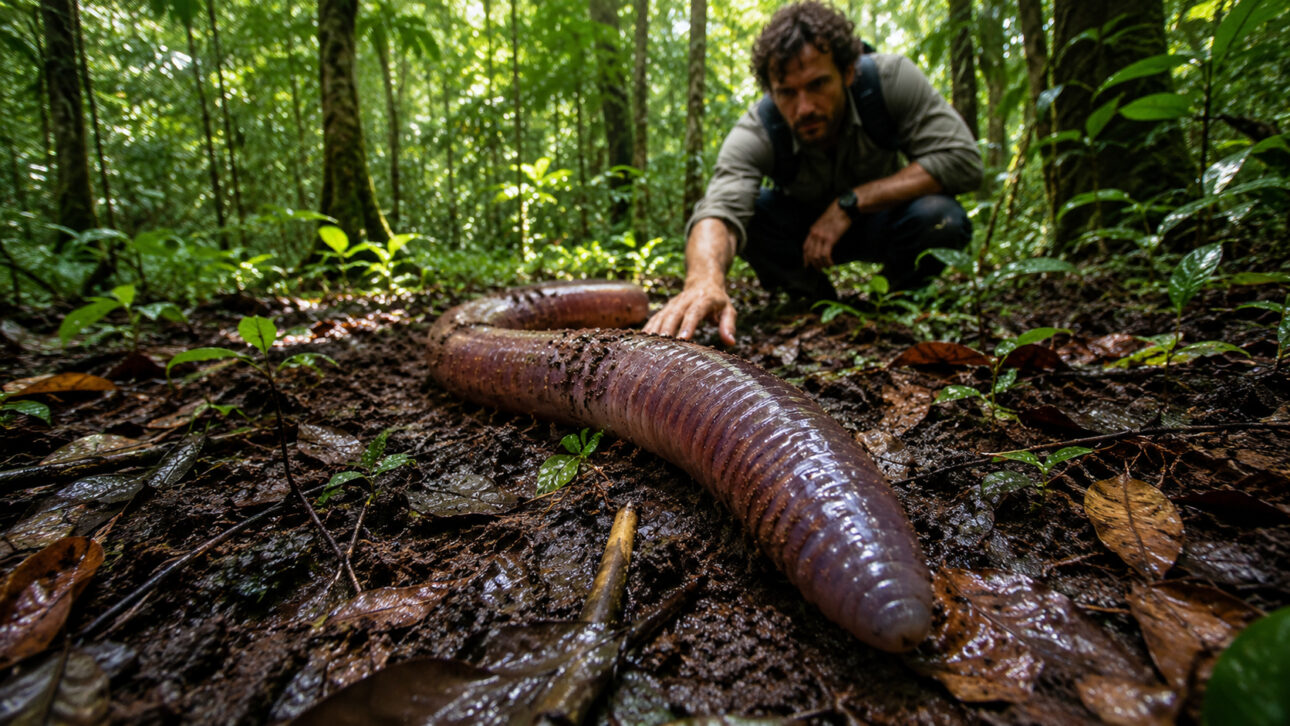
How do these giants transform the forest soil?
During feeding, the earthworms ingest soil mixed with leaves, dead roots, fungi, and other organic residues.
Then, this material is decomposed in the intestine with the help of microorganisms.
Afterwards, the matter returns to the environment in the form of extremely fertile humus.
Research on earthworms and soil indicates that populations of these animals can process tons of organic matter per hectare per year.
As a result, important nutrients return to the soil and help sustain the Amazonian vegetation.

Do underground galleries help protect the forest?
The tunnels dug by worms act as natural channels for rainwater.
Thus, infiltration increases and surface runoff decreases.
Consequently, the risk of erosion is also reduced.
These galleries improve soil aeration.
With more oxygen, roots and microorganisms can keep the underground environment biologically active.
Why is the produced humus so important?
After digestion, worms release coprolites, a type of humus that improves soil fertility.
This material supplies plants with minerals necessary for development.
Among the main benefits are:
- Greater availability of nitrogen, phosphorus, and potassium;
- Better distribution of nutrients between deep and surface layers;
- Stimulus to the growth of Amazonian tree roots;
- Strengthening of the biodiversity present in the soil.
Why are these species threatened?
Giant worms depend on moist, protected, and less compacted soils.
However, deforestation, fires, machinery, and cattle directly compromise this environment.
Without these organisms, the soil loses fertility and becomes more compact.
Its ability to regenerate vegetation can also be reduced.
Conserving the soil also protects the future of the Amazon
Researchers highlight that understanding the functioning of these worms can help in the recovery of degraded areas.
This knowledge can also reduce the dependence on chemical fertilizers in certain projects.
Although they remain hidden, the giant worms of the Amazon sustain fundamental processes for environmental balance.
Therefore, preserving their habitat means ensuring a more fertile, resilient, and biodiversity-rich forest.
What do you find more surprising: the size of these giant worms or the silent role they play in the health of the Amazon? Share your opinion!


