Portuguese
  Spanish


At 17 years old, with only R$ 400 in her pocket and no money to buy clothes in traditional stores, young Michelle Svicero began to hunt for used pieces in Bauru, in the interior of São Paulo, and resell them on the internet. More than a decade later, in 2025, this same girl transformed the improvisation into Release, a network of thrift stores that now aims for 50 stores and R$ 90 million in revenue through franchises. A leap that started from R$ 400 and today relies on a circular fashion market valued at around R$ 24 billion in the country.
According to Exame, the business was born out of necessity: without resources to accompany her friends to shop windows, the young woman started hunting for second-hand clothes and selling them for a profit. According to Diário do Comércio, Michelle Svicero sums up that beginning with a phrase that explains her pioneering spirit: “I started selling online, even before Enjoei existed. I created simple websites and posted the pieces.” From that homemade improvisation to the Release brand, the path was long, and each step helps to understand why thrift stores have ceased to be a niche market.
The R$ 400 that started it all at 17 years old
Before Release existed, there was only a teenager dissatisfied with her own budget. Michelle Svicero was 17 years old and had no money to buy clothes in mall stores like her peers. Instead of giving up on the desire to dress well, she calculated in reverse: if she couldn’t pay a high price, she would hunt for bargains. The R$ 400 she saved became, at the same time, working capital and raw material for a business that no one, at that time, would call promising.
The starting point was the hunt. She scoured pieces in bazaars and clothing thrift shops, chose what had value and resale potential, and returned each find to the market with a new tag. There was no glamour in this. There was work, a trained eye, and the discipline to turn R$ 400 into something bigger with each round of buying and selling. The logic of resale, buying well to sell better, was there from day one.
-
17-Year-Old Develops Free App to Prevent Hot Car Deaths, Launches National Campaign in the U.S.

-
Man Transforms Childhood Building in Detroit into Community Bookstore, Draws 400 to Opening

-
Two Brothers Leave City Life to Build Mud House in the Himalayas with Help from Over 100 Volunteers from 18 Countries, Including Brazil

-
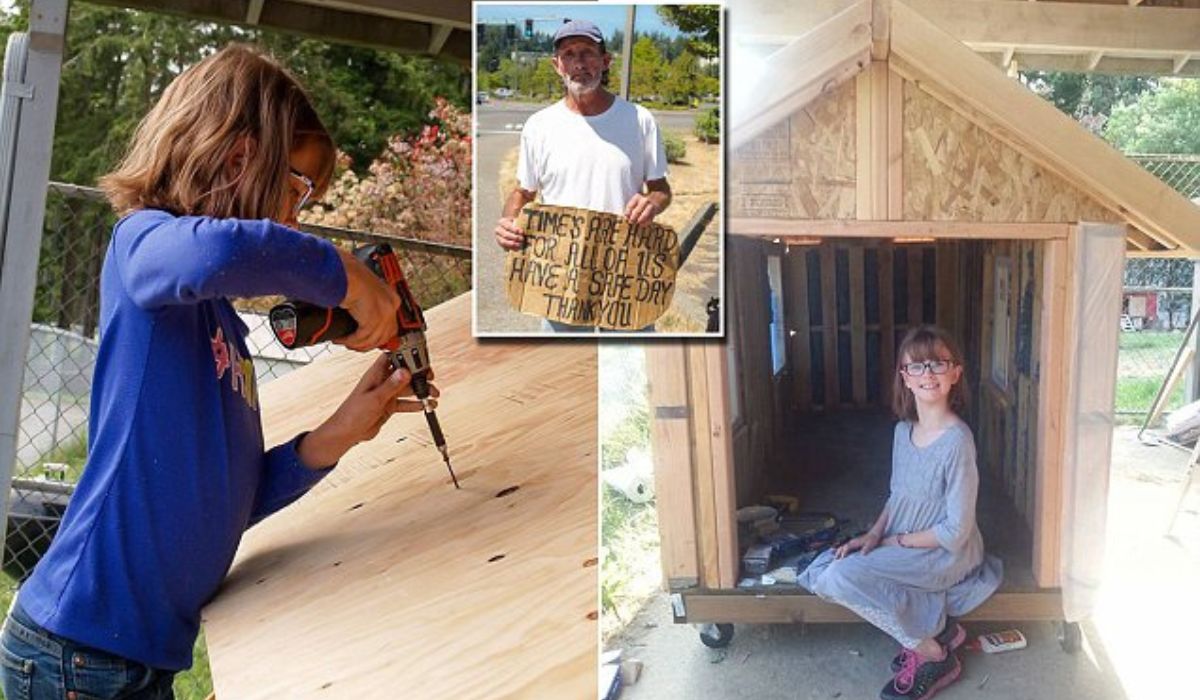
At 9, Hailey Builds Mini Shelters for the Homeless Using Recycled Materials in Her Backyard


The detail that makes Michelle’s story different is that scarcity became a method. Without investors, loans, or a safety net, she learned to operate with a tight margin and total reinvestment. Each piece sold financed the next purchase. It was a one-person operation, driven by the talent to see in a used garment what the previous owner no longer saw.
From Bauru to the internet, even before Enjoei
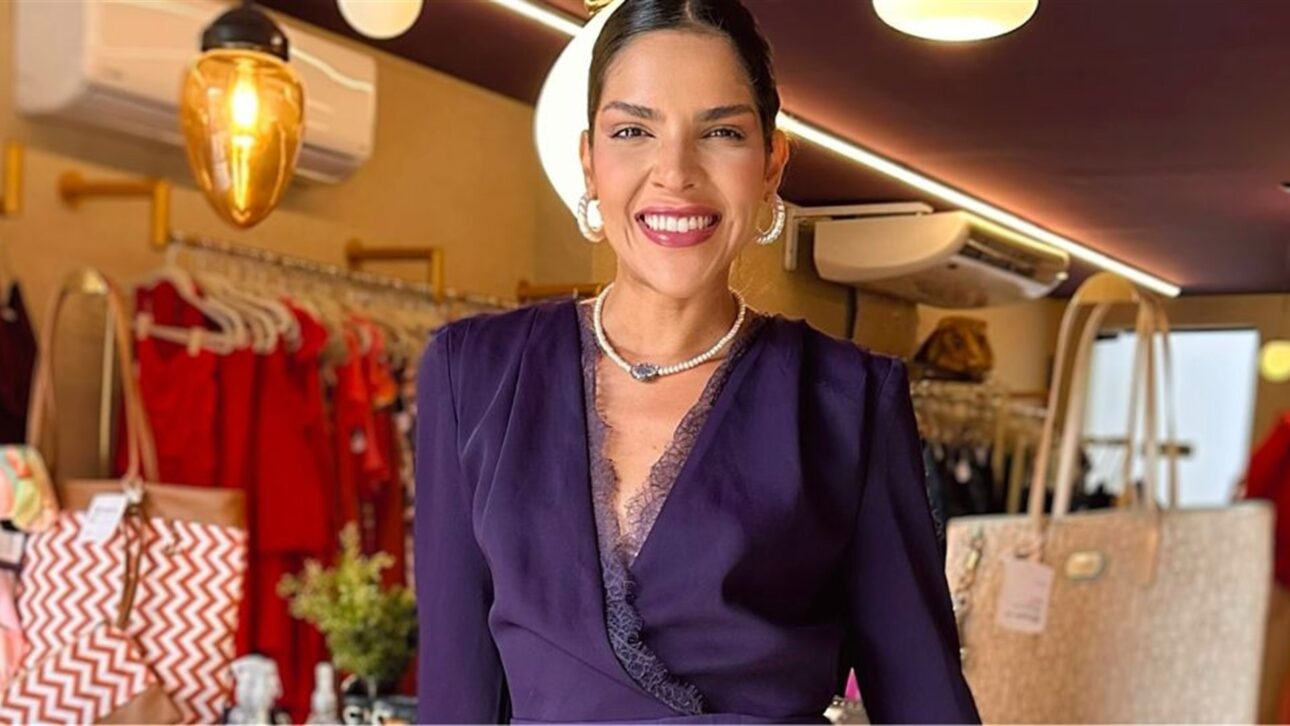
The second leap was geographical without leaving home. From Bauru, in the interior of São Paulo, Michelle Svicero took the thrift shop to the internet at a time when selling used clothes online still seemed strange. There was no Enjoei, no popularized second-hand marketplace, no manual. She created simple websites, photographed the pieces, and posted the ads on her own.
This digital pioneering gave the future Release a time advantage. While Brazil still associated used clothes with dusty neighborhood stores, she was already testing virtual showcases, home logistics, and direct customer service. Circular fashion, a term that would only gain strength years later, was already being practiced there, without a fancy name, in the room of a young woman from the interior of São Paulo.
Selling online also taught scale. A physical store serves those who pass by the door. A website reaches those hundreds of kilometers away. It was this perception that separated the hobby from the business and planted the seed of what would become a network. The idea that a thrift shop could be big, not just charming, was born during this period.
The bazaar that sold twice the month’s worth in a single day
Every business has a day that divides the before and after. For Michelle, that day was a bazaar set up inside a partner store. In 24 hours, she sold the equivalent of twice what she usually earned in an entire month. The number alone would be encouraging. What it revealed was more important: there was pent-up demand for quality and curated second-hand clothing.
That result served as proof of concept. If a single well-done bazaar yielded so much, a fixed, organized, and constant point could yield much more. Circular fashion was no longer just an alternative for those without money and became a choice for those who wanted different, good, and fairly priced pieces. The business gained a new audience.
The bazaar also taught about the shopping experience. It wasn’t enough to have good and cheap clothes. It was necessary to present them well, organize by curation, and make the customer feel like they were in a real store, not in a clearance sale. This obsession with experience would later become one of Release’s trademarks.
The first store born in the back of another store
The first permanent store did not start in a prime location. It was born, literally, in the back of the same store that had hosted the historic bazaar. With refurbished furniture and a rigorous curation of items, Michelle Svicero set up the physical embryo of Release there. Every real of profit went straight back into the operation.
This phase reveals the financial method behind the brand. “I never had money from a bank or investor. The profit from one month went to air conditioning,” the entrepreneur recounted, summarizing years of patient reinvestment. There was no shortcut. Growth was financed by the operation itself, item sold after item sold.
It was in this back-of-store environment that Release began to gain identity. The rigorous curation set the brand apart from old conceptions of thrift stores. There, used clothing did not mean just any clothing. It meant selection, organization, and the promise that it was worth browsing in that space. Circular fashion finally had a showcase worthy of it.
The Release network and the bet on franchises
With the model validated, it was time to multiply. Release moved towards expansion through franchises, in partnership with 300 Franchising, specialized in scaling businesses. The selectivity of the partner says a lot about the brand’s potential. “300 selects few businesses to scale. On the presentation day, there were 12 entrepreneurs and only two were chosen,” reported Michelle Svicero.
The franchise format was designed to replicate the experience, not just the storefront. Each Release unit is designed 100% for the female audience, with rest areas, massage chairs, and even pet and kids areas. The idea is that shopping at a network thrift store is as pleasant as shopping at a new store, with the difference in price and the appeal of circular fashion.
To safeguard quality, the founder decided to closely monitor the start of the expansion. The first 10 franchises will have direct mentoring from Michelle Svicero, who insists on conveying the curation and standard she has built over more than a decade. The franchise, in this case, does not just sell a brand. It sells an operating method that has already been tested to the core.
Circular fashion: the R$ 24 billion market that drives Release
Release’s ambition does not float in a vacuum. It rides a concrete wave. Circular fashion moved around R$ 24 billion in Brazil, and second-hand consumption already represents about 12% of Brazilians’ wardrobes. In other words, more than a tenth of the country’s clothes have already been resold before reaching the wardrobe of the user.
The trajectory numbers are equally eloquent. The sector, which was around R$ 7 billion in 2021, jumped to R$ 24 billion in 2025, with an expected growth of up to 30% per year. The boldest projection suggests that by 2030, thrift stores could surpass fast fashion sales. Circular fashion has ceased to be a niche trend to become a market force.
It is this backdrop that gives meaning to Release’s goal. When circular fashion grows by double digits annually and second-hand shopping gains status as a conscious choice, a well-structured franchise network has plenty of room to grow. The entrepreneur is not just opening stores. She is positioning the brand at the exact point where consumer behavior has shifted.
The goal of 50 thrift stores and R$ 90 million
The declared destination is ambitious and specific: to reach 50 stores and R$ 90 million in revenue. For a brand that started with R$ 400, the distance between the starting point and the goal is almost dizzying. And it is precisely this contrast that gives strength to Release’s story.
The math behind the plan is replication. If each unit of the network replicates the experience, curation, and appeal of circular fashion that succeeded in Bauru, the sum of dozens of franchises can indeed push revenue towards the R$ 90 million mark. The model, treated as a professional business, ceases to be small by nature.
There is a phrase from the founder that sums up the astonishment at her own size. “If someone had told me 15 years ago that the second-hand market would be where it is today,” reflected Michelle Svicero, leaving the thought hanging. Fifteen years ago, she was the girl with R$ 400. Today, she leads a network that aims to be worth tens of millions.
What Release’s journey teaches about new beginnings
The story is not just about money. It’s about seeing value where others see discard. Release was born from a limitation, the lack of R$ 400 became an impulse, and it grew precisely by taking seriously what the traditional market disregarded: used clothing and second-hand. Circular fashion was the vehicle, but the raw material was always the perspective.
It is also a story about patience. There was no investor check or overnight success. There was reinvestment, curation, and more than a decade transforming profit into structure. The franchise comes now, at the end of a process, and not as a shortcut at the beginning. It is the opposite of the rush that usually defines startups.
Michelle Svicero proved that a thrift store can be large, modern, and desirable, and that circular fashion has the backing to support an entire network. From R$ 400 at 17 years old to aiming for R$ 90 million, Release is proof that a new beginning is sometimes just a piece of clothing waiting for a new owner. And if a single closet holds so many pieces that could gain a second life, how many silent fortunes are still hanging, forgotten, waiting for someone with the courage to dig them out?