Portuguese
  Spanish


Paola Carosella and businessman Benny Goldenberg founded La Guapa 12 years ago, went from 1,500 empanadas in the first month to 600,000 per month, and are preparing 20 more openings in the 2nd semester, starting in Natal on July 21
The La Guapa empanada chain, founded 12 years ago by Argentine chef Paola Carosella and businessman Benny Goldenberg, detailed on July 8 to the website Seu Dinheiro the expansion plan that combines franchises, delivery, and artisanal production to reach R$ 100 million in revenue this year. The brand currently has 46 active stores, will open the next one in Natal on July 21, and is already planning another 20 units by December.
The scale of the operation behind the chef that Brazil got to know at the MasterChef bench is impressive: about 30,000 empanadas are hand-closed daily, one by one, by 20 employees at the factory in São Paulo, and the mark of 14 million units sold was reached in the first 10 years of operation, according to NeoFeed. The most curious detail is that the business was born in the back of a restaurant.
The empanada that came from the back of a restaurant and gained a 2,500 square meter factory
La Guapa was born to fill a space that, according to Seu Dinheiro, was still little explored in Brazil: that of artisanal empanadas served quickly. Instead of competing with traditional fast food, the duo bet on the format called fast casual. “La Guapa delivers speed, quality, and price at the same time, without having to give up anything, as fast food does,” says Goldenberg.
-
From a 12-square-meter room to leading a $4.8 billion fuel empire with over a thousand stations

-
El Niño Threatens Brazilian Food Production, Economists Predict Rising Prices for Coffee, Corn, and Rice
-
Brazil’s First Freight Railway Built from Scratch, EF-118 Connecting Espírito Santo to Rio de Janeiro, Goes to Auction in October Attracting Chinese Giant in Multi-Billion Dollar Bid for Southeast Rail Network

-
Audit in Rio de Janeiro’s State Government Uncovers Ghost Employees Across All 77 Departments, Leading to Over 4,000 Dismissals and Significant Cost Savings


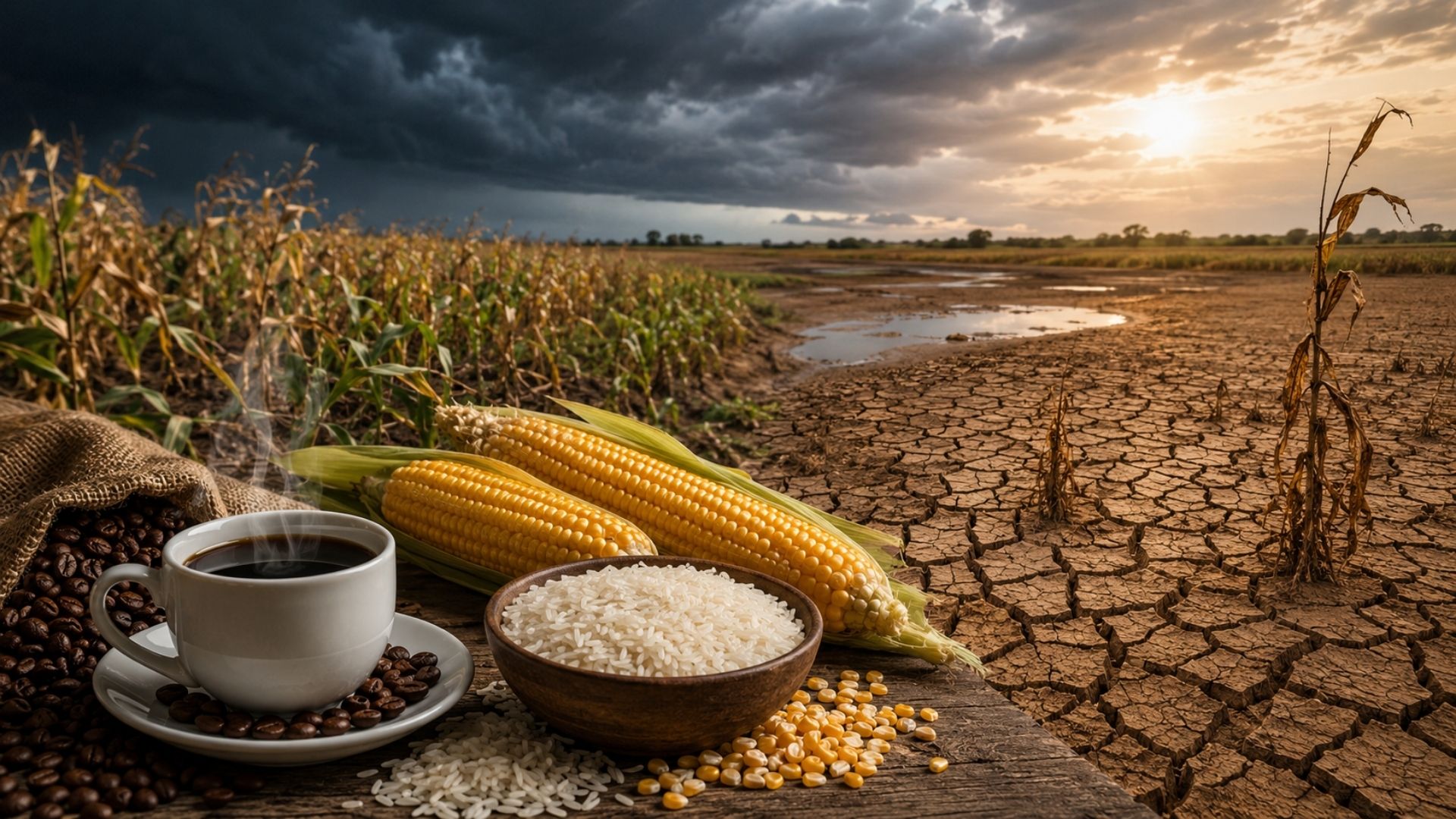


The scale changed level without changing the method: in the first month of operation, in 2014, about 1,500 empanadas were produced, and today the volume reaches approximately 600,000 units per month, according to Seu Dinheiro. The production is centralized and started in the back of a restaurant, evolved into a central kitchen, and then gained an industrial structure, with large mixers and blast freezers replacing domestic equipment. “It was a small pot, it became a big pot; it was a small fridge, it became a giant freezer,” summarizes the businessman.
According to NeoFeed, this turnaround was fueled by investors: the management company Concept Investimentos invested R$ 50 million in 2020, OrderVC also joined the business, and the capital injection allowed for the expansion of the team, now with 400 employees, and the construction of the 2,500 square meter factory in São Paulo, from where all the empanadas sold across the country are produced.
The “repulgue”: 30,000 hand-closed empanadas every day, in 14 flavors
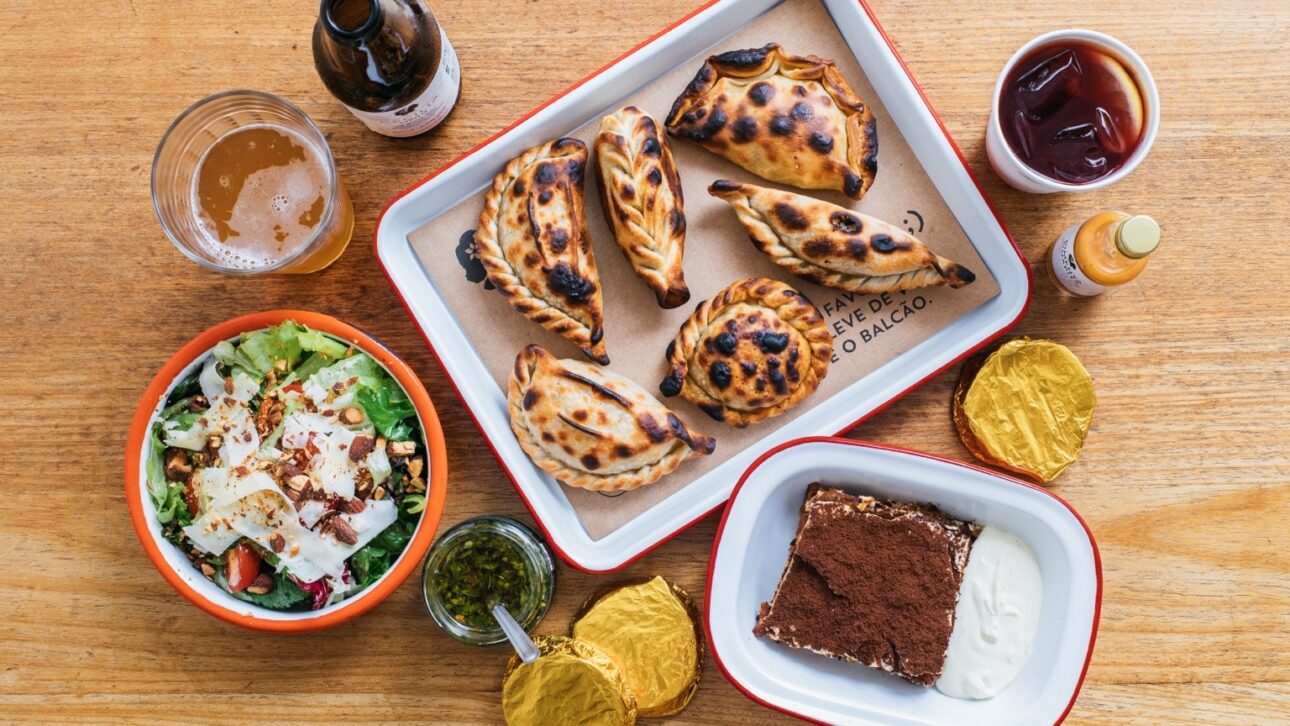
The heart of the operation is a technique with a Spanish name. Repulgue is the art of closing the empanada by hand, and every day 20 employees at the São Paulo factory dedicate themselves to closing, one by one, about 30,000 units, each folding style corresponding to one of the 14 menu flavors, according to NeoFeed. Technology was introduced to increase production capacity, but manual closing never left the process.
To Seu Dinheiro, Goldenberg explains that this was a project decision, not an accident. “La Guapa was born with the mindset of being scalable. When we thought about creating the business, we focused on pillars such as affordable pricing, quality ingredients, and simplicity in store operations to avoid quality bottlenecks,” says the founder in the interview. The challenge, therefore, was not just to manufacture more: it was to produce hundreds of thousands of empanadas while maintaining the artisanal standard that became the brand’s signature.
Almost 10 years without franchising: “I prefer to make mistakes with my own capital than with others’
The chain spent almost a decade operating exclusively with its own stores before selling the first franchise. The expansion followed a deliberate script: first strategic neighborhoods in the capital of São Paulo, such as Itaim Bibi, Jardins, and Pinheiros, then cities in the interior, such as Campinas, Sorocaba, and Ribeirão Preto, and only in 2022 the first capital outside São Paulo, Brasília, followed by units in Paraná, Minas Gerais, Rio de Janeiro, and now in Natal, according to Seu Dinheiro.
The logic, according to Seu Dinheiro, was to completely dominate the operation before increasing the complexity of the business. “The franchise is a great transfer of know-how. If you don’t have deep knowledge of the process, you have nothing to teach,” says the entrepreneur to Seu Dinheiro. And he adds: “For a long time, we grew by learning with our own money. I prefer to make mistakes with my own capital than with others’.”
NeoFeed recorded the beginning of this phase: to structure the franchise area, the duo hired Fabio Furquim, an executive with experience in networks like Wal-Mart, Burger King, Pizza Hut, and Subway, and established a rule of coexistence that protects the franchisee: not to open a franchise in a city where the brand already operates its own store.
Franchise from R$ 200,000 to R$ 550,000, with estimated return in 24 months

Today, the expansion happens with three store formats. The conventional unit requires an approximate investment of R$ 550,000, the Digital Store, created for delivery and pickup, costs around R$ 350,000, and the kiosk, designed for places like outlets, is about R$ 200,000, with an expected return in approximately 24 months, according to Seu Dinheiro. The two more compact formats are still in the testing phase.
The selection of who will operate these stores is segmented. In smaller cities, the priority is the franchisee who directly participates in management, as compact stores tend to work better in the hands of the owner. In larger markets, the network seeks multi-franchisees capable of managing several units. There is also a group of partners for special operations, such as airports and hospitals, which require specific knowledge.
Even while accelerating, the network does not intend to relax the selection process, still according to Seu Dinheiro: Goldenberg personally participates in the final interview of each candidate. “We look for people who have care and attention to the process and ingredients. In the food sector, there will always be shortcuts, but we do not like them,” he states.
Delivery until 5 AM and half of the revenue coming from online
The other growth front is on the mobile screen. About 50% of La Guapa’s revenue already comes from online sales, and the proprietary app accounts for approximately 20% of digital sales, according to Seu Dinheiro. In São Paulo, some units operate delivery until five in the morning to meet nighttime demand.
This performance, still according to Seu Dinheiro, is attributed by the network to the versatility of the menu, which covers the entire day. “La Guapa delivers from a coffee with an empanada in the morning to a healthy lunch with a small salad or soup; it goes through afternoon coffee, happy hour with craft beers and drinks, to dinner and the ‘midnight snack’,” says Goldenberg in the interview. Still according to Seu Dinheiro, the strategy follows changes in consumer behavior, such as the growth of quick snack consumption and smaller meals.
The goal: R$ 100 million this year and 100 units by 2030
The plan numbers are on the table. With 46 active stores, 20 more planned for the 2nd semester, and the debut in Natal scheduled for July 21, the company’s expectation is to reach R$ 100 million in revenue this year, according to Seu Dinheiro. The horizon is more ambitious: when the franchise was launched, the network projected reaching 100 units by 2030, according to NeoFeed.
Goldenberg credits the solidity of the plan to the original design of the business. “La Guapa was born from a very structured strategic thought of what we wanted to be,” he told NeoFeed, citing an organized company with audited governance. For those who saw Paola Carosella only as the tough TV judge, here’s the insight, noted here as an observation from this editorial: the fame opened doors, but what sustains the R$ 100 million is a factory that closes 30,000 hand-made empanadas per day.
From the back of a restaurant to 46 stores in five states and the Federal District, the story of La Guapa shows that it’s possible to grow quickly without giving up on handmade products.
Tell us in the comments: have you ever tried an empanada from La Guapa, or is this market still waiting for someone to occupy it in your city?