






 Portuguese
  Spanish
  4 min of reading
  0 comments


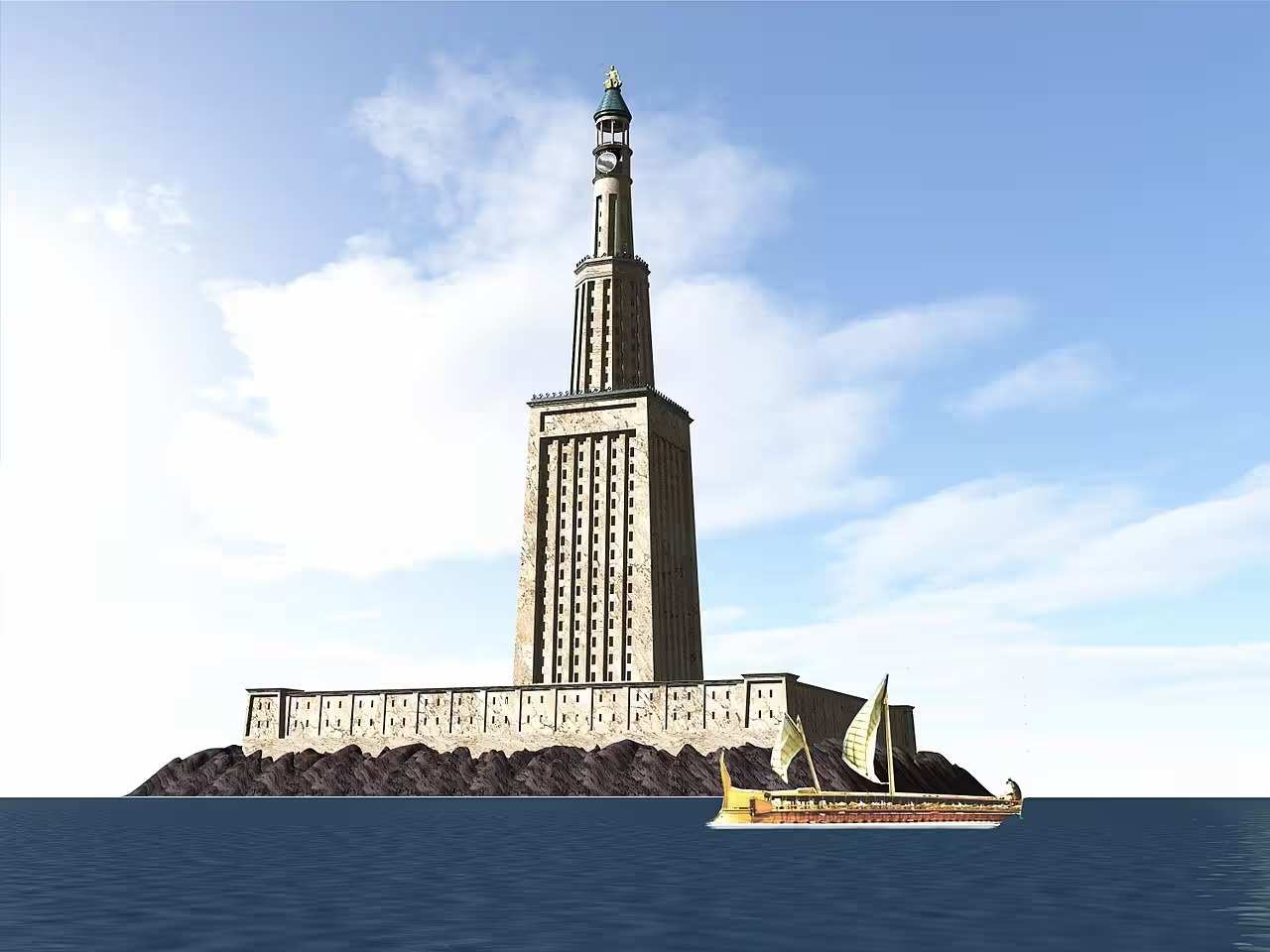
After Centuries Submerged in the Port of Alexandria, Egypt, Giant Stone Blocks That Were Part of the Legendary Lighthouse of Alexandria — One of the Seven Wonders of the Ancient World — Are Being Recovered. The International Operation Involves Archaeologists, Divers, and Engineers, and Promises to Reveal New Secrets of This Millennia-Old Construction with the Help of Cutting-Edge Technology
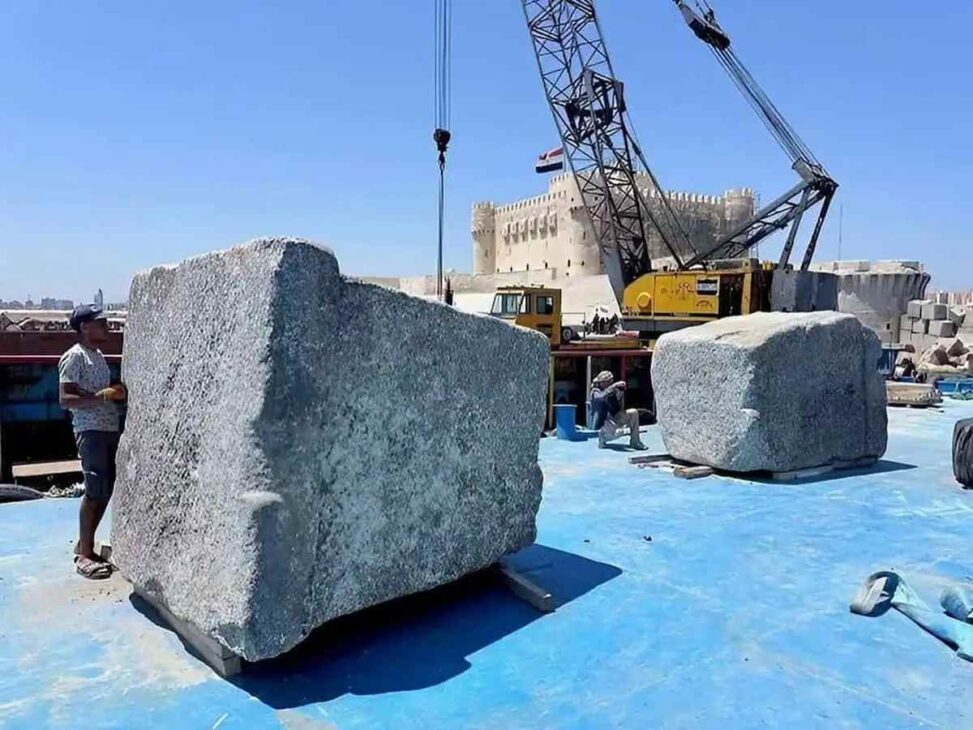
For centuries, the Lighthouse of Alexandria was only memory and submerged ruin. Now, gigantic stones weighing up to 80 tons are beginning to emerge from the depths of the Mediterranean Sea, bringing back to the surface one of the Seven Wonders of the Ancient World.
An international effort of archaeologists, divers, and engineers is bringing to light the foundations of one of the most iconic monuments in history.
The Re-Discovery at the Bottom of the Port
On the shores of Alexandria, Egypt, the team responsible for the operation has recovered 22 immense stone blocks.
-
Goodbye traditional laundry: Roborock launches washer and dryer with super hydrolysis, microbubbles, 99.99% sterilization, low-temperature drying, automatic detergent, app control, and cycles to remove stains, odors, mites, and bacteria from clothes.

-
It is now possible to generate energy without batteries: new flexible material transforms body heat into electricity and paves the way for more efficient, autonomous, and comfortable wearable devices, with the potential to revolutionize personal electronics in the coming years.

-
Leaving the charger plugged in without a phone consumes energy or is it a myth? Experts call the phenomenon “phantom consumption” and warn that dozens of devices on standby can add up on the bill over the year.
-
It accompanies Earth, but it is not a moon: Chinese probe reaches Kamo’oalewa and begins an unprecedented mission to investigate where the strange asteroid came from, what its internal structure is like, and whether its origin is linked to an ancient collision that launched fragments of the lunar surface into space.


According to the archaeologists involved, these structures were parts of the base, entrance, and ceremonial portal of the legendary Lighthouse of Alexandria.
Each block, removed from the port’s depths, is a literal piece of history, lost since the great earthquakes of the 14th century.
The mission is not only about physical removal.
It is also a symbolic and technical rescue of a work that, for over a thousand years, guided sailors and inspired civilizations.
The operation, which is part of an international project called PHAROS, is considered the most ambitious ever undertaken to recover the lighthouse.
A Symbol That Illuminated More Than the Sea
Built Around 280 B.C., the Lighthouse of Alexandria Was a Monumental Work of the Reign of Ptolemy II Philadelphus.
Located on the Island of Pharos, Its Name Became Synonymous with “Lighthouse” in Several Languages.
The Tower Was Erected Not Only as a Guide for Navigators but Also as a Demonstration of Power and Prestige of the City.
With a Height of About 100 Meters, the Structure Was Divided into Three Parts: a Square Base, an Octagonal Section in the Middle, and on Top, a Cylindrical Lantern. A Fire Generated the Light, Which Could Be Seen Up to 50 Kilometers Away.
Accounts Mention the Use of Large Bronze Mirrors to Focus the Beam of Light Over the Sea.
The Tower Survived for Over a Thousand Years Until It Was Destroyed by Earthquakes in 1303 and 1323.
What Remained Eventually Became Submerged or Was Used in the Construction of Fort Qaitbay, Built Later on the Same Site.
Diving into the Past and Leaping into the Future
The First Underwater Discovery of Parts of the Lighthouse Happened in 1994. Since Then, Researchers Have Been Recording the Fragments with Modern Technology.
The New Phase, Led by the French CNRS, the Egyptian Ministry of Tourism and Antiquities, and the Dassault Systèmes Foundation, Marks a New Level in the Recovery of the Monument.
The Recovered Blocks Now Include Lintels and Jambs of the Main Entrance, as Well as Structural Stones from the Tower.
An Unexpected Find Caught Attention: Elements of a Pylon — a Typical Portal of Egyptian Architecture — Built with Greek Techniques. The Origin and Function of This Part Remain Unknown.
Each Piece Is Being Digitized in 3D with High Precision.
The Goal Is to Create a “Digital Twin” of the Lighthouse.
Dassault Systèmes Is Leading the Virtual Modeling, Which Will Allow Simulations Regarding the Construction, Functioning, and Collapse of the Tower.
The Analysis Also Involves Ancient Texts, Coins, and Engravings, Compared to the Recovered Fragments.
Understand to Preserve
Despite Its Fame, No Lighthouse from Antiquity Has Survived to the Present Day in a Significant Way.
The One in Alexandria Was the Model for All Others, but Its Complete Design Remains a Mystery. There Are No Plans or Technical Descriptions from the Time.
The Reconstructions Until Today Have Been Based on Illustrations and Interpretations.
With the Data Collected and the Digital Modeling, Researchers Will Be Able to Answer Ancient Questions: How Was the Firelight Reflected? Were There Lenses?
Was the Lighthouse Renovated Over the Centuries? How Did It Collapse? The PHAROS Project Seeks Scientific Answers to These Issues.
The Reconstruction Also Has Cultural Value. Alexandria, Once an Intellectual Power Alongside Rome and Athens, Sees This Work as an Opportunity to Recover Part of Its Historical Identity.
The Lighthouse, Neighbor to the Legendary Library of Alexandria, Was a Symbol of the City. Bringing Back Its Stones Is Also a Way to Reconnect the Present with the Past.
The Lighthouse, Which Stood for Over 1,600 Years Before Succumbing to Earthquakes, Now Slowly Returns to the Surface.
The Giant Blocks, Which Were Forgotten on the Seafloor for Centuries, Help Piece Together the Puzzle of One of the Greatest Achievements of Ancient Engineering.
The Digital Reconstruction May Be the Key to Revealing How This Tower Illuminated the Seas and Dominated the Skies. More Than History, It Is a Reunion with the Human Ambition to Build the Impossible — and to Remember What Time Tried to Erase.






Be the first to react!