






 Portuguese
  Spanish
  4 min of reading
  0 comments


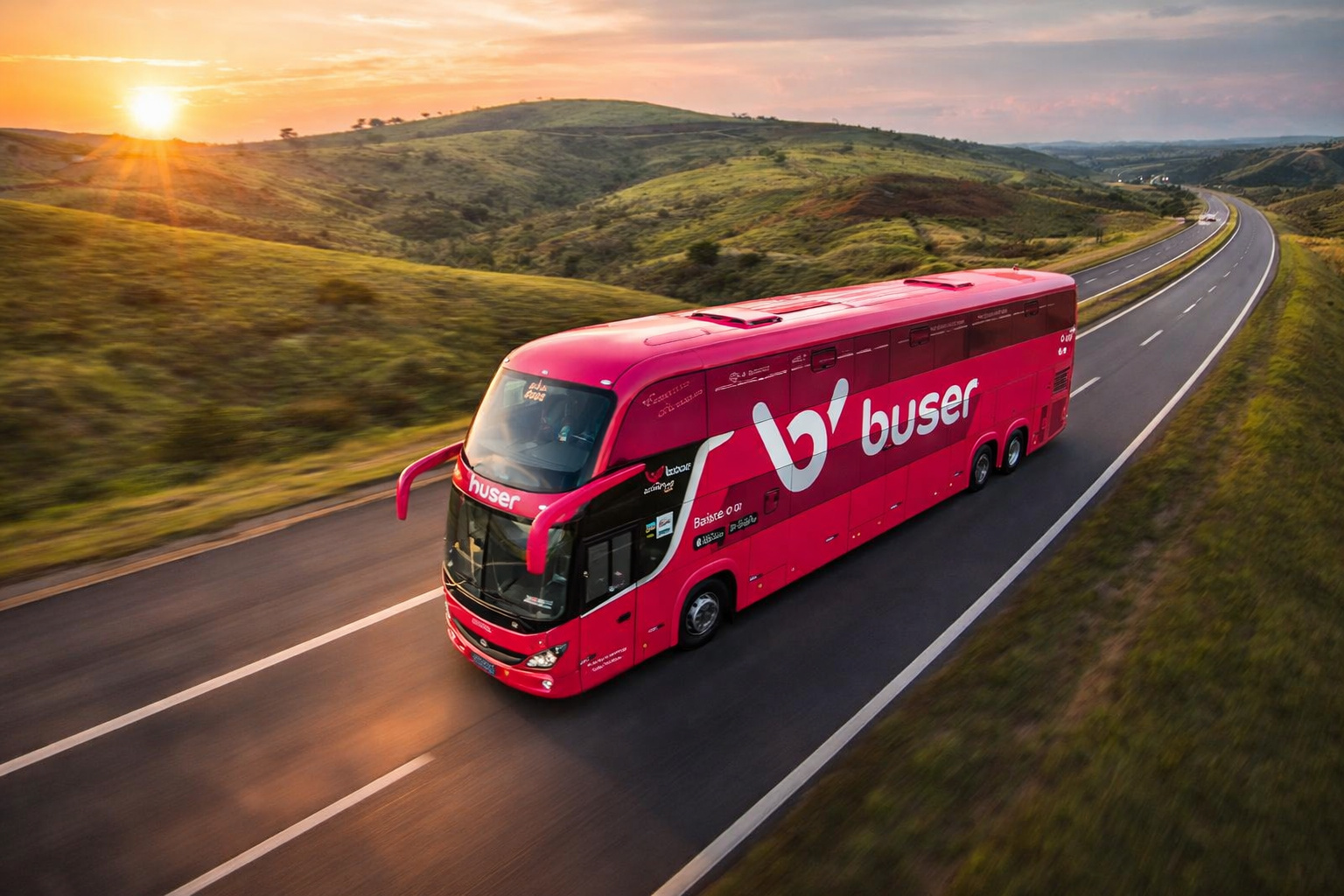
New proposal could change rules of chartered transport, limit operations of apps, and directly impact millions of passengers across Brazil
The debate about the future of app-based transport in Brazil has taken a new turn that promises to generate significant repercussions across the country. This is because the Commission on Transportation and Communications of the Chamber of Deputies approved, on Monday (13), Bill 3692/21, which establishes significant changes in the rules of chartered transport. Thus, companies like Buser could be directly impacted if the proposal advances in the next legislative stages.
Additionally, the information was released by “Câmara News Agency”, which detailed how the project seeks to reorganize the sector in light of the rapid growth of digital platforms. In this sense, the text reinforces the need to more clearly differentiate collective private transport from regular public transport, something that has been the subject of discussions for years.
At the same time, the service known as “collective private” transport will still be able to be hired through apps and digital platforms. However, new restrictions will be imposed, which could completely change the operating model currently used by companies like Buser.
-
Driver who “holds” the left lane can receive a hefty fine and 4 points on their driver’s license even if they think they are going at the correct speed for the road.

-
São Paulo Government puts R$ 343 million on the table and releases 31 km of duplication, 9.84 km of third lanes, 4 reinforced viaducts, and 8 grade-separated returns.

-
Volvo FH 2026 truck automatically reduces speed in risk areas in Brazil with GPS, activates engine brake without driver intervention, and combines safety with aerodynamics capable of saving up to 3% of diesel in some operations.

-
A viaduct over 40 years old in a city in Minas Gerais was closed due to the risk of collapse, blocked routes for months, exposed maintenance failures, and now requires a R$ 1.7 million project to prevent a collapse in the urban heart for decades.



Understand what changes with the project that could impact Buser

The main change proposed by Bill 3692/21 is directly related to how trips are sold. From this, the text establishes that chartered transport must exclusively serve pre-formed groups, eliminating practices that have become common in recent years.
In other words, the individual sale of tickets, a central characteristic of Buser’s model, could be prohibited. Consequently, this represents a profound transformation in the operation of these platforms, which currently connect passengers independently.
To prevent chartering from functioning as a kind of informal public transport, the project sets forth quite specific rules. Among them, the following stand out:
- Group hiring: the service must be contracted by a group or entity, with no possibility of individual seat sales;
- Non-stop travel: boarding or disembarking passengers along the route is prohibited;
- Use of apps with rules: digital platforms may mediate the service, but must follow tourism agency regulations when they do not own the fleet;
- Prohibition of cargo: transporting goods in these vehicles will not be allowed.
In this way, the central objective of the proposal is to prevent chartering from operating as a disguised regular line, which, according to experts, creates distortions in the market and unequal competition with conventional transportation companies.
Project aims to organize the sector and reduce regulatory ambiguities
On the other hand, the rapporteur of the project, Deputy Diego Andrade (PSD-MG), defended the approval of the proposal by stating that the measure is essential to organize the sector. The favorable opinion was presented based on the original text by Deputy Hugo Leal (PSD-RJ), which had already been discussed in Congress.
According to Andrade, the advancement of digital platforms has created a scenario of regulatory uncertainty, making it necessary to establish clearer rules for the operation of chartered transport. In this context, he emphasized that the project helps to reduce ambiguities and reinforce the private nature of this type of service.
“The proposal helps to reduce regulatory ambiguities and reinforce the private nature of this type of transport, making it clear that it is a service restricted to a specific group,” said the rapporteur.
Furthermore, the proposal amends the Urban Mobility Law, updating important concepts and creating a more solid foundation for the oversight and regulation of the sector. With this, the government seeks to balance technological innovation and legal security.
What could happen now with Buser and app-based transportation
Despite the approval in the Commission of Transportation and Communications, the project is not yet in effect. This is because it is being processed in a conclusive manner and still needs to be analyzed by the Commission of Constitution and Justice and Citizenship.
Only after this stage, if approved, will the text proceed to the Senate. Therefore, there is still room for changes, adjustments, and even resistance from companies and users who utilize this type of service.
Meanwhile, concern is growing in the mobility sector, as millions of passengers could be directly affected by a potential ban on the individual sale of tickets. At the same time, companies like Buser may need to completely reformulate their business models to adapt to the new rules.
In light of this scenario, experts point out that Brazil is experiencing a decisive moment for the future of app-based transportation, where innovation needs to coexist with increasingly strict regulations.
And you, who have already saved money traveling by bus through an app, do you think this new rule will improve transportation in Brazil or could it end up making life harder for those who depend on these alternatives?


Be the first to react!