Portuguese
  Spanish


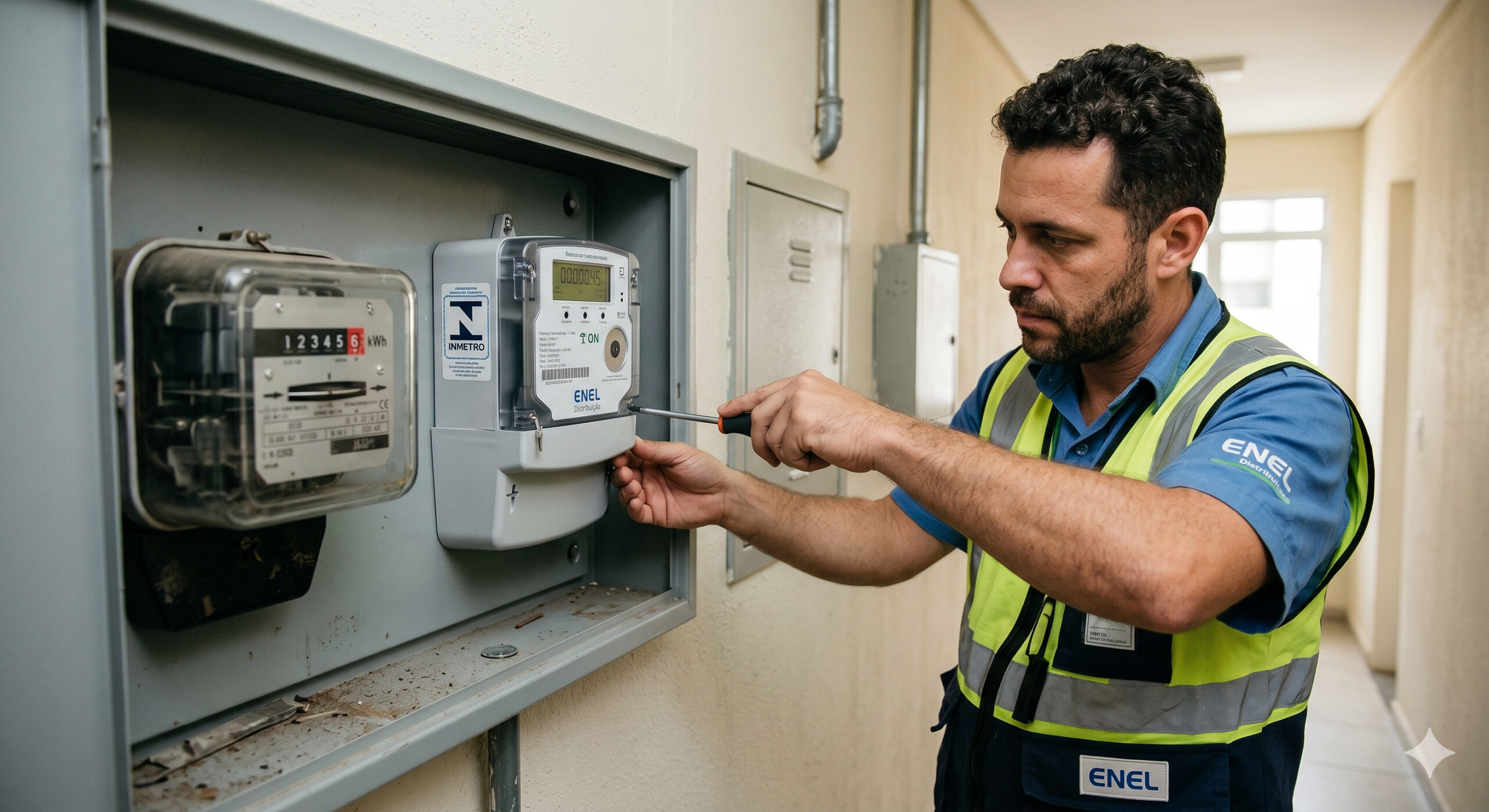

Smart meters advance in Brazil and promise detailed reading of electricity consumption, with more frequent data and basis for time-based tariffs.
Starting in 2025, Brazil took a concrete step towards modernizing electricity measurement when the Ministry of Mines and Energy, in a text published in the Official Gazette of the Union on June 23, 2025, established general guidelines for the gradual digitization of low voltage electricity distribution networks and services, prioritizing the assessment of the implementation of smart meters. The movement gained a more practical development on January 29, 2026, when the MME itself amended the previous regulation to set initial implementation guidelines for these systems in the short term and require cost-benefit analyses for their expansion in the medium and long term.
In parallel, technical analyses from the federal government began to support the idea that the combination of smart meters and time-based tariffs can change the way energy is consumed and charged in the country.
On March 24, 2026, a technical note from the Ministry of Finance summarized this logic by stating that the hourly tariff provides the “price signal” and the smart meter delivers the “data signal,” reinforcing the idea that consumers tend to stop receiving just a consolidated amount at the end of the month to start seeing consumption as a continuous flow of data, with more transparency about when, how, and at what time electricity was used.
-
Engineers Develop Fridge-Sized Machine to Produce 95-Octane Synthetic Fuel from Air and Water, Aiming to Sustain Combustion Engines Without Oil

-
Two-Armed Robot Uses AI to Reassemble Destroyed Pompeii Frescoes, Solving an “Impossible” Puzzle
-
New Law in Brazil Requires Breaks for Type 1 Diabetes Management at Work, School, and Public Exams

-
Scientists Confirm “Greening” of Antarctica: Ice on the World’s Coldest Continent Turns Green as Mosses Multiply Over Tenfold in Four Decades


Traditional measurement model limits real understanding of consumption
Historically, the residential measurement system in Brazil has always operated based on periodic readings, usually monthly, made by electromechanical or basic electronic meters. These devices record the total consumption in kilowatt-hours (kWh), but do not provide any details about usage behavior over time.

This means that the consumer cannot identify, for example, at what times the highest consumption occurs, which devices impact the bill the most, or how changes in habits could reduce costs.
This limitation creates a scenario where energy is consumed without transparency, making any data-driven optimization strategy difficult.
Smart meters introduce granularity and frequency in data collection
The main difference brought by smart meters is the ability to record consumption at much shorter intervals, which can vary from minutes to hours, depending on the configuration adopted by the distributors.
This allows for the construction of a detailed usage profile, showing exactly how energy is consumed throughout the day. Instead of a single number at the end of the month, the consumer gains access to a consumption curve, with clearly identifiable peaks, variations, and patterns.
This granularity completely transforms the way consumption can be analyzed, moving from a static model to a dynamic model based on data.
Integration with time-based tariffs creates new energy pricing logic
One of the most relevant points of this transition is the possibility of broader adoption of so-called time-based tariffs, also known as hourly tariffs.
In this model, the price of energy varies throughout the day, reflecting the demand of the electrical system. Peak hours, with higher consumption, tend to have higher tariffs, while periods of lower demand may have reduced costs.
According to technical analyses from the federal government, the combination of smart meters and this type of tariff allows for the creation of a system where the price acts as an economic signal and the meter provides the necessary data for the consumer to respond to this signal.
Energy no longer has a single price and begins to reflect the real conditions of supply and demand throughout the day.
Data transparency opens space for more efficient decisions within homes
With access to more detailed data, the consumer is better equipped to understand their own consumption pattern. This allows for the identification of which periods concentrate the most spending and which changes can generate savings.
The ability to visualize consumption almost in real-time also changes the way decisions are made within the home, making energy use more conscious and information-driven.
The electricity bill ceases to be an inevitable result and becomes a direct reflection of decisions that can be adjusted.
National electric infrastructure begins to operate with a higher level of information
The adoption of smart meters impacts not only the consumer but also the functioning of the electrical system as a whole. With a greater volume of available data, distributors and operators can have a more accurate view of demand in different regions and times.
This allows for improved network planning, reduced losses, quicker identification of failures, and optimization of system operation.
The electric sector begins to operate based on more detailed data, increasing efficiency and the ability to respond to consumption variations.
Implementation still depends on scale and regulatory adaptation
Despite institutional advances, the large-scale deployment of smart meters in Brazil still depends on factors such as investments, regulatory adaptation, and the definition of business models by distributors.
Ordinance No. 111/2025 establishes important guidelines, but practical execution involves technical and financial challenges, especially considering the size and diversity of the Brazilian electrical system. The transition does not occur immediately but follows a gradual process that tends to intensify in the coming years.
International experiences show the potential for transforming consumption
Although Brazil is advancing in this process, other countries already use smart meters more widely, demonstrating the potential of this technology to transform residential consumption.
These experiences indicate that access to detailed data, combined with dynamic tariffs, can lead to significant changes in consumer behavior and the efficiency of the electrical system. Brazil is following a global trend of digitalization in energy measurement.
Integration with smart homes expands future possibilities
The presence of smart meters also paves the way for integration with home automation systems. This allows devices within the home to automatically adjust their operation based on energy prices or consumption patterns.
For example, equipment can be programmed to operate during lower-cost hours, reducing the impact on the electricity bill without manual intervention.
The home begins to respond not only to user behavior but also to the conditions of the electrical system.
Change redefines the role of the consumer within the electrical system
With more information and greater responsiveness, the consumer ceases to be just a passive user and takes on an active role in managing consumption.
This change alters the dynamics of the electric sector, bringing residential behavior closer to more sophisticated energy management models. Consumption is no longer just a necessity but becomes a manageable variable within a broader system.