Portuguese
  Spanish


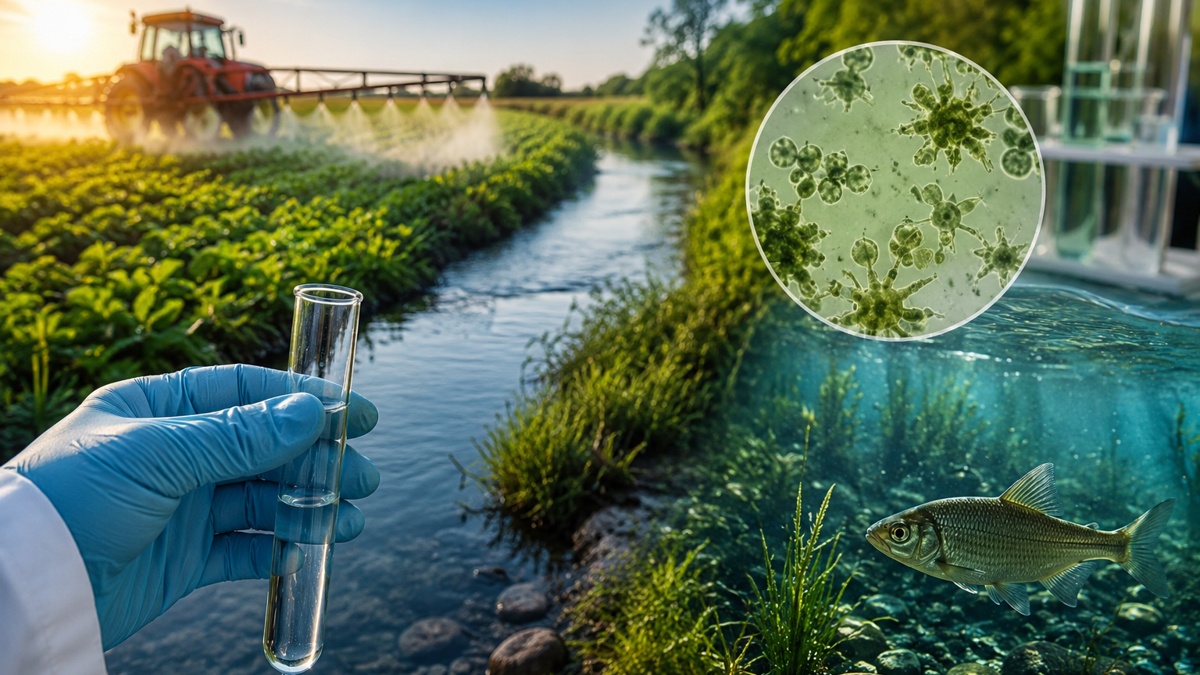

The federal government has launched a new monitoring dashboard to track the presence of pesticides in water resources across different hydrographic basins in Brazil. The platform gathers data on collection points, tracked substances, detection levels, and impacts on aquatic life, with the aim of increasing transparency, strengthening environmental policies, and improving public access to information.
Furthermore, the system seeks to identify risks associated with the excessive or improper use of pesticides, helping authorities develop preventive actions aimed at human health and environmental preservation. According to the Ministry of Environment and Climate Change, the dashboard represents a significant advance in monitoring water quality and the impacts caused by chemical products used in agriculture.
What is the pesticide monitoring dashboard
The new dashboard functions as a public environmental data platform aimed at monitoring the presence of pesticides in Brazilian water resources.
-
A Brazilian city decided to purchase a piece of the Atlantic Forest with more than 153,000 square meters, and owners of preserved areas will be able to submit proposals to transform the forest into a conservation unit.

-
Brazilian siblings aged 11 and 7 read 240 books in just one year and caught attention on social media: while many children spend hours on screens, they turned their family’s routine into an example of reading, discipline, and curiosity.
-
The legendary oak that, according to the story, hid Robin Hood from the Sheriff of Nottingham, died at the impressive age of 1,200 years in England, and the first chilling sign of its end was that no leaves sprouted on the tree this spring.

-
While the world looks at forests, the UN warns that the Earth is also threatened by the silent degradation of natural grasslands and savannas, ecosystems that cover half of the planet, support billions of people, and can exacerbate water, food, and climate crises.


In addition, the system gathers information collected in different states and hydrographic basins across the country.
Key available data include:
- Monitoring points
- Tracked substances
- Detection percentages
- Geographical distribution
- Observed environmental impacts
In this way, the government intends to increase transparency and facilitate access to environmental information.
The objective of monitoring
According to the federal government, the main objective of the dashboard is to strengthen public policies related to the environment and health.
Furthermore, the system seeks to identify risks linked to the improper or excessive use of pesticides in agriculture.
Experts state that continuous monitoring helps authorities act preventively against possible environmental and health impacts.
In this context, the initiative also aims to stimulate debates on the sustainable use of agricultural defensives.
Pesticides concern specialists
The use of pesticides continues to be one of the most debated topics in environmental and agricultural discussions.
Although these products are widely used in pest control, experts warn of possible impacts on water, soil, biodiversity, and human health.
Furthermore, certain substances can remain in the environment for long periods.
Therefore, constant monitoring has become an important tool for environmental risk assessment.
The impact on water resources
Water resources are among the main environments affected by pesticide contamination.
During rainfall or irrigation processes, chemical residues can reach rivers, lakes, and reservoirs.
Furthermore, some substances can spread over large areas through hydrographic basins.
Experts state that monitoring water quality is essential to protect ecosystems and human populations.
The concern for aquatic life
The dashboard also gathers information related to the impacts of pesticides on aquatic organisms.
According to specialists, certain substances can affect fish, amphibians, aquatic insects, and other organisms fundamental to ecological balance.
Furthermore, contamination can cause changes in food chains and reduce biodiversity.
In this scenario, environmental authorities emphasize the importance of preventive actions and continuous monitoring.
What the Ministry of Environment said
During the platform’s launch, the Minister of Environment and Climate Change, João Paulo Capobianco, highlighted that pesticides represent one of the major current environmental and health challenges.
Furthermore, he stated that the improper use of these substances can generate impacts on:
- Aquatic organisms
- Pollinators
- Soil
- Water resources
- Human health
According to the minister, expanding access to environmental information helps strengthen more efficient public policies.
Environmental transparency gains prominence
The government states that the platform seeks to increase transparency regarding the presence of pesticides in water resources.
Furthermore, the dashboard allows researchers, public managers, and citizens to monitor environmental data more accessibly.
Experts believe that such initiatives help improve oversight and encourage more sustainable agricultural practices.
In this context, transparency has come to play a strategic role in environmental policies.

How data collection works
The system uses information obtained from monitoring points distributed across different regions of the country.
In addition, technicians analyze water samples to identify the presence and concentration of specific chemical substances.
The results are organized in the digital dashboard, allowing visualization by region, type of substance, and detection rates.
Experts state that technology and data integration are fundamental for increasing the efficiency of environmental monitoring.
The use of pesticides in Brazil
Brazil is among the largest global consumers of pesticides due to the scale of the national agribusiness.
Furthermore, different agricultural crops use chemical pesticides for pest control and increased productivity.
However, experts warn that excessive or improper use can cause significant environmental impacts.
Therefore, pressure for oversight, traceability, and the adoption of more sustainable practices is growing.
The debate between agricultural production and environmental preservation
The discussion about pesticides involves a balance between agricultural productivity and environmental protection.
Rural producers state that agricultural pesticides are important for ensuring large-scale production.
On the other hand, researchers and environmentalists advocate for greater control over potentially harmful substances.
Furthermore, consumers are showing increasing concern for food safety and environmental quality.
How the dashboard can help public policies
Experts state that more precise data helps governments develop more efficient public policies.
Furthermore, monitoring allows for the identification of critical areas and guides environmental inspection actions.
Among the possible benefits are:
- Greater environmental control
- Identification of health risks
- Preventive planning
- Ecosystem protection
- Support for water management
In this scenario, technology and information gain strategic importance.
The relationship between pesticides and human health
Monitoring also has relevance for public health.
This happens because water contamination can affect populations exposed to the consumption of contaminated water resources.
Furthermore, experts warn that certain pesticides can cause health impacts depending on the level and duration of exposure.
For this reason, authorities advocate for continuous monitoring and preventive actions.


The advancement of environmental enforcement
In recent years, environmental agencies have expanded the use of digital technologies for enforcement and monitoring.
Furthermore, public platforms have been used to improve transparency and access to environmental information.
Experts state that the integration of environmental data can strengthen the fight against pollution and the degradation of natural resources.
In this context, the new dashboard represents another step in the modernization of Brazilian environmental management.
What experts expect now
Researchers and environmental experts believe that the new platform can help broaden knowledge about the impacts of pesticides on Brazilian water resources.
Furthermore, the system should facilitate cooperation among governments, universities, and environmental agencies.
Among the main points monitored are:
- Evolution of detection rates
- Most affected areas
- Most prevalent substances
- Impacts on biodiversity
- Preventive measures adopted
All these factors are expected to influence future environmental policies.
The future of environmental monitoring in Brazil
The launch of the dashboard shows how environmental monitoring and transparency are gaining ground in Brazilian public policies.
Furthermore, experts state that access to information can help society monitor environmental impacts more clearly.
As debates on sustainability and agriculture continue to advance, the monitoring of water resources is expected to occupy an increasingly strategic position in the country.
Finally, the initiative reinforces the importance of balancing agricultural production, environmental preservation, and public health protection through data, enforcement, and preventive policies.