






 Portuguese
  Spanish


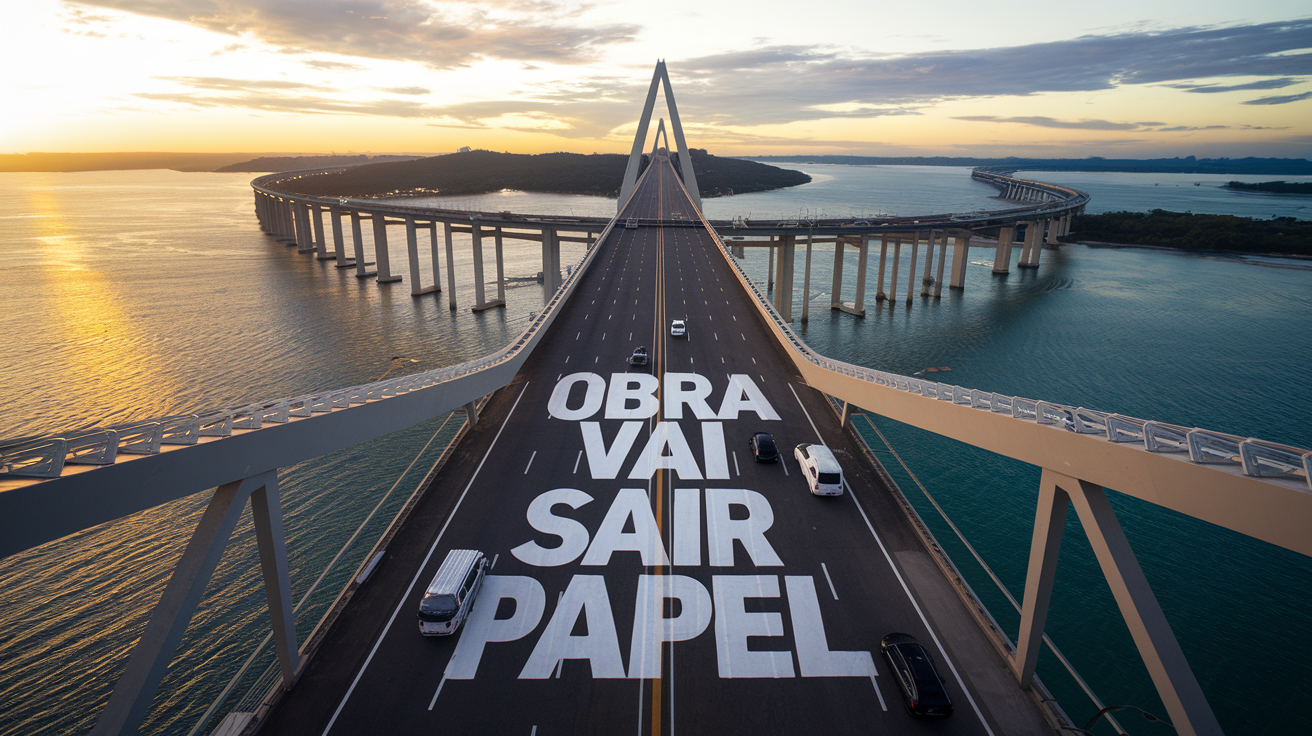


Salvador-Itaparica Bridge, With Investment of R$ 10.42 Billion, Is About to Become a Reality! Approved by TCE-BA, the project promises to transform mobility, reduce distances, and boost the economy of 250 municipalities in Bahia. Find out how this mega structure will revolutionize the state and benefit millions of people.
Bahia, known for its natural beauty and rich culture, is about to witness a project that promises to revolutionize its infrastructure and economy.
A grand construction is on the verge of becoming a reality, connecting strategic points and bringing benefits to millions of people in Bahia.
The State Court of Account of Bahia (TCE-BA) approved, in a plenary session held on February 11, 2025, the mediation proposal between the State Government and the Salvador-Itaparica Bridge Concessionaire.
-
It’s official: Petrobras takes 75% of block 3 in São Tomé and Príncipe and debuts as an offshore operator outside South America.

-
US$ 1.5 billion dam project on the Rio Indio promises water for the Panama Canal for 50 years, but it could flood rural areas and displace 2,000 residents from 38 farming communities.

-
More than 6,000 trucks poured nearly 70,000 cubic meters of concrete without interruption for 72 hours to create the largest continuous concrete pour in history and erect a megaproject in Saudi Arabia.

-
28-meter, 156-ton titans traveled 20,000 km from China to the port of Santa Catarina: Portonave received 7 fully electric megacranes, part of a R$ 210 million package, to double container handling.


This approval updates the contract’s total value from R$ 7 billion to R$ 10.42 billion, following favorable votes from the seven TCE advisors.
The new value is lower than the R$ 13 billion initially requested by the consortium after the pandemic, a reduction attributed to the TCE’s mediation.
TCE Approval and Next Steps
With approval, the government of Jerônimo Rodrigues (PT) plans to sign, in the coming weeks, the addendum that will allow work to start in Baía de Todos-os-Santos.
The rapporteur, councilor Marcus Presidio, highlighted that the contract needed to be revised due to the economic impacts of the COVID-19 pandemic, which caused significant increases in construction and steel material prices, in addition to the rise in the basic interest rate.
Main Adjustments to the Contract
The main proposed changes include:
- Increase of the total public input to R$ 5.07 billion, with a base date in August 2024;
- Change in the annual compensation to R$ 371 million for the first ten years of full operation and R$ 170 million in the subsequent period;
- Update of the contract value;
- Extension of the construction schedule from five to six years;
- Reduction of the effective operation period from 30 to 29 years.
Economic and Social Impacts
The construction of the Salvador-Itaparica Bridge is considered one of the largest infrastructure projects in Brazil and promises to change the socioeconomic reality of all of Bahia.
250 municipalities will benefit, especially those in Recôncavo Sul, Baixo Sul, and the Metropolitan Region of Salvador.
About eight thousand jobs are estimated to be generated during the construction, which will require investments of approximately R$ 9 billion.
The bridge will allow Bahians and tourists to move around the state with more agility and safety, as well as boost the tourism sector in various cities.
Project Details and Expected Completion
The Salvador-Itaparica Bridge will be the largest overwater bridge in Latin America, with an expected completion in 2028.
The initial project had aimed for completion in 2025, but the pandemic delayed the start of construction.
The responsible concessionaire is made up of the Chinese companies CCCC (China Communications Construction Company) and CRCC/CR20 (China Railway 20 Bureau Group Corporation).
The concession contract has a duration of 35 years, comprising four years for construction and 30 years for bridge administration.
Benefits for Mobility and Economy with the Bridge
Currently, those traveling from the metropolitan area of Salvador to the Island of Itaparica cover a distance of 238 km by car or use ferries, with a travel time of about 1 hour and 40 minutes.
With the new bridge, this time will be reduced to approximately 10 minutes.
The estimated fee for crossing the bridge is R$ 56, while the ferry costs R$ 58.50 for vehicles, plus R$ 6.50 per person.
On weekends, the ferry rate increases to R$ 82.90 for vehicles and R$ 8.60 per passenger.
Besides saving time, the bridge will play an important role in the social and economic development of southern Bahia, allowing greater integration between the metropolitan region and the southern state.
The project will also improve the connection of Salvador with southern Brazil, where the highest GDPs in the country are concentrated, reducing logistics costs for the transportation of goods within Bahia and between states passing through Bahian territory.
Financing and Sustainability
In December 2024, the Government of Bahia signed a loan agreement for the construction of the bridge, with provisions for up to US$ 150 million, approximately R$ 800 million.
The project also includes the implementation of educational projects and socio-environmental programs that will allow for the training of local residents in various areas of activity, promoting sustainability and regional development.
The Salvador-Itaparica Bridge represents a milestone in Bahia’s infrastructure, promising to transform mobility, boost the economy, and promote sustainable development in various regions of the state.





Os baianos nasceram pra comer pasto e mortadela mesmo o maior **** do mundo vai fazer essa obra?? Ok só esses nordestinos **** pra acreditar…
Mais uma remessa de bilionários surgindo com o dinheiro do povo que será todo roubado.
Não consegui entender a vantagem na relação custo benefício.