Portuguese
  Spanish


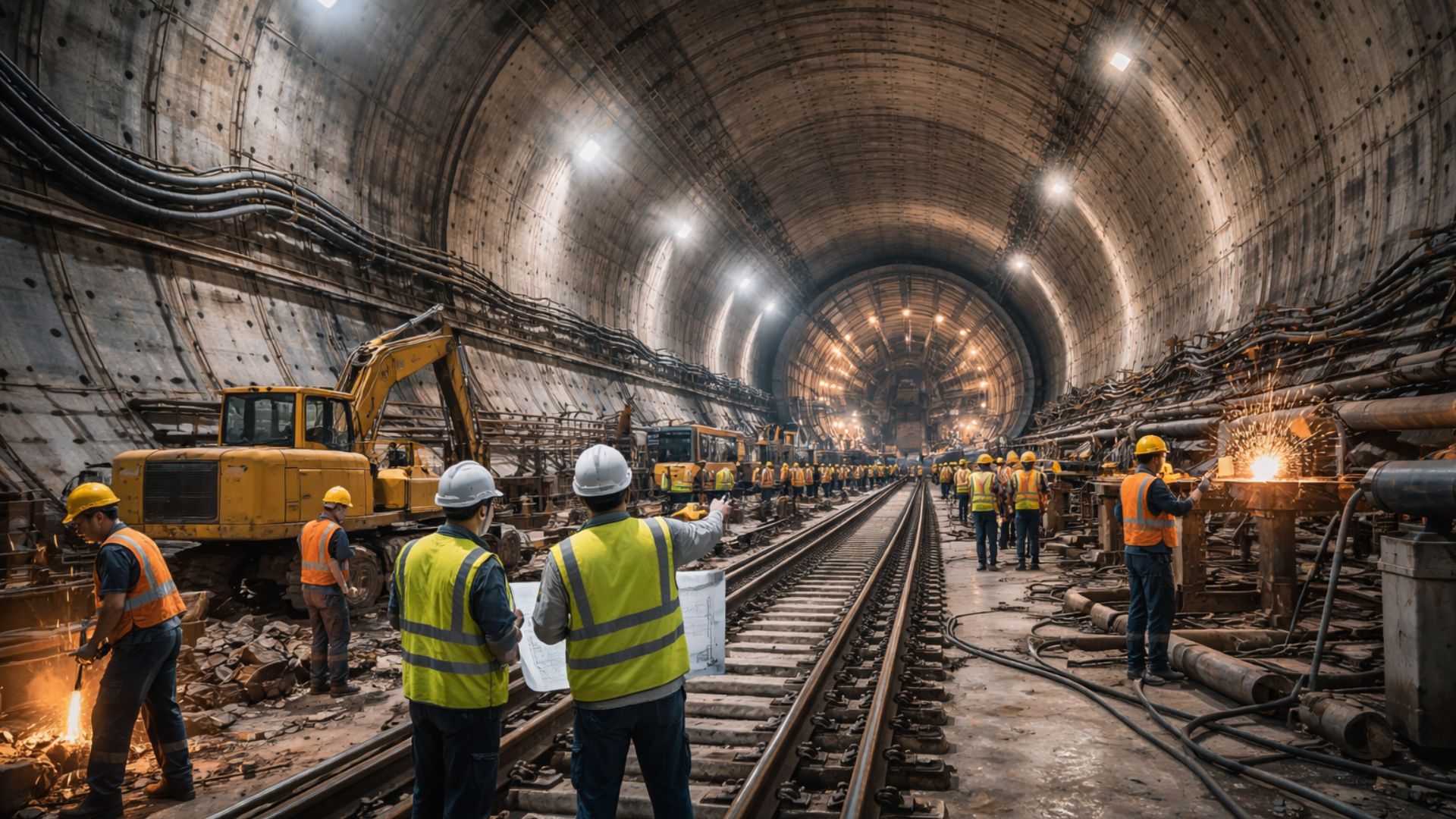


The 33.5 km Underground Project Changes Mobility in Mumbai After Years of Delays, Phase Releases, and Safety Charges, Connecting Employment Hubs and Central Areas with 27 Stations and Continuous Operation Since October 2025, Promising Predictability and Reduced Daily Commute Times.
The Mumbai Metro Line 3, called the Aqua Line, began operating end-to-end after the inauguration of the last stretch on October 8, 2025, completing a 33.5 km project that was almost entirely underground and became a measure of urban delays in the Indian city.
The corridor connects Aarey in the north zone to Cuffe Parade in the south, crossing areas of high employment and service concentration, with a total of 27 stations, 26 of which are underground and one at ground level.
The core proposal of the project is to shift part of the daily traffic to a high-capacity axis that does not depend on congested avenues, offering more predictable travel times between hubs such as the Bandra Kurla Complex (BKC), central areas, and coastal regions.
-
Giant Robots Build Entire Neighborhood of 100 3D-Printed Homes in the U.S., Showcasing Technology’s Impact on Construction Industry

-
Helsinki Residents Receive Water That Travels 120 Kilometers Through a Hidden Rock Tunnel from a Lake Before Treatment

-
Brazil’s Sertão Region Nears Completion of Latin America’s Longest Artificial River, Transforming Water Access in Drought-Prone Ceará
-
Pre-mixed stabilized mortar set to revolutionize construction in 2026: extends usability to 36 or 72 hours, boosts productivity, and minimizes waste in building projects.


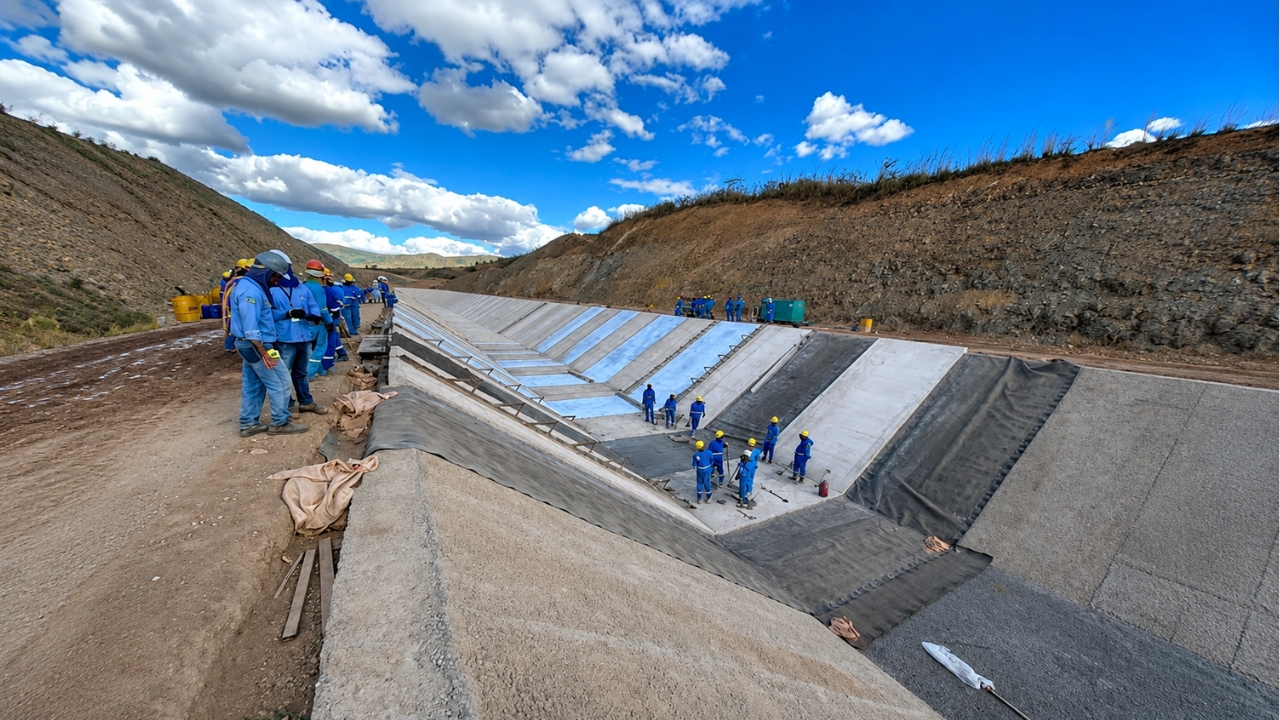

Throughout the construction, the line accumulated disruptions in the surroundings, interfered with sidewalks and traffic, and concentrated public scrutiny regarding the schedule, cost, and risk management in underground works.
Line 3 of the Mumbai Metro Gains Scale with Phase Releases
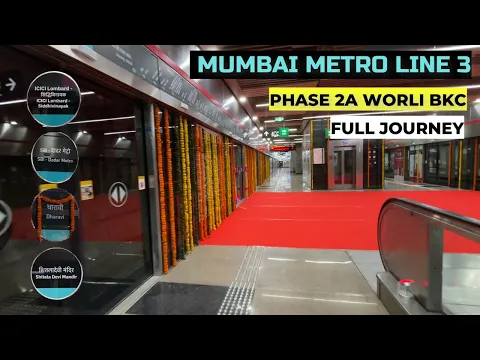

As the Aqua Line was released in phases, the public saw the network grow in blocks while the rest waited for systems and authorizations, a common dynamic in megaprojects where civil works need to coordinate with signaling, power, ventilation, and emergency protocols.
The first phase opened to the public in October 2024, in the section between Aarey and BKC, creating the first operational axis of the corridor and allowing performance and demand evaluation in a real environment before expansion.
BKC–Worli Section and Underground Expansion in 2025
In May 2025, operations advanced with the opening of the 9.77 km stretch between BKC and Acharya Atre Chowk in Worli, incorporating six stations and connecting neighborhoods with high daily traffic, as well as urban and religious points of interest along the way.
At the time, operational information released alongside the announcement indicated that the trip between Aarey and Worli could be made in about 36 minutes, with intervals announced around six minutes and a daily set of scheduled rides.
The new segment, however, also exposed the difficulty of operating underground infrastructure during periods of heavy rain, when a flooding incident at Acharya Atre Chowk led to a temporary suspension of services at the end of May 2025, according to local coverage.
After drainage and system checks, operations resumed, while the responsible company indicated structural protection measures to reduce the chance of recurrence.
Safety Assessment and Integrated Testing in the Fully Underground Metro

The closure of the complete corridor depended on a phase that is often decisive in urban railways: the approval from the metro rail safety commissioner, a process involving inspections, tests, and protocol checks on tracks, power, signaling, communication, and emergency exits.
In September 2025, reports in India indicated that the final phase was awaiting approval from the safety authority, despite tests already having been conducted, highlighting that “completing” the project does not automatically equate to opening it to passengers.
In practice, this type of authorization acts as a divide between a construction site that still needs adjustments and a commercial operation capable of handling large volumes, with evacuation, ventilation, and contingency routines assessed together.
The official reading at that moment was that full delivery would come after the technical stamp, as a fully underground line requires fine coordination between multiple systems, not just the completion of tunnels and platforms.
Inauguration of the Final Stretch and Complete Operation to Cuffe Parade
On October 7, 2025, the Indian government announced that the Prime Minister would inaugurate the final stretch between Acharya Atre Chowk and Cuffe Parade, named Phase 2B, and that the ceremony would mark the dedication of the entire Line 3 to the population.
The inauguration took place on October 8, 2025, according to statements and public coverage, allowing continuous travel from Aarey to the south of Mumbai, without the need to leave the system to complete the axis.

With the line now complete, the network offers a continuous underground path that crosses dense areas and work concentrations, reducing dependence on surface commutes precisely in segments where traffic tends to behave more unpredictably.
Still, the post-inauguration phase remains relevant for measuring real impact, as frequency, integration with other modalities, and operational stability determine whether the metro consistently absorbs demand or merely redistributes passengers among corridors.
Predictability in Commute and Impact on Passenger Routines
Authorities and operators treat the corridor as a backbone of mobility by connecting strategic points, including business zones, central areas, and regions that connect with other transportation modes, while the population tends to measure benefits in saved minutes and schedule predictability.
In cities of this size, part of the gain often comes not only from average speed but also from reducing variations caused by accidents, rain, blockages, and flow changes, factors that directly affect work and study routines.
Passenger experience aspects, such as ticketing, real-time information, and underground connectivity, also play a role, as apps and digital payments increasingly weigh in daily transportation use.
At this point, reports of signal interruptions in underground sections and efforts to expand Wi‑Fi and associated services show that the line, even when completed, continues to require operational adjustments to maintain the promise of simple and predictable travel.