Portuguese
  Spanish


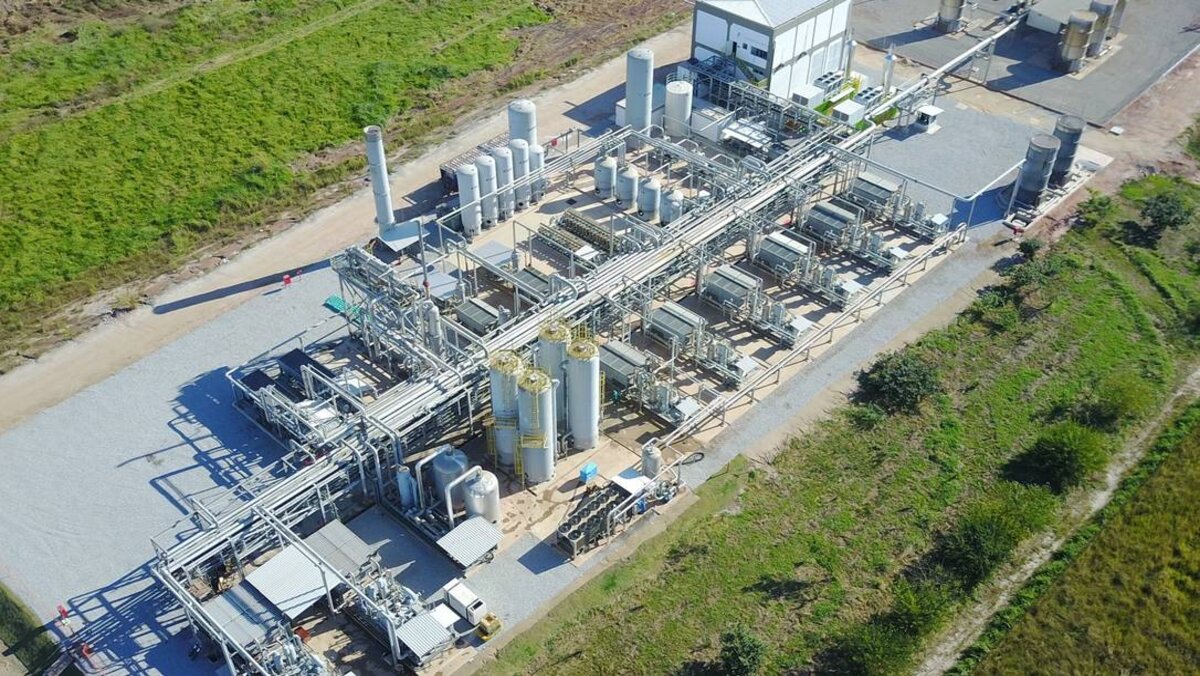

The Tariff Review by Naturgy Will Enable the Construction of New Gas Pipelines in the Region to Connect Biogas Plants to the Company, While the Government of Rio de Janeiro Will Establish New Regulations for Biogas Prices in the State
The Deputy Secretary of Oil and Gas of Rio, Daniel Lamassa, commented on the future of the fuel market in Rio de Janeiro, and on Wednesday (06/01), it is expected that the state government will deliver the new regulation for biogas prices by the second half of June. Furthermore, there will be the inclusion of new pipelines for interconnection with fuel production plants in the company’s tariff review.
The Government of Rio de Janeiro Will Publish New Regulations to Define Maximum Biogas Prices by the Second Half of June
The government of the state of Rio de Janeiro expects to publish the new regulations for biogas prices, aiming to inject the product into the state gas network, by the second half of June. As this regulation is being developed, representatives hope that the resumption of Naturgy’s tariff review, which controls CEG and CEG Rio, will include the construction of gas pipelines to connect the state’s biogas plants to the distribution network.
The new regulation for biogas prices is increasingly required in the state, as the decrees from 2014 and 2018 did not update the price, which is currently up to R$ 1.20 per m³, thus creating a gap in relation to international prices.
-
Brazilian scientists are simultaneously advancing two research projects on clean hydrogen and driving solutions that could transform the energy matrix, enhance industrial competitiveness, and accelerate large-scale emission reduction targets.

-
Advancement in renewable energy: A R$ 150 million project launched by Petrobras and Finep aims to create state-of-the-art electrolyzers for green hydrogen, strengthening national research and preparing Brazil to compete in a billion-dollar energy market.
-
Illiterate or semi-literate grandmothers were trained to repair solar systems, open rural workshops, and light up homes that still depended on kerosene.
-
US$ 7 billion, green hydrogen, and steel with up to 95% less CO₂: the first green steel plant on the planet emerges in Sweden and targets Brazil as the next chapter



Additionally, according to projections from the Secretary of Oil and Gas in Rio, the capacity being utilized in the region is not at its maximum, and there would still be room for compulsory injection of about 650,000 m³/day into Naturgy’s network, which controls CEG and CEG Rio. One of the main problems preventing biogas injection in the state’s network from occurring as expected is the high prices of the fuel.
Therefore, the new regulation from the state aims to create legal security to encourage the attraction of new investments in the state, with fair and secure prices for new ventures. The state of Rio de Janeiro is currently producing only 10% of its potential, which is 1.3 million m³/day, and the government is now focusing on expanding this production.
Rio de Janeiro Will Have New Pipelines for Connecting Biogas Production to Expand Fuel Injection into the State’s Network
The tariff review by Naturgy and its subsidiaries throughout this month of June also aims to include the construction of new gas pipelines to connect biogas production to the gas network in the state. According to Lamassa, this is another strategy by the state government to ensure the attraction of new investments for biogas production in the region, focusing on the sustainability market, which is increasingly in demand in the national energy landscape.
In this way, the Deputy Secretary of Oil and Gas of Rio, Daniel Lamassa, confirmed the project and stated that “This year, Agenersa (Regulatory Agency for Energy and Sanitation of Rio de Janeiro) will conduct the fourth and fifth tariff review of Naturgy. In this last one, we will include the construction of pipelines to connect the biogas plants.”
Moreover, he recalled, among the measures to incentivize renewable fuel adopted in Rio, the reduction of ICMS on biogas, which went from 18% to 12%, and reaffirmed the commitment of the government of Rio de Janeiro regarding the growth of the fuel segment during the year 2022.