






 Portuguese
  Spanish


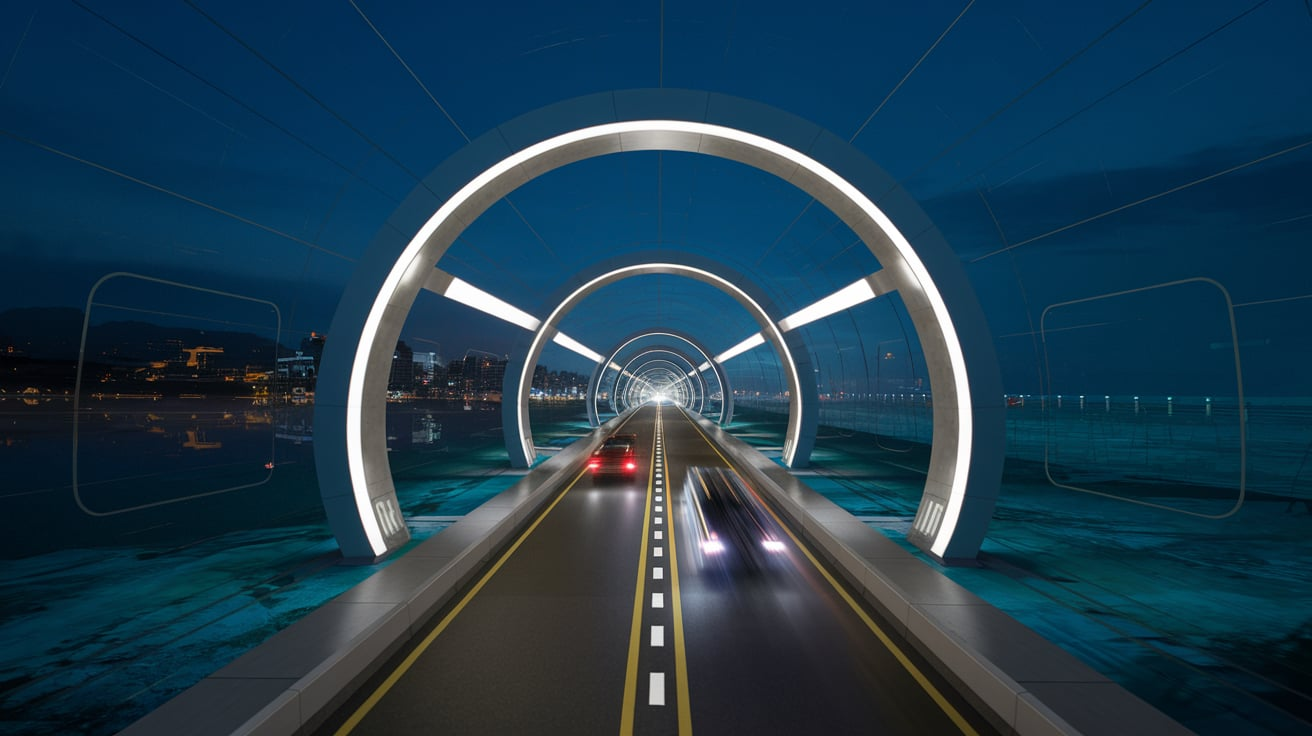


Government Surprises by Choosing a Submerged Tunnel to Connect Itajaí and Navegantes, Leaving Aside the Project for a Monumental Bridge. The Work Promises to Revolutionize Local Mobility and Economy.
Connecting neighboring cities through a monumental bridge is often the most common solution to overcome natural obstacles, such as rivers and canals.
However, in Santa Catarina, this logic has been subverted with a bold and innovative choice.
Instead of erecting a bridge, the state government opted for a submerged tunnel, an unprecedented project in Brazil that promises to transform the mobility and economy of the region. But what was the reason behind this unexpected decision?
-
Brazil’s 2026 Tax Refund: Record 9.58 Million Filers in Largest Payout Ever, But a Key Detail on Priority Recipients Draws Nationwide Attention

-
U.S. City Builds Tiny Home Village on Water Company Land to House 136 Homeless People: Inside the Social Housing Units

-
Itaú Alters Hybrid Work Model, Increasing Office Days from 2028, Prompting Employees to Adjust to New Routine
-
Woman Turns Shipping Container into Home, Embraces Rural Life to Cut Monthly Expenses to Just Over $330



Strategic Decision to Avoid Structural Restrictions
According to NSC Total, the coordinator of the mobility project, João Luiz Demantova, explained that the decision to abandon the bridge was due to structural restrictions imposed by naval traffic and the proximity of the local airport.
The Itajaí-Açu River, through which large ships transit to the ports of Santa Catarina, would require the bridge to have a height of 65 meters at its highest point to avoid interfering with navigation. However, this requirement clashed with an aerial limitation.
The Navegantes Airport, located nearby, imposes a maximum height of 45 meters for any construction in the aircraft approach area. This conflict made the construction of the bridge unfeasible.
Submerged Tunnel: The Viable and Innovative Alternative
In light of this impasse, the government of Santa Catarina turned to an innovative solution. The submerged tunnel will allow crossing under the river without interfering with air or maritime traffic, ensuring efficient infrastructure for the region.
Although it is a rare model in Brazil, the technology has been successfully applied in other countries.
The project envisions precast blocks being submerged and sealed at the bottom of the river, creating a safe underground corridor for vehicles.
This technology has been used in various parts of the world to solve similar problems, ensuring safety and efficiency in crossing between cities separated by bodies of water.
Comparisons with Other Projects in Brazil
Brazil’s experience with submerged tunnels is still limited. Currently, a similar project is being developed to connect Santos and Guarujá in São Paulo, but it faces numerous delays and financial challenges.
As a result, Santa Catarina has the opportunity to lead a new model of infrastructure, potentially becoming a reference for future projects in other regions of the country.
The expectation of the Santa Catarina government is that the bidding for the Public-Private Partnership (PPP) responsible for the work will be launched in the first half of next year.
In addition to providing a new solution for mobility, the tunnel has the potential to boost the economic development of the region by reducing travel time between Itajaí and Navegantes.
Economic Benefits and Regional Impact
The choice of the submerged tunnel represents more than a technical solution. It is a strategy to strengthen the local economy and improve the logistical infrastructure of Santa Catarina.
The Port of Itajaí, one of the most important in Brazil, will be able to benefit directly from this faster and more efficient connection.
Additionally, the work has the potential to generate thousands of direct and indirect jobs during its construction.
The positive impact should also be reflected in real estate appreciation and the growth of local commerce.
The improvement in commuting between the cities tends to attract new investments, boosting sectors such as tourism, services, and industry.
Challenges and Future Concerns
Despite the expected benefits, the project faces significant challenges. The engineering of a submerged tunnel requires detailed planning to ensure structural safety and durability of the work.
There are also environmental concerns, as the intervention in the riverbed may affect the local ecosystem.
Another point of attention is adherence to deadlines and costs. Large-scale construction projects in Brazil often face delays and budgets that exceed expectations.
Transparency in project execution will be essential to ensure that the expected benefits materialize.
The Future of Catarina Mobility with the New Tunnel
The submerged tunnel between Itajaí and Navegantes could become a landmark in Brazilian infrastructure, inaugurating a more efficient model of connection between cities.
The initiative positions Santa Catarina at the forefront of engineering and may inspire similar solutions in other regions of the country.
The local population, in turn, eagerly awaits the next steps. Will the project be executed on schedule? Will costs remain within budget? Will the economic impact be as positive as expected? These are questions that only time can answer.









Qual a extensão do túnel ? Mudar a pista de lugar seria uma alternativa mais cara a curto prazo porém mais barata a longo prazo pois via submersa requer gasto continuo com iluminaçao, ventilação e drenagem. Sem falar na questão da segurança. Via submersa sempre tem riscos de colabamento
Sou carioca e tenho certeza que se tratando de um estado do sul do Brasil as coisas funcionam de forma mais correta. Infelizmente nesse país qualquer obra já sabemos o que acontece né. Temo também pela empresa que vai administrar esse obra faraônica e o que pode acontecer no futuro.
Acho bem viável esse túnel, contanto que não sejam os Chineses que construam o túnel.