Portuguese
  Spanish


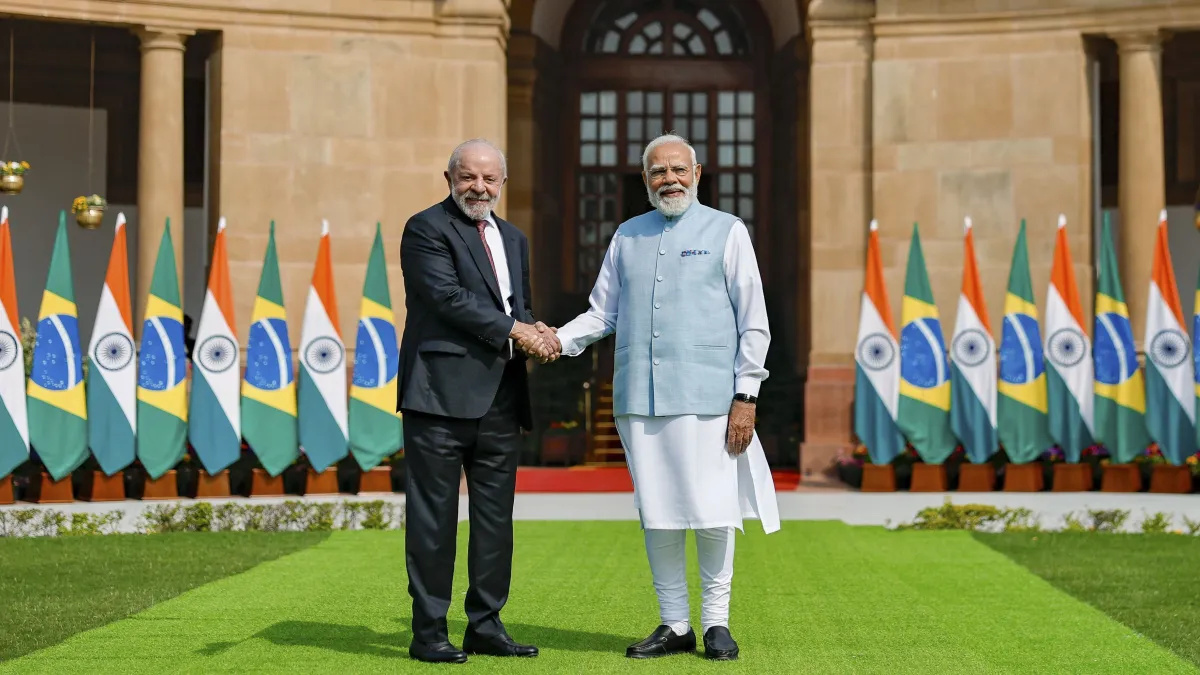


Ministry of Health Formalizes Partnerships in New Delhi to Nationalize Oncology Medications and Expand Supply in the SUS, Forecasting Billion-Dollar Investments and Technology Transfer Involving Public Laboratories and Private Brazilian and Indian Companies.
The Ministry of Health signed on Saturday (21), in New Delhi, three Productive Development Partnerships (PDPs) for the national manufacturing of oncology medications intended for the Unified Health System (SUS).
According to the ministry, the estimated investment may reach R$ 722 million in the first year and R$ 10 billion in ten years.
The formalization took place during the Brazil–India Business Forum in the Indian capital, with the presence of President Luiz Inácio Lula da Silva and Health Minister Alexandre Padilha.
-
He has never read a line of code, but he already knows how to work: the French company UMA presented in Paris the Northstar, its first AI-powered humanoid robot designed for factories and warehouses, capable of copying tasks just by observing an employee in action.

-
A young Kenyan engineer collects plastic waste from the streets and transforms it into robots that translate physics lessons into sign language in real-time, a machine made with old bottles that teaches what was missing to deaf children left out of science.

-
What is the dark substance found in the sand of Ipanema Beach? Civil Police conduct an examination, collect samples of the material, and initiate an investigation to identify the composition, clarify the origin, and verify if there was an environmental crime.
-
The beer that was hidden for 3,000 years has returned to the world: scientists find yeast preserved in Ancient Egyptian vessels and recreate a pharaoh’s drink to discover the lost taste of an ancient civilization.



The agreements involve Brazilian public institutions and private companies, including Indian firms, with plans for technology transfer and local production.
Oncology Medications in the PDPs and Costs Outside the SUS
The PDPs address the medications pertuzumab, dasatinib, and nivolumab, used to treat different types of advanced cancer, such as breast, skin, and leukemias, according to the Ministry of Health.
The ministry states that most of these medications are still not available in the SUS and that, in the market, they may cost up to R$ 100 thousand.
According to the government, the agreements utilize the state’s purchasing power to expand the supply of these treatments to SUS patients.
The proposed announcement also includes the internalization of production stages and technological transfer to national partners.
National Production, Technology Transfer, and the Health Industrial Complex
The Ministry of Health states that this initiative is part of the strategy to strengthen the Economic-Industrial Health Complex.
The ministry says that the focus is on internalizing production, technology transfer, and increasing national productive autonomy.
In justifying the production in the country, the government points to the intention of reducing external dependence on strategically important medications.
The ministry also states that this measure seeks to ensure greater stability in the supply and expand access to high-complexity therapies in the SUS.
Bahiafarma, FURP, and Partner Companies for Each Medication
The production of nivolumab will be done through cooperation between Bahiafarma (Bahian Foundation for Scientific Research and Technological Development, Supply and Distribution of Medications), as a public partner, and the companies Bionovis and Dr. Reddy’s Laboratories, as private partners.
The pertuzumab will be produced in partnership between Bahiafarma, as a public institution, and the companies Bionovis and Biocon Biologics do Brasil, as private partners.
In the case of dasatinib, the PDP will be executed in partnership between the Foundation for Popular Medicines (FURP), Biocon Pharma, and Nortec Química.
During the official mission to India, Lula stated that “Brazil and India have been working side by side, for decades, in defense of equity in access to medicines, especially generics, and in health sovereignty within the World Health Organization.”
Alexandre Padilha, according to the ministry’s statement, highlighted that the agreements foresee technology transfer and local production of the medications.
Brazil–India Memorandum Expands Cooperation in Vaccines, Inputs, and Digital Health
In addition to the PDPs, Brazil and India signed an addendum to the Memorandum of Understanding between the countries, extending bilateral health cooperation for five years.
According to the Ministry of Health, the agreement expands joint initiatives in areas such as medication production, vaccines, and active pharmaceutical ingredients, biofabrication, and the development of biologics.
Additionally, the ministry states that the cooperation includes actions in digital health, telehealth, and artificial intelligence.
The text also provides for technical exchange in areas such as oncology, diabetes, cardiovascular diseases, and prevention of chronic diseases.
Fiocruz, Farmanguinhos, and Agreements with Biocon and Lupin
The Oswaldo Cruz Foundation (Fiocruz) signed two Memorandums of Understanding with Indian pharmaceutical companies.
One of them was established with Biocon Pharma and, according to the statement, focuses on technology transfer and the production of treatments for rare diseases, cancer, and immunosuppressive therapies.
The other agreement was made with Lupin and foresees joint development and local production of medications aimed at neglected infectious diseases, such as tuberculosis, malaria, schistosomiasis, leprosy, and Chagas disease.
The initiatives will be conducted by Farmanguinhos/Fiocruz (Institute of Technology in Pharmaceuticals), as reported by the government.