






 Portuguese
  Spanish
 4 min of reading
  0 comments


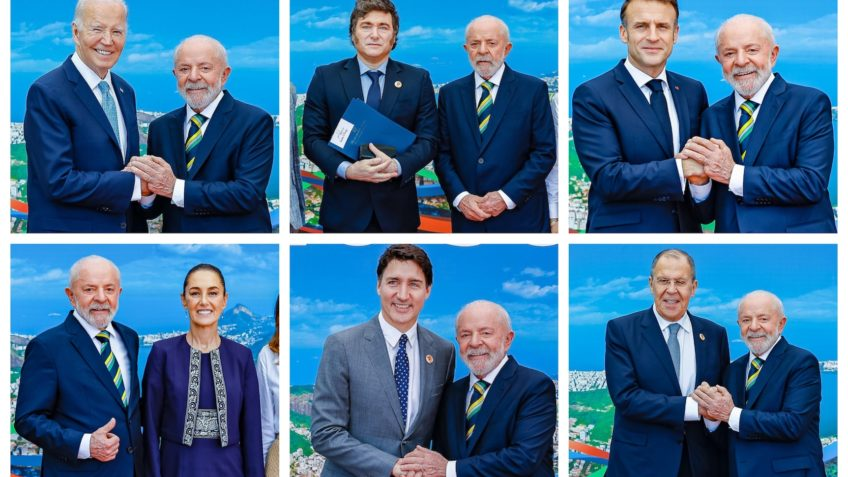
The G20 in Rio Moved R$ 140 Million from the Federal Government and Brought Discussions About Cost-Benefit and Global Impact. Was It Worth It?
Brazil became the center of global attention with the G20 summit in Rio de Janeiro, marking the first time the country hosted the event.
But while world leaders discussed the economic and political future, the cost of R$ 140 million for holding the meeting sparked controversy in the national scenario.
The G20 summit, which concluded on Tuesday (19), was held in a context of high expectations. The event mobilized a grand structure and significant public resources.
-
The urgent need to implement a severe cut in public spending and a massive increase in taxes, in addition to drastically compromising the quality of basic services and the purchasing power of the population, could result in social unrest in the country, with the population leading protests, strikes, and frequent disturbances.

-
FIRJAN’s mega plan of R$ 526.3 billion for Rio de Janeiro aims to revive Brazil’s largest industry, with two-thirds of the investments going to oil and gas.

-
China signals an increase in beef imports, Brazil has already consumed 70% of the 1.106 million ton quota and seeks to renegotiate the tariff that jumps from 12% to 55%, while demand from the US also skyrockets.
-
Food inflation rose 302% in 20 years in Brazil, but the supermarket changed: purchasing power yielded 87% more mortadella and 31% less fruit, and ultra-processed foods took over the cart.



According to the Ministry of Planning, of the initial budget of R$ 220.1 million, R$ 140.4 million was allocated, while the actual payments so far totaled R$ 77.6 million.
How Much Did It Cost and Who Paid?
Holding an event of this magnitude required the participation of various ministries. Here is how the costs were distributed:
| Ministry | Allocated Amount (R$) | Paid Amount (R$) |
|---|---|---|
| Foreign Affairs | 49.3 million | 21.7 million |
| Finance | 21.9 million | 18 million |
| Communications | 6.8 million | 6.5 million |
| Culture | 7 million | 5.8 million |
Additionally, specific renovations, such as the Modern Art Museum (MAM), which hosted part of the meeting, cost R$ 32 million.
The government justifies the investment as necessary to accommodate over 120,000 participants, including heads of state, delegations, journalists, and other professionals.
The economic activity generated by the event in Rio was estimated at R$ 595.3 million, divided among lodging, food, and services.
What Was Discussed at the G20?
The leaders of the 20 largest economies in the world discussed central issues for the global future, such as climate change, social inequality, and economic cooperation.
One of the greatest achievements was the formation of a global alliance against hunger and poverty, led by Brazil.
With the support of more than 80 nations, the project will receive an investment of US$ 25 billion (approximately R$ 146 billion), according to the Inter-American Development Bank (IDB).
Furthermore, the summit reinforced the commitment to sustainability and the search for clean energy, topics that highlight Brazil, especially due to its renewable energy matrix and its relevance in food production.
Local Impacts: Benefit or Excessive Spending?
The event, besides putting Brazil at the center of global decisions, also had impacts on the local economy.
However, the high cost of R$ 140 million generated criticism, especially at a time of internal economic challenges, such as high inflation and lack of resources for priority sectors, such as health and education.
President Luiz Inácio Lula da Silva highlighted in his speech the role of Brazil at the G20 and defended the spending as a necessary investment to consolidate the country as a global leader. He stated:
“We are placing Brazil where it deserves to be: at the center of global decisions that will shape the future.”
On the other hand, experts question whether the long-term benefits justify the investment, especially considering that part of the allocated amounts has not yet been paid.
Unspent Funds
Interestingly, some ministries registered allocated amounts, but no payments have been made so far. Here are the examples:
| Ministry | Allocated Amount (R$) | Paid Amount (R$) |
|---|---|---|
| Social Security | 91 thousand | 0 |
| Human Rights and Citizenship | 62 thousand | 0 |
These data raise questions about budget execution and how these resources will be managed after the event.
Promises and Challenges for the Future
The G20 left a legacy of important discussions and promising agreements, such as the commitment to reduce inequalities and expand global cooperation.
However, the concrete results of these debates will still take time to materialize, while the immediate cost of the event is already a reality.
For Rio de Janeiro, the summit brought international visibility and boosted the local economy. However, residents and critics still wonder whether the event will directly benefit the population or be remembered merely for the high public expenditures.
Was the G20 a Good Deal for Brazil?
The holding of the G20 in Brazil reinforced the country’s role in the international arena and promoted highly relevant debates.
However, the high cost and the need for resources in essential areas create a dilemma: does the impact of the event justify the investment?
And you, do you think the G20 brought more benefits or was it an excessive expense? Share your opinion!






Be the first to react!