Portuguese
  Spanish


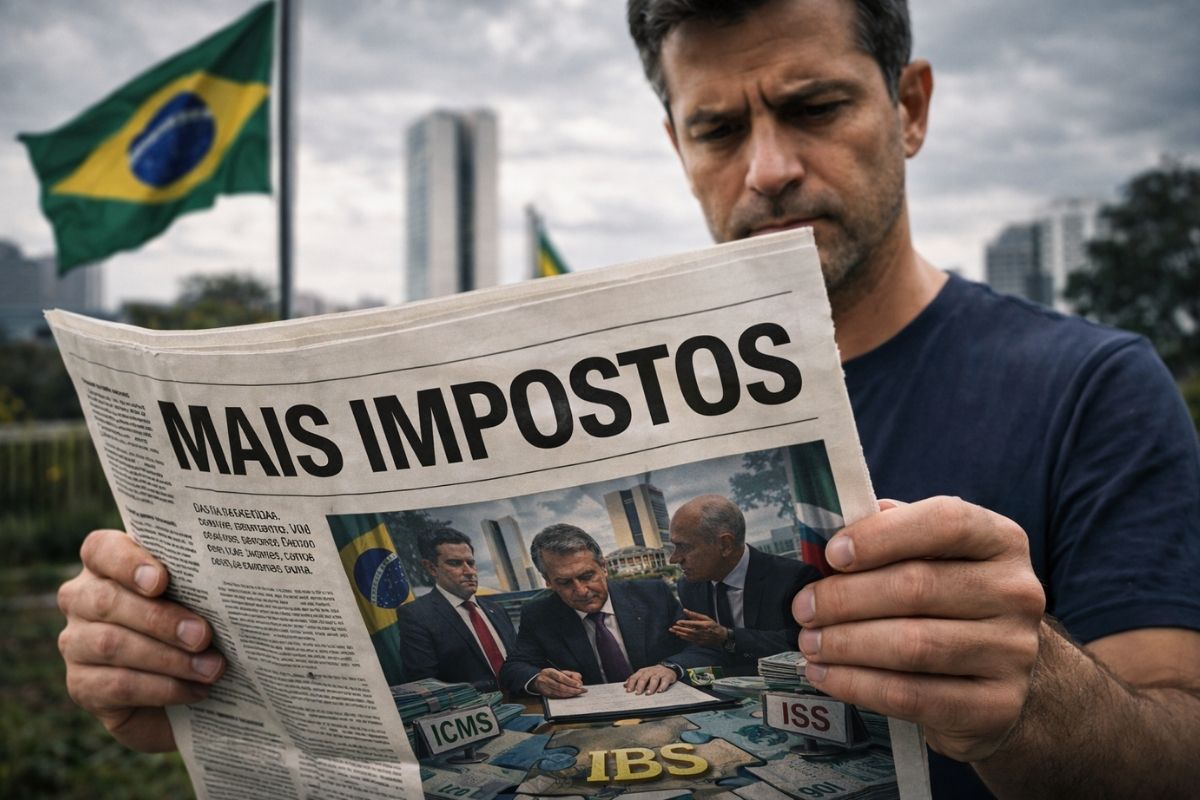


With Unspecified Vetoes, Lula Signed on January 13, 2026, at the Palácio do Planalto, the Law of the IBS Management Committee, Which Consolidates the New Tax in Brazil by Replacing ICMS and ISS, Standardizing Oversight, Organizing Revenue Collection, and Enabling Cashback and Credit Refunds on a National Scale.
At the Palácio do Planalto, President Luiz Inácio Lula da Silva signed, on Tuesday, January 13, 2026, the law that creates the IBS Management Committee and accelerates the implementation of the new tax in Brazil within the Tax Reform approved by Congress.
In practice, the IBS does not emerge as an unprecedented charge, as it unifies ICMS and ISS into a single structure. The change reorganizes revenue collection, alters the coordination among the Union, states, Federal District, and municipalities, and opens a stage with political noise and fiscal expectations regarding the final design of the Tax Reform.
What the Sanction Defines for the New Tax in Brazil
The signed law formalizes the Management Committee as the operational piece of the IBS and marks a turning point for the new tax in Brazil.
-
Brazilian Construction Retail Chain Closes After 60 Years, Begins Liquidation Sale Across Five Cities

-
Brazil Approves Landmark Bill Requiring Workplace Adaptations for Autism Inclusion

-
Brazil’s Micro-Entrepreneur Program May See Major Changes: Income Cap Could Increase to R$ 130,000, Annual Inflation Adjustments, and Allow Hiring of an Additional Employee
-
DoorDash Founder Tony Xu, CEO of an $85 Billion App, Becomes Delivery Driver for an Hour, Completes Four Orders, Makes $19


The act was carried out with unspecified vetoes, according to the Palácio do Planalto, leaving uncertainty over sections that may have a direct impact on revenue collection.
The institutional message is that the Tax Reform enters an executive phase: less generic dispute and more operational rule, with responsibilities distributed and standardized collection.
Management Committee and the Governance of the IBS
The Management Committee of the IBS was established to manage, oversee, and coordinate the functioning of the tax.
The management, according to the federal government, will be shared among the Union, states, Federal District, and municipalities, in a cooperative model.
In practice, the Management Committee gains prominence because the routine of the IBS depends on technical decisions regarding revenue collection, oversight, and common procedures.
Therefore, the Management Committee is likely to become the center of dispute when regional interests are affected.
Unification of ICMS and ISS and the Impact on Revenue Collection
The core of the IBS is unification: ICMS, of state competence, and ISS, charged by municipalities, now integrate the new tax in Brazil.
The promise is to reduce federative conflicts and provide predictability to taxpayers, who are currently exposed to different rules in each location.
By concentrating ICMS and ISS into a single system, revenue collection will depend on standardization and transparency.
This is where the design of the IBS touches the daily operations of local administrations, as revenue collection sustains services and public policies.
Oversight, Credits, and Cashback in the Tax Reform
Among the listed responsibilities, the Management Committee must ensure standardization of oversight rules and transparency in revenue collection.
Another point is the agility in the refund of tax credits, which becomes an indicator of the system’s trust.
The law also anchors the tax cashback, described as a mechanism for returning part of the tax to low-income families.
In the Tax Reform, this item is included as a social component to reduce the burden of indirect taxes on consumption.
Political Noise and the New Federative Balance
The creation of the Management Committee of the IBS reorganizes the relationship between the Union, states, Federal District, and municipalities, as it impacts revenue collection and oversight that were previously dispersed.
This is likely to generate political noise in future votes, in regulation, and in the competition for implementation rules.
The new tax in Brazil advances, but the practical outcome will depend on how the Management Committee consolidates procedures and how the Tax Reform will be translated into revenue collection and credit refunds.
If you rely on local rules for ICMS and ISS, follow the upcoming decisions from the Management Committee and the regulation of the IBS, because they are expected to alter revenue collection and the timelines for credits in the Tax Reform.
Do you think the new tax in Brazil will genuinely simplify revenue collection or just shift the confusion around between the Union, states, and municipalities?