






 Portuguese
  Spanish


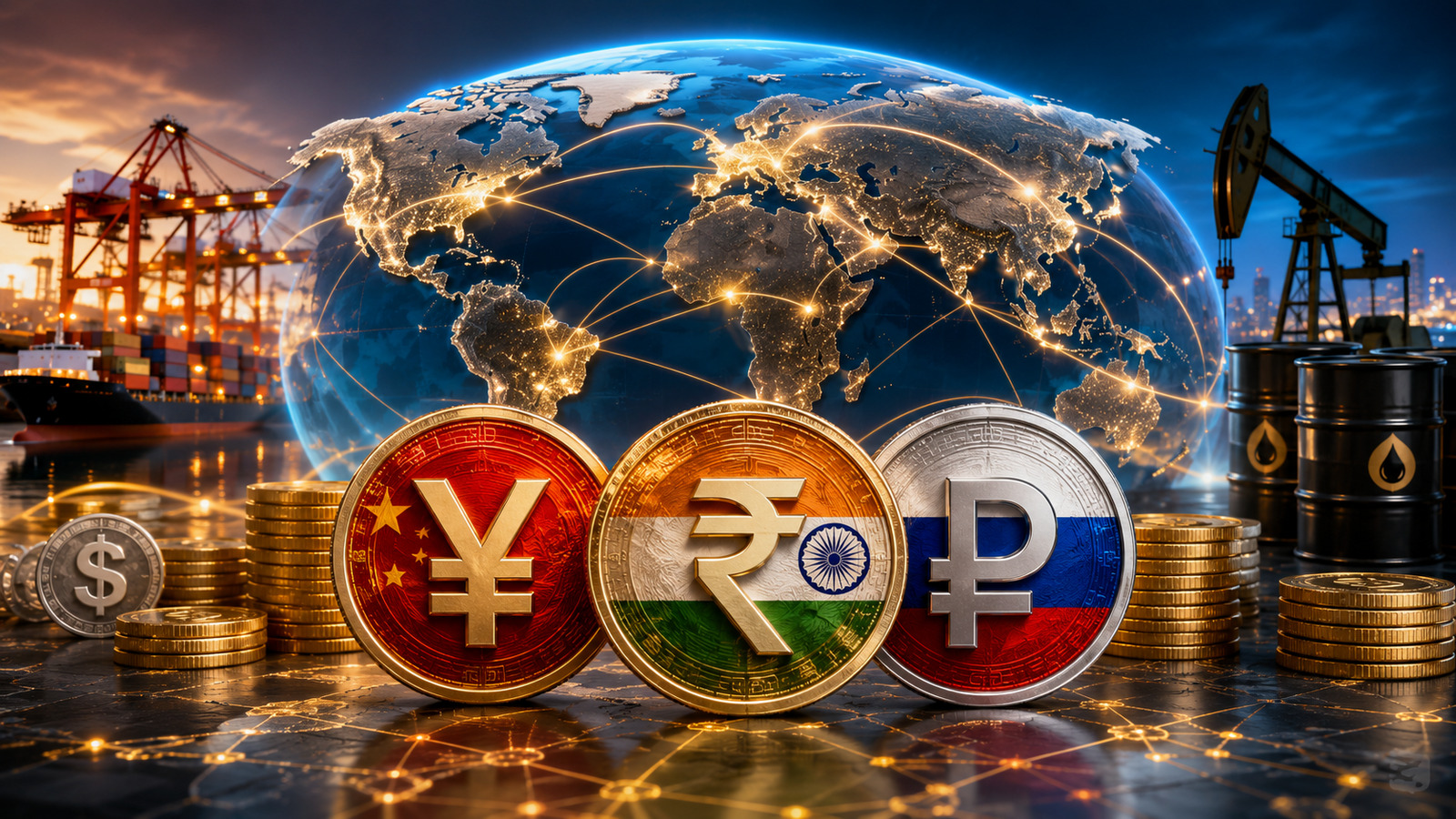

More than 80 countries participate in initiatives to reduce the use of the dollar in international trade, while expanded BRICS boost payments in yuan, rupee, and ruble
More than 80 countries are participating in dedollarization initiatives to reduce dependence on the US dollar in international exchanges. The movement is gaining momentum with the expansion of the BRICS, which now bring together economies with greater commercial and financial weight, while agreements in yuan, rupee, and ruble advance in bilateral transactions.


Dedollarization gains scale with more than 80 countries involved
The dedollarization movement has reached a new stage with the participation of more than 80 countries in initiatives aimed at reducing the use of the US dollar in international trade. The dynamic is linked to the growing influence of the BRICS.
The bloc has expanded its composition with the entry of new members, such as Saudi Arabia, United Arab Emirates, Egypt, Iran, and Ethiopia.
-
7-Year-Old Estela Wins Ballet Qualifier; Family Crowdfunds for Argentina Finals in October

-
Before taking over as CEO of Starbucks, Laxman Narasimhan spent about six months training as a barista and committed to working a half shift each month to stay connected to the store floor.

-
After Selling Meetup for $200 Million, Founder Scott Heiferman Spent Nine Months Working at an Amazon Distribution Center to Reconnect with the Everyday Worker
-
The Atlantic Journalist Given $10,000 to Bet on NFL Season Ends Experiment as Compulsive Gambler with Just $109 Left, Family Says


Thus, it has gained more weight in discussions about alternatives to the financial system dominated by the US currency.
The strategy involves encouraging the use of national currencies in trade agreements. Chinese yuan, Indian rupee, and Russian ruble appear among the main alternatives used in settlement mechanisms between partner countries.
For the governments involved, the change seeks to reduce exposure to financial structures controlled or influenced by the United States.
At the same time, it increases the autonomy of countries that want to settle international transactions outside the traditional dollar-based standard.
Expanded BRICS increase the economic weight of the movement
The cited data shows the scale of the group in global trade and economy. The BRICS represent 20.4% of world trade and approximately 36.8% of global GDP in purchasing power parity.
These numbers help explain why dedollarization has started to attract more attention from international markets.
The bloc brings together countries with strong participation in energy, industry, agricultural production, foreign trade, and supply chains.
The entry of new members also expands the geographical reach of the negotiations. With members in the Middle East, Africa, Asia, and South America, the group now brings together economies with varied interests but with a common agenda of monetary diversification.
The change does not eliminate the role of the dollar, which remains the main world reserve currency and maintains a dominant position in international financial markets.
Even so, the expansion of agreements in local currencies indicates an attempt to reduce dependence on a single reference.
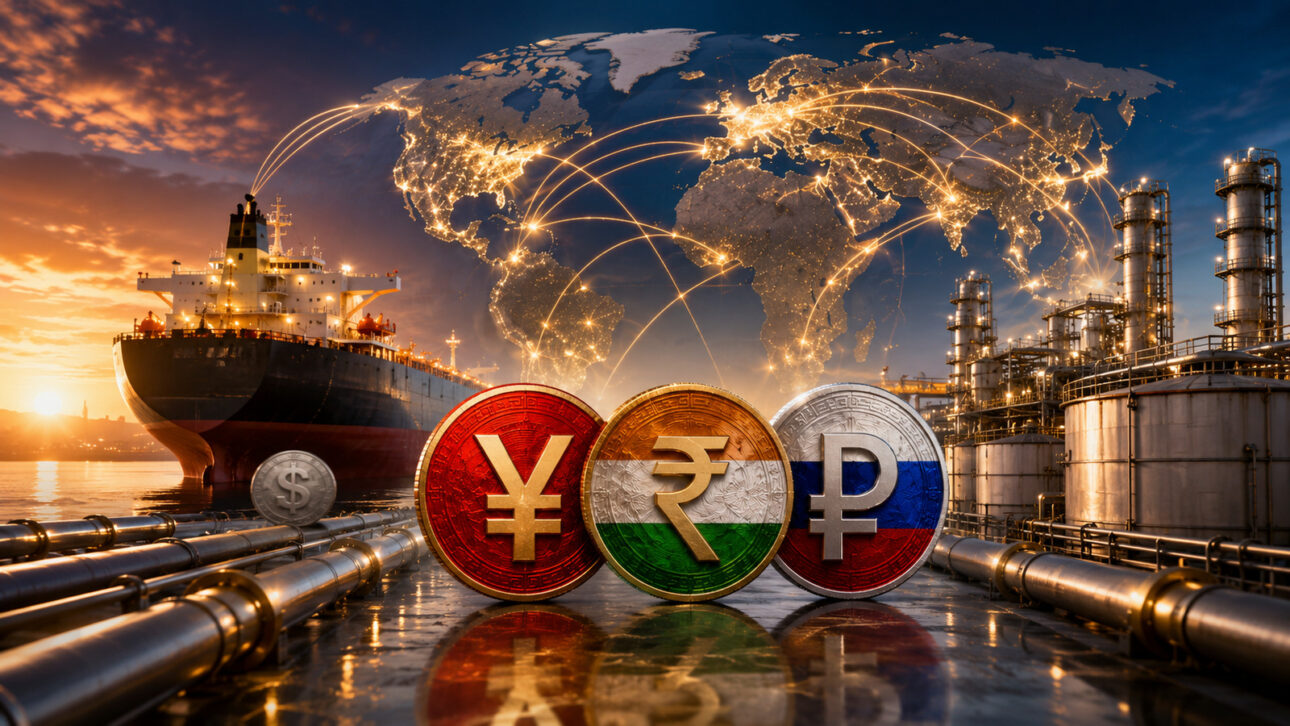
China and Russia already operate billion-dollar trade in local currencies
The cooperation between China and Russia is one of the most advanced examples of this process. According to Yuri Ushakov, diplomatic advisor to the Kremlin, practically all payments related to $240 billion in trade exchanges between the two countries are made in yuan and ruble.
The statement indicates that the change is already operational between the two powers. The use of local currencies is also presented as a form of protection against Western sanctions.
In addition to general trade, the energy sector reinforces this rapprochement. Russia exported more than 31 million tons of oil to China in the first quarter of the year, a volume more than a third higher than previously recorded.
This flow shows how dedollarization advances in strategic sectors. In the case of energy, contracts in currencies alternative to the dollar have a direct impact on one of the most sensitive areas of global trade.
Bilateral agreements spread new forms of payment
China also expands its strategy through currency swap agreements. The country is said to have established this type of mechanism with more than 50 nations, including Russia, Saudi Arabia, and the United Arab Emirates.
India follows a similar movement and develops rupee settlement systems with more than 20 partner countries. These agreements allow commercial transactions to be made without necessarily going through the US dollar.
Another point observed by the markets is Saudi Arabia’s interest in a possible partial payment of its oil exports in yuan. The topic draws attention because energy trade has a strong impact on global dollar demand.
The multiplication of these agreements points to a more diversified international monetary system, in which different currencies can gain space in global exchanges.
For now, the dollar remains dominant, but de-dollarization is already emerging as a concrete trend in a significant part of global trade.
This article was prepared based on information from Cointribune, with data, numbers, and statements preserved as per the consulted material.


