






 Portuguese
  Spanish
  4 min of reading
  0 comments


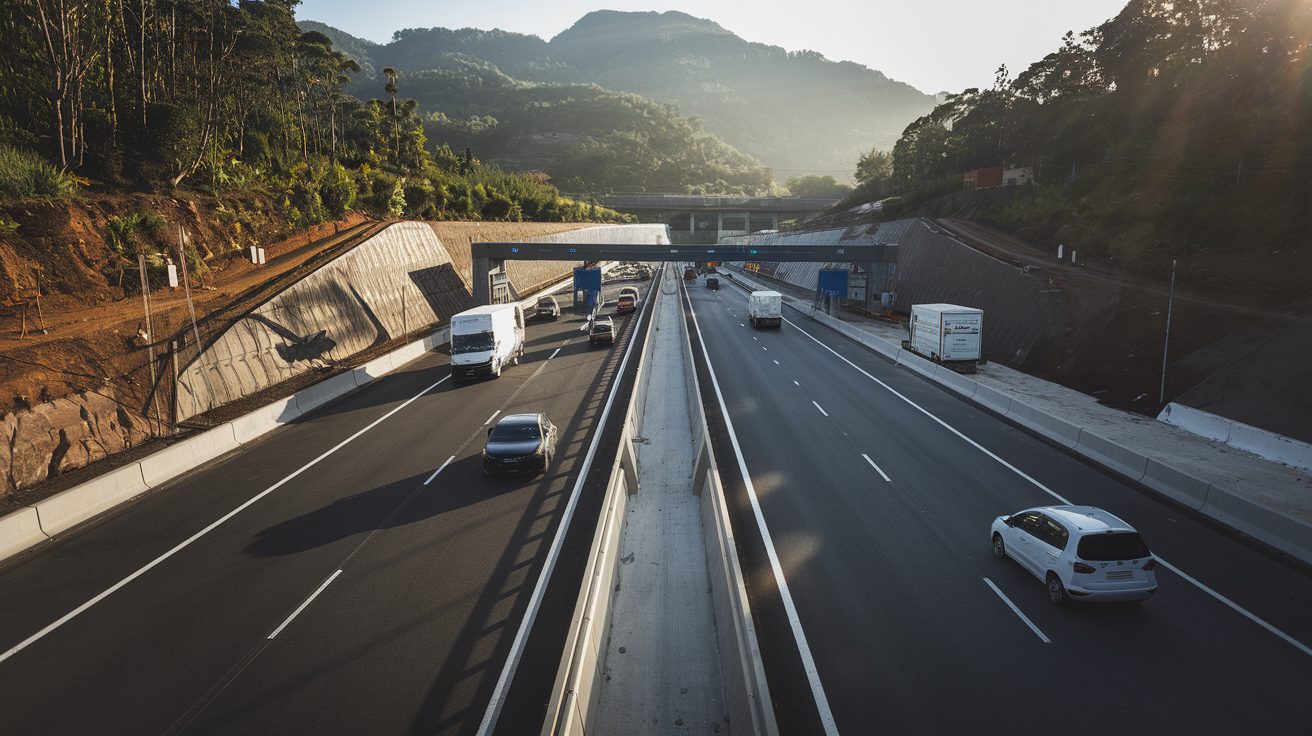
Government Plans to Revolutionize Its Highways: 3 Thousand Kilometers Will Be Handed Over to the Private Sector, Promising Billion-Dollar Investments.
Get ready for a new era on the highways of Minas Gerais. The state government announced an ambitious initiative that promises to transform the infrastructure of transportation in the state.
In the coming years, thousands of kilometers of highways will be handed over to private management, but the details reveal an even deeper impact on the lives of Minas Gerais residents.
Will this change truly be beneficial for the state?
-
Land Rover to Halt Production in July, Putting 371 Jobs at Risk, as Chinese Automaker Negotiates to Convert Factory to 100,000 Vehicles Annually by 2027

-
Bolivian Female Construction Workers Form Association to Combat Discrimination and 38% Pay Gap in the Industry

-
Mexican Pest Threatens U.S. Cattle Herds at Historic Lows, Potentially Boosting Brazilian Beef Exports as Burger Prices Soar

-
Near Amsterdam, residents buy land and discover they must also build streets, manage drainage, handle waste, and grow food on half their plot.


Minas Gerais on the Route of Highway Concessions
Currently, Minas Gerais has 2,350 kilometers of highways under private management, divided into six active contracts totaling investments of R$ 17 billion.
These concessions include important roads, such as MG-050, BR-135, South Minas Lot, Triângulo Mineiro Lot, Varginha-Furnas Lot, and the Metropolitan Ring Road of Belo Horizonte.
Of the six stretches, five are already fully operational, benefiting thousands of drivers daily.
The next step of the government is even more ambitious. In 2025, five new lots will be auctioned, which together will add about 3 thousand kilometers of highways to the concession network.
With this expansion, Minas Gerais will see the number of roads under private management more than double, bringing new challenges and opportunities for users.
Billion-Dollar Investments on the Horizon
The five new projects will require investments of approximately R$ 19 billion, surpassing the amount already invested in operating concessions.
Among the lots to be auctioned, the Ouro Preto Lot stands out, which includes stretches of the BR-356, MG-262, and MG-329 highways.
This lot will have a length of 187.3 kilometers and will pass through 11 municipalities, such as Nova Lima, Mariana, and Rio Casca, ensuring significant improvements in the region’s infrastructure.
Additionally, R$ 2 billion from the agreement for the Mariana tragedy, approved by the Supreme Court, will be invested in the duplication of BR-356 and in improvements to the road connecting BR-040 to Mariana and Rio Casca.
These works promise not only to benefit traffic but also to pay tribute to the memory of the 2015 tragedy.
New Lots: Infrastructure and Regional Impact
The concession project is not limited to Ouro Preto. Other strategic lots will also be auctioned:
North Vector Lot: Covers 123.4 kilometers of highways, including MG-010, MG-424, and LMG-800, passing through 13 municipalities such as Belo Horizonte, Lagoa Santa, and Sete Lagoas. The contract provides for R$ 3 billion in investments and R$ 1.3 billion for user services.
Iron Quadrangle Lot: With 500 kilometers, it includes 24 strategic municipalities in the economic center of Minas.
Northwest Lot: Extends over 775.9 kilometers, covering 14 cities.
Zona da Mata Lot: The largest of all, with 1,176 kilometers and covering 47 municipalities.
All auctions are expected to take place throughout 2025, with contracts lasting up to 30 years.
Highways Already Conceded and the Impact of Privatization
Since 2019, the government of Minas Gerais, under the management of Romeu Zema (Novo), has accelerated the pace of concessions.
The lots from the Triângulo Mineiro, South Minas, Varginha-Furnas, and Metropolitan Ring Road have been handed over to the private sector, consolidating a public-private partnership policy aimed at modernizing the state’s road infrastructure.
Despite advancements, the privatization of highways is a controversial topic. Users frequently question the high costs of tolls and the efficiency of the promised works.
However, the government argues that the concessions ensure faster improvements and essential services, such as emergency medical assistance and towing, which would be difficult to provide with exclusively public resources.
What to Expect from the Future of Minas Highways?
With over R$ 19 billion in planned investments, the expectation is that the new lots will bring greater safety, better traffic conditions, and quality services to drivers.
However, it remains to be seen whether the cost to users will be proportional to the benefits delivered.
Minas Gerais, a state of continental dimensions, heavily relies on efficient road infrastructure to boost its economy and connect its regions.
Will private management be able to meet the growing demands and deliver the projects on time? Or will the residents face even greater challenges, such as high tolls and lack of oversight?
Leave your opinion in the comments: do you support or oppose highway concessions? Does privatization really improve infrastructure or just increase costs for drivers?








Be the first to react!