Portuguese
  Spanish


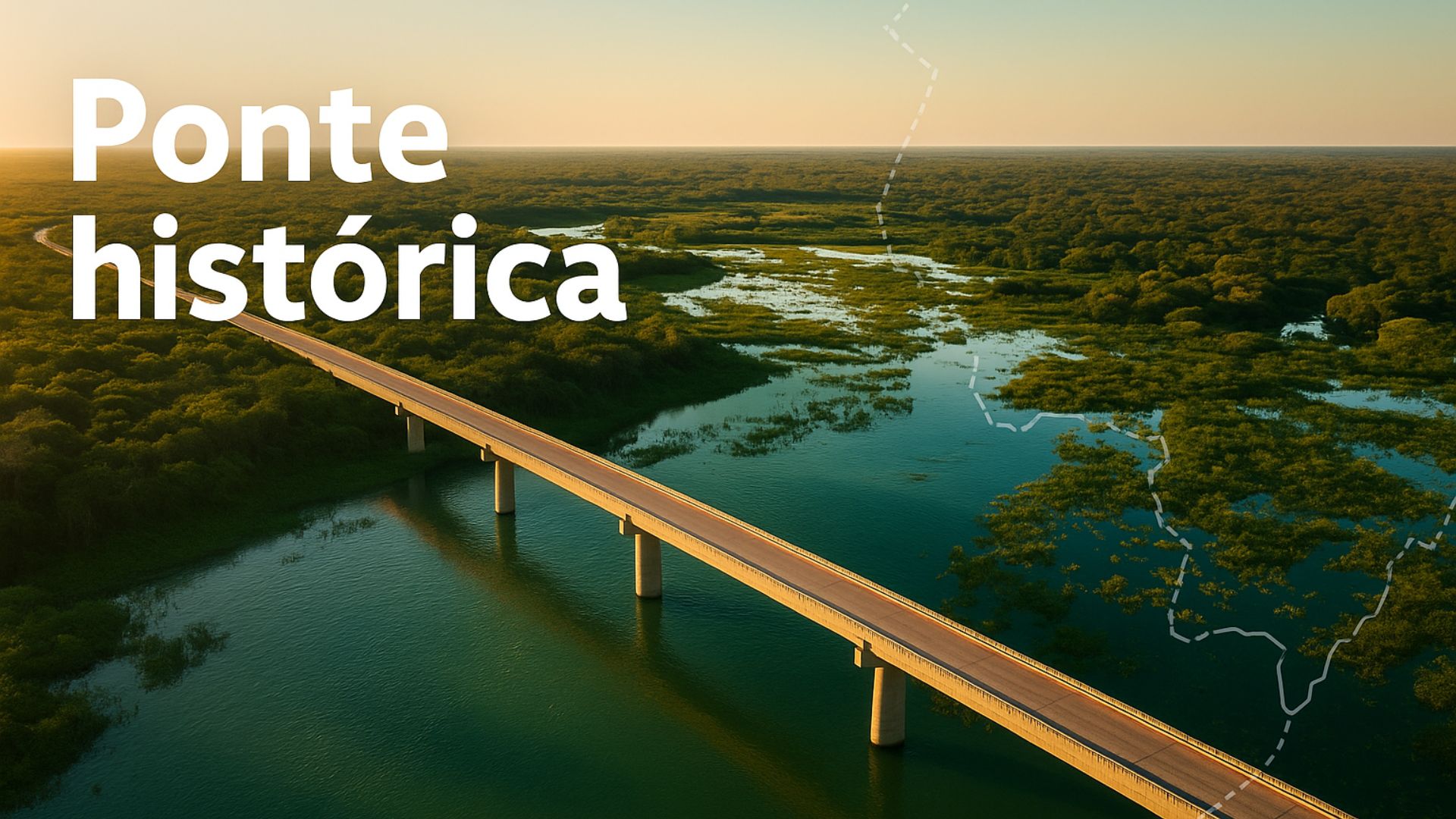

A 300-Meter Bridge Will Connect Mato Grosso and Mato Grosso do Sul Over the São Lourenço River in the Pantanal, With an Estimated Investment Between R$ 50 Million and R$ 60 Million. The Project Is Expected to Boost Tourism, Economy, and Regional Integration.
A bridge of 300 meters over the São Lourenço River, in the heart of the Pantanal, will be the first physical connection between Mato Grosso and Mato Grosso do Sul.
With an estimated investment between R$ 50 million and R$ 60 million, the structure will connect the Transpantaneira Road (MT) to the MS-214 (MS), creating a new axis of regional integration with expected impact on tourism and the local economy.
The initiative is the result of cooperation between the two state governments.
-
Brazil’s 2026 Tax Refund: Record 9.58 Million Filers in Largest Payout Ever, But a Key Detail on Priority Recipients Draws Nationwide Attention

-
Itaú Alters Hybrid Work Model, Increasing Office Days from 2028, Prompting Employees to Adjust to New Routine
-
Facing Labor Shortage, Japan Plans to Invest $34 Million to Attract Foreign Workers in Construction, Healthcare, Industry, and Commerce

-
Brazilian City Makes Remarkable Leap, Becomes 4th Wealthiest in the Country with GDP of R$ 134.1 Billion




Under the agreement, the costs will be shared equally, and Mato Grosso will be responsible for the development of the executive project.
The route was defined after joint technical visits, which identified the shortest and most viable path to cross the São Lourenço River.
Route and Engineering: Direct Connection Between Transpantaneira and MS-214
Teams from the infrastructure departments of both states analyzed route alternatives and concluded that the ideal route connects the end of the Transpantaneira, in Mato Grosso, directly to the MS-214, in Mato Grosso do Sul.
The Director of Projects and Budgets at Agesul, Magno Mendes, stated that the chosen path reduces distances and facilitates access for residents and tourists traveling in the region.
The project envisions a concrete bridge of about 300 meters, designed to withstand flooding and seasonal variations in the Pantanal.
According to involved engineers, the adopted model should allow wildlife to pass beneath the structure, avoiding significant interference in the natural dynamics of the river.
Responsibilities of Each State and Progress of the Works
The cooperation agreement states that Mato Grosso will execute the technical project, and Mato Grosso do Sul will continue the interventions on the MS-214, the road that will connect the BR-163 to the bridge point.
Official data from Agesul indicate that about 60 kilometers of the stretch have already undergone implementation and primary surfacing works, with 70.63% physical progress recorded so far.
The highway is considered strategic for dispersing tourist traffic and improving access to the Pantanal region.
Local authorities assess that the physical connection between the two states may reduce travel time and expand circulation routes throughout the year.
Ecotourism and Economic Activity in the Pantanal
The area where the bridge will be built is close to Porto Jofre (Poconé, MT), recognized for housing one of the largest wild jaguar viewing hubs in the country.
According to the manager of Pousada Porto Jofre Pantanal, Eduardo Blanco, local tourism drives dozens of properties, with 10 large boats, 60 small boats, and about 200 boat drivers operating in the region.
Most visitors arrive via Cuiabá and travel the 150 kilometers of dirt road of the Transpantaneira to the river.
According to industry operators, the construction of the bridge should improve access for tourists coming from Mato Grosso do Sul and expand the offer of integrated itineraries between the two states.
The project may also increase the length of stay for visitors and benefit the regional economy.
Ecological Corridor and Environmental Care
Environmental specialists assess that the connection could strengthen integration between both sides of the Pantanal and create an ecological corridor between conservation areas.
The Director of Road Infrastructure at Seilog, Rudi Fiorese, stated that the project will be a landmark of connectivity between the states, as long as it follows appropriate technical and environmental criteria.
The Deputy Secretary of Road Works of Mato Grosso, Nivia Calzolari, reported that the project is being developed based on sustainability principles and that the environmental licensing will be conducted according to the requirements of the Pantanal biome.
According to her, the connection meets a long-standing demand from the tourism sector and should contribute to sustainable regional development, within the environmental limits established by the competent authorities.
Mobility and Social Impact in the Region
The project is seen by state managers as a measure to improve mobility and integrate riverside communities living in hard-to-access areas.
The new bridge will shorten the journey between Corumbá (MS) and Porto Jofre (MT), facilitating the movement of residents and visitors.
The investment may also increase road safety during the flooding period when dirt roads become impassable.
According to technicians from the involved departments, the investment may also generate temporary jobs during construction and boost local sectors, such as hospitality, transport, and food.
The regional commerce, according to preliminary estimates, is expected to benefit from the increased circulation of people and goods.
Technical Challenges and Next Steps
The construction of a bridge in the Pantanal poses logistical and environmental challenges.
Engineers responsible for planning emphasize that the saturated soil and water level variations require specific foundation techniques and timelines adjusted to the dry season, when working conditions are more favorable.
According to Seilog and Sinfra, the advancement of the project depends on the completion of environmental studies, the approval of the executive project, and the bidding of the works.
Both administrations state that the execution will be coordinated to ensure compatibility between road interventions and the main structure.
Perspectives for the Future of the Pantanal
With the completion of the bridge and access works, the expectation is that the Pantanal will become more accessible to tourism and scientific research, while maintaining a commitment to environmental conservation.
Managers and researchers point out that balancing economic growth and preservation will be the main challenge for the coming years.
The physical integration between the states is considered, by technicians and environmentalists, an important step for the joint planning of public policies focused on ecotourism and the protection of the biome.
The main question now is: how to ensure that the increase in tourist visitation occurs sustainably, without compromising biodiversity and the Pantanal communities?