






 Portuguese
  Spanish


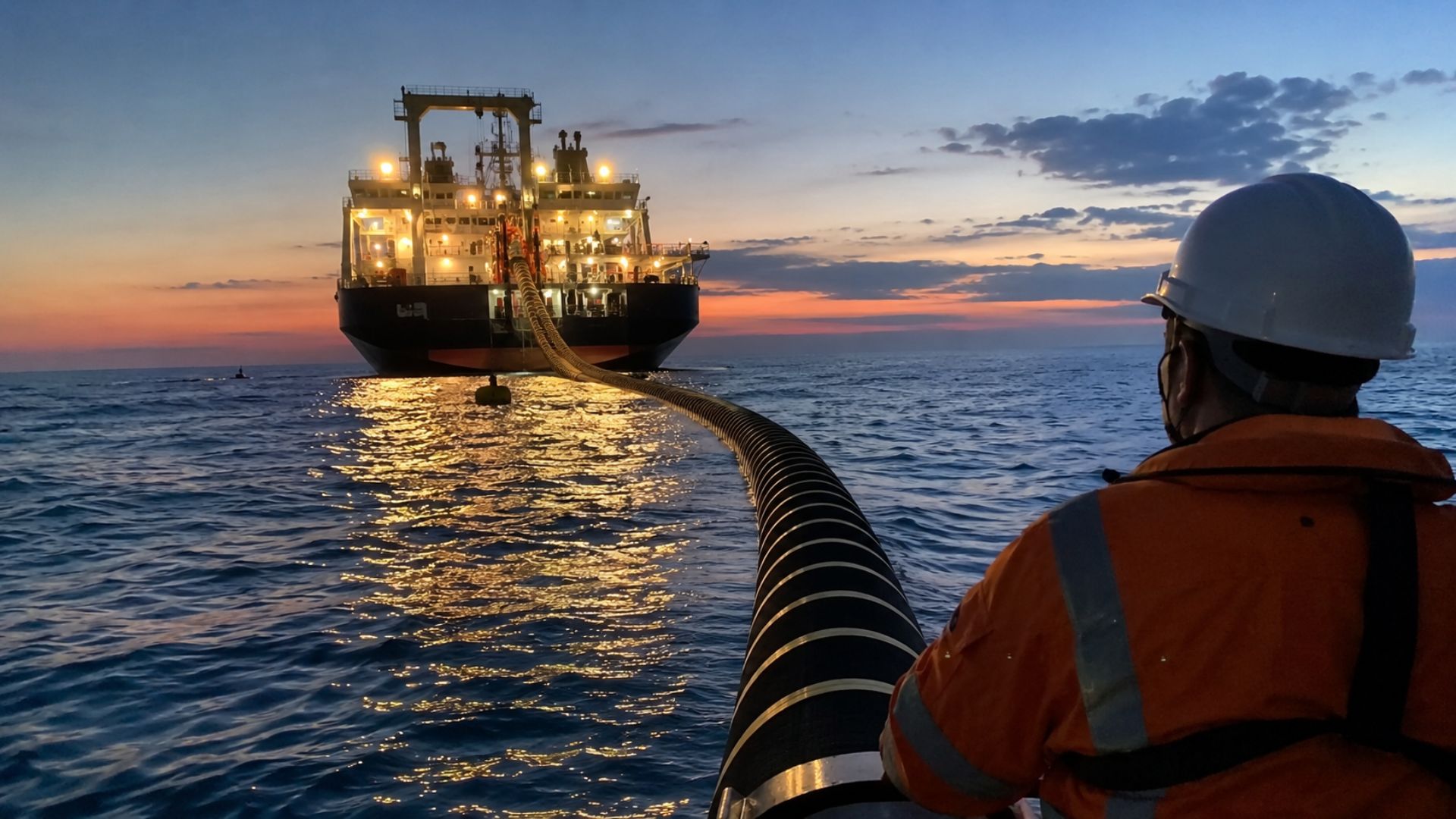

Billion-dollar project in the Mediterranean aims to connect Europe and Middle East electricity grids via a high-voltage submarine cable installed at extreme depths, in a work considered strategic for energy security, regional integration, and expansion of renewable energy transmission.
Linked to the Great Sea Interconnector project, Greece, Cyprus, and Israel plan to install a high-voltage submarine power cable approximately 1,240 kilometers long in the eastern Mediterranean, in sections that can reach 3,000 meters in depth, a dimension considered rare even for large energy sector projects.
Initially, the proposal aims to connect the electricity grids of Greece and Cyprus via Crete, while the next stage plans to extend the connection to Israel, forming an underwater energy corridor between Europe and the eastern Mediterranean.
According to those responsible for the undertaking, the system could become the longest and deepest high-voltage submarine interconnector on the planet, a combination that has made the project one of the most closely watched energy infrastructure initiatives currently in the region.
-
Employee buys a ticket that a customer left behind, discovers a million-dollar prize, tries to claim the fortune, is fired after 20 years, and ends up in a legal dispute with the company.

-
China returned almost 20 Brazilian ships with soybeans and is now back to buying from the USA, but stocks above 9 million tons raise suspicions of a political move, not a commercial necessity.

-
Japan will have a bullet train that levitates at 500 km/h and will cross 90% of the route through tunnels; the project promises trips in just 67 minutes but faces billion-dollar challenges and unprecedented environmental obstacles.
-
Few people know, but the smallest city in Rio holds a tunnel that was once the largest in the world, covering only 95.35 km², housing a railway work of 2,233 meters, and is also known for the historic title of the 4th best climate in the world.



In addition to reducing Cypriot energy isolation, the plan was designed to expand electricity exchange between countries and facilitate the integration of renewable sources, a scenario that has gained importance given global pressure for more interconnected and flexible grids.
According to information released by Reuters, the estimated cost of the project is around 1.9 billion euros, a value that includes not only the submarine cable, but also converter stations, terrestrial infrastructure, and highly specialized maritime operations.
Submarine cable expected to integrate Cyprus into the European electricity grid
In the first phase of the Great Sea Interconnector, the connection between Crete and Cyprus appears as a central piece to bring the Cypriot electricity system closer to the European grid, reducing a condition of energy isolation that has accompanied the country for decades.
Currently, Cyprus remains without a direct connection to the continental electricity grid, a reality that limits the ability to import or export energy and increases dependence on internally generated power to meet local consumption.
With the new cable in operation, the island will be able to exchange electricity with other markets more broadly, increasing supply flexibility and creating alternatives for times of higher demand or pressure on the system.
At the same time, the connection has come to be seen as strategic for the utilization of renewable sources, as surplus solar and wind production can circulate between integrated grids, reducing losses and improving regional energy balance.
HVDC technology to be used in Mediterranean submarine cable
To enable transmission over long submarine distances, the project adopted HVDC technology, an acronym for High-Voltage Direct Current, a model frequently used in large-scale electrical interconnections to reduce losses over certain routes.
Unlike conventional alternating current systems, the structure was designed to operate more efficiently over extensive underwater routes, allowing the integration of national grids separated by large maritime areas and extreme depths.
In addition to the cable installed on the Mediterranean seabed, the operation will require onshore converter stations responsible for transforming alternating current into direct current during transmission and performing the reverse process upon the electricity’s arrival at its destination.
Another factor that increases technical complexity involves the submarine topography of the region, as the system will need to cross deep and irregular areas, requiring specialized vessels, detailed route planning, and equipment prepared to withstand high pressure.
Project faces delays and geopolitical tension in the Eastern Mediterranean
Even though it is considered strategic by governments and electricity sector operators, the Great Sea Interconnector has accumulated delays over recent years amidst discussions about financing, economic viability, and the division of operational responsibilities.
Reports published by Reuters also pointed to impacts caused by geopolitical tensions in the Eastern Mediterranean, a region marked by maritime disputes and energy interests considered sensitive by various countries involved in the vicinity.
In this scenario, the project’s progress no longer depends solely on submarine engineering but now requires constant coordination among governments, regulators, investors, and operators responsible for the future electrical integration between participating markets.
In September 2025, Cypriot authorities stated that European prosecutors were investigating possible irregularities related to the project, following complaints that led the European Public Prosecutor’s Office to open a preliminary inquiry into the case.
A few days later, the President of Cyprus, Nikos Christodoulides, stated that the government was holding talks with the United Arab Emirates about possible financial and strategic cooperation to ensure the continuity of the initiative.
Submarine work could change energy flow between Europe and the Middle East
If it proceeds within the planned schedule, the interconnector is expected to function as a submarine electrical bridge between Europe and the Eastern Mediterranean, allowing energy to flow in two directions according to the needs of each connected system.
In recent years, structures of this type have gained relevance by offering greater flexibility in the face of the expansion of renewable sources and growing international concern with energy security and stability in electricity supply.
As interconnected grids can better respond to demand fluctuations, local failures, and natural changes in solar or wind generation, offshore transmission projects have come to occupy a strategic place in the energy plans of different countries.
For Israel, the future connection could open an additional route for electrical integration with Europe through Cyprus and Greece, although this stage still depends on the progress of ongoing technical, regulatory, and financial negotiations.
The physical dimension of the undertaking helps explain the international interest surrounding the project, as a cable over a thousand kilometers long installed at extreme depths requires unusual industrial planning and highly specialized maintenance.
Almost invisible to those who observe only the surface of the Mediterranean, the Great Sea Interconnector was designed to alter the regional circulation of electricity and create a new energy connection between markets historically separated by the sea.


