





 Portuguese
  English
  Spanish
  5 min of reading
  0 comments


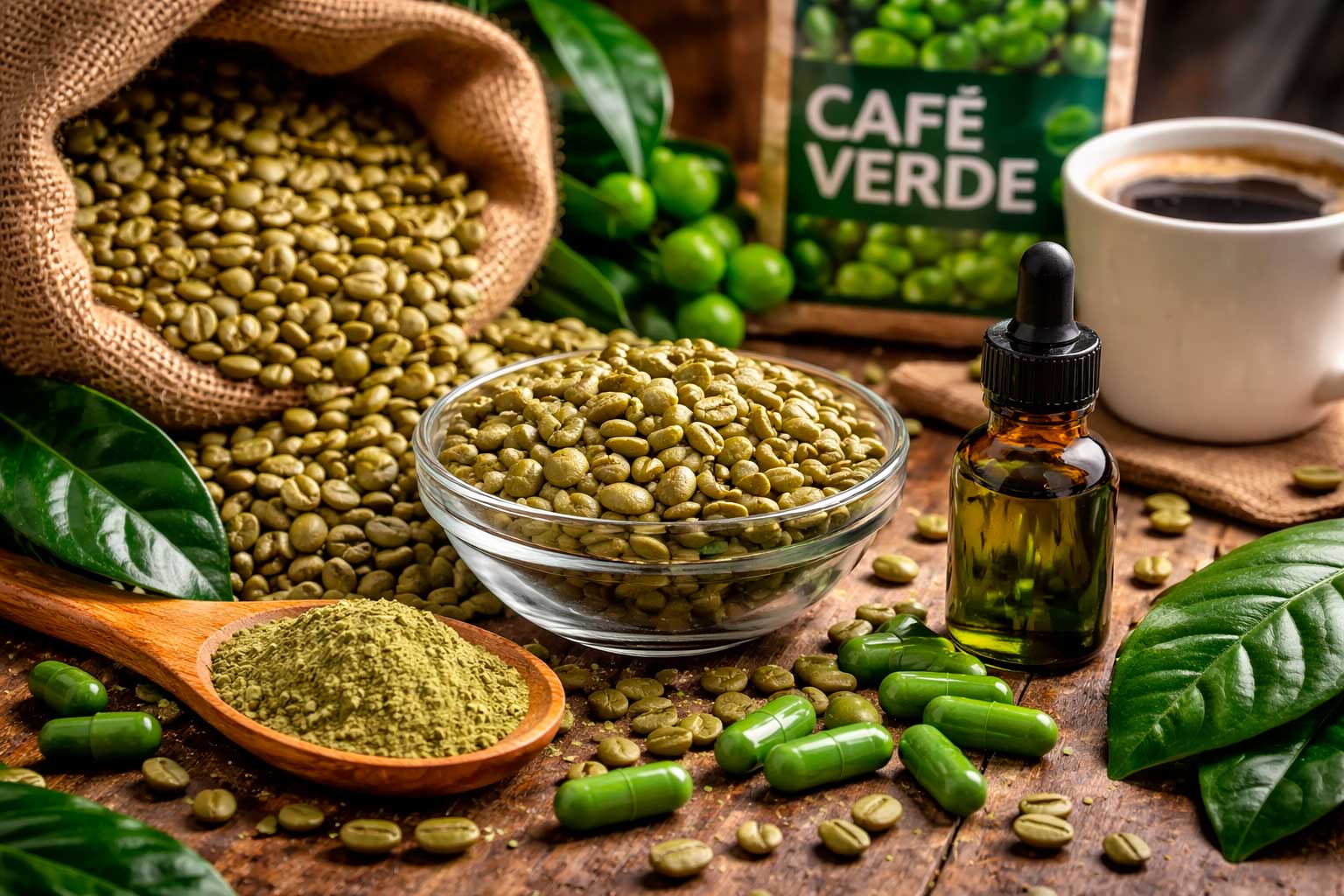
Raw grain preserves bioactive compounds linked to metabolism, but studies show a modest effect on weight loss and a large gap between evidence and marketing
Green coffee has gained traction in pharmacies, supplement stores, and Google searches as a quick solution for those looking to lose weight. However, the most current scientific picture is far less spectacular than advertising suggests. A NIH fact sheet on weight loss supplements cautiously summarizes the scenario by stating that green coffee extract may help lose only a small amount of weight.
This difference between promise and reality is not a detail. In March 2025, the Federal Trade Commission of the United States reported sending over $905,000 in refunds to consumers who purchased the product Pure Green Coffee, advertised with false weight loss claims, misleading testimonials, and pages that mimicked news articles.
What keeps green coffee on researchers’ radar is not a supposed caffeine explosion. The focus is mainly on chlorogenic acid, a group of polyphenols present in greater quantities in the unroasted bean and quite sensitive to heat.
-
A study proposes transforming the Moon into a kind of quarantine center for samples brought from Mars and other worlds, creating a sterile and isolated barrier that would filter any unknown organisms before the material reaches Earth and its ecosystems.

-
Wax notebook falls into latrine 800 years ago, survives intact in Germany and reveals Latin notes that may expose the routine of a high-status medieval merchant.

-
After more than 11 years orbiting Mars, NASA declared the MAVEN probe lost, which disappeared after passing behind the Red Planet in December, began to spin abnormally, depleted its batteries, and never responded to controllers on Earth again.
-
China creates a capsule with artificial intelligence that scans the stomach in just 8 minutes and can reduce costs by up to R$ 1,400, paving the way for a new era of gastrointestinal diagnostics without tubes, sedation, and discomfort for patients.


Roasting studies show that chlorogenic acids drop drastically when coffee is roasted, while caffeine remains much more stable.
What is green coffee and why does the raw grain attract so much attention
In practice, green coffee is the coffee bean before roasting, usually from the species Coffea arabica or Coffea canephora. It has not yet undergone the process that develops the more intense aroma, dark color, and characteristic flavor of the coffee that arrives in the cup in the morning.
It is precisely at this roasting stage that the major chemical shift occurs. High temperature enhances the sensory experience but reduces some of the phenolic compounds associated with antioxidant activity and metabolic effects observed in laboratory and clinical trials.
Therefore, the fame of green coffee should not be sold as if it were that of a “stronger” coffee. The central point is different. Caffeine is not the main differentiator, because it withstands heat better, while chlorogenic acid suffers significant losses during roasting.
This detail corrects a common misconception in the supplement market. Many people buy green coffee thinking of an extreme thermogenic effect, when the scientific discussion is more related to the preservation of polyphenols than to an extraordinary dose of stimulant.
What studies have really found about weight loss
When it comes to green coffee for weight loss, the results exist, but they are far from the miracle promised in many campaigns. A meta-analysis from 2019 that gathered 13 articles and 16 randomized clinical trials found a significant reduction in BMI, but did not show statistically solid changes in body weight and waist circumference across all combined analyses.
A broader review published in 2020, with 15 clinical trials and 897 participants, found a clearer favorable effect. The synthesis estimated average reductions of 1.23 kg in body weight, 0.48 in BMI, and 1 cm in waist, numbers that help to understand why green coffee sparks interest, but also why it doesn’t make sense to treat it as a standalone solution.
Another relevant point appeared in a meta-analysis from 2023 focused on chlorogenic acid. The study indicated that green coffee extracts with 500 mg per day of chlorogenic acid were associated with weight loss, but the authors emphasized important limitations, such as small sample sizes and the short duration of some studies.
The duration of use also weighs in the correct interpretation of the evidence. In the 2019 review, interventions lasting less than four weeks did not show an effect, while results tended to be better in individuals with an initial BMI above 25. Translating to real life, green coffee may even act as support, but it does not deliver the kind of radical transformation that advertising often suggests.
Beyond the scale, chlorogenic acid appears in other markers
The story does not end with weight. A 2024 meta-analysis on green coffee extract and blood pressure pointed to an average decrease of 2.95 mmHg in systolic pressure and 2.15 mmHg in diastolic, with no significant effect on heart rate. It is a small result, yet clinically interesting in groups with cardiovascular risk.
In the metabolic field, another review found improvements in fasting glucose, insulin, and total cholesterol after supplementation with green coffee extract. In parallel, a meta-analysis on lipid profile also recorded reductions in total cholesterol and LDL, with improvements in HDL, although the effects on triglycerides were modest and less consistent.
These findings help to explain why chlorogenic acid has become the true protagonist of this discussion. A systematic review from 2024 on the compound describes a set of biological effects that include antioxidant, anti-inflammatory action, and improvement of some glycemic and lipid parameters, always with the caveat that the clinical impact depends on the context, the product, and the quality of the study.
What consumers need to observe before believing the promise

The first filter is to separate scientific evidence from commercial speech. The NIH itself warns that, in weight loss supplements, some studies are small, short, and of variable quality, and that messages like “lose weight without diet or exercise” tend to be too good to be true.
The second filter is the product composition. An analysis comparing samples of green coffee and supplements showed great variation in chlorogenic acid and caffeine content among brands, as well as cases where the measured composition did not match the label. In other words, two bottles sold under the same promise can deliver very different chemical profiles.
It also makes no sense to treat green coffee as if it were risk-free just because it comes from a known food. The NIH fact sheet for consumers states that the extract appears safe under certain study conditions, but can cause headaches and other unwanted effects, while the caffeine present in the product can still cause palpitations, anxiety, nausea, and difficulty sleeping in higher doses or in more sensitive individuals.
In the end, the best reading of science is less glamorous and more useful. Green coffee does not melt fat, does not replace proper nutrition, sleep, and physical activity, but it also does not need to be dismissed as pure fad. What research suggests is a real, yet modest, effect more related to the chlorogenic acid preserved in the raw bean than to caffeine, and far from the easy promises that have gained fame in the market.
Does it make sense to treat green coffee as a metabolic ally, or has it just become another supplement inflated by marketing? Leave your comment and tell us if you see value in small, but real effects, or if you believe that the promise sold to consumers is still too great for what science delivers.





Be the first to react!