






 Portuguese
  Spanish
  4 min of reading
  0 comments


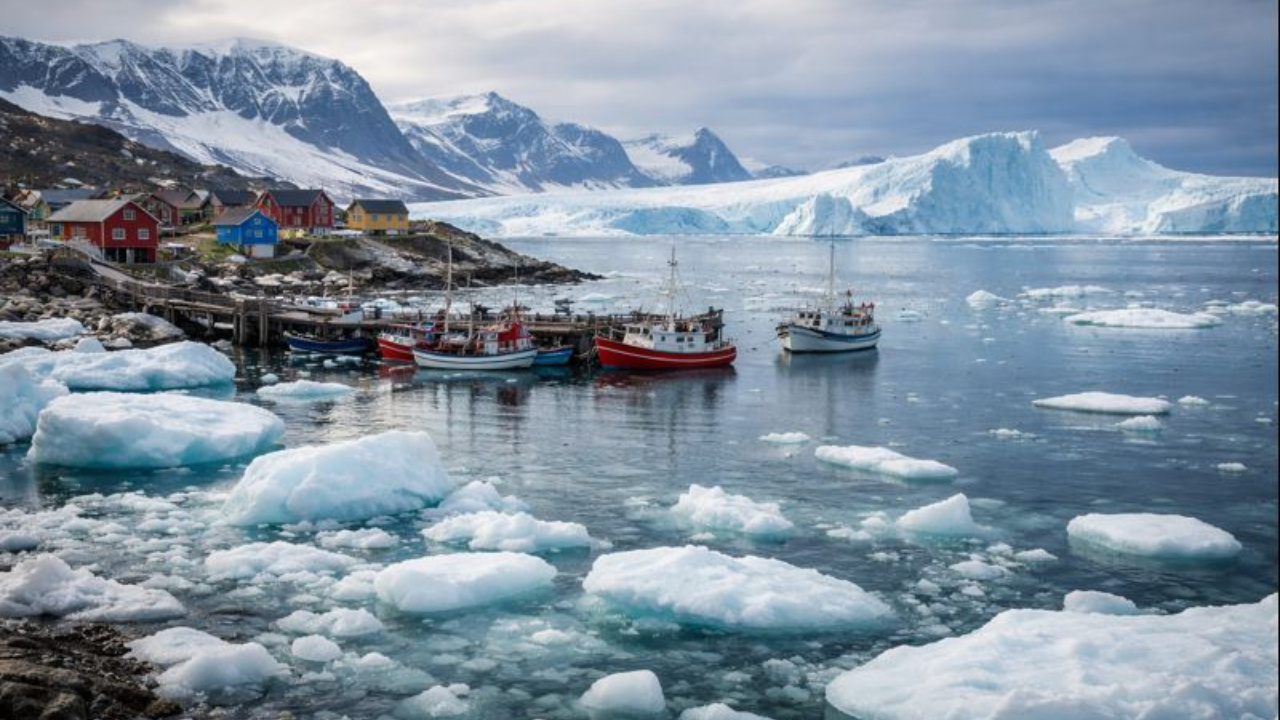
Greenland’s Economy Suffers From Climate Crisis in the Arctic, Aging Population, and International Pressure for Rare Earths.
Greenland has returned to the center of international geopolitics after statements by U.S. President Donald Trump.
This debate arises, especially from the slowdown of the local economy and the growing global interest in the rare earths hidden under the ice.
In this context, the island, located between North America and Europe, is undergoing a decisive moment, combining external pressure.
-
Coal mine purchased for $2 million in Wyoming, the Brook Mine holds rare earth elements and critical minerals estimated at up to $37 billion, in an asset that the US is competing for with China.

-
In the year Brazil won the World Cup, gasoline cost R$ 1.77, the cheapest car was worth R$ 13,000, there were no flex-fuel cars, SUVs were rare, and no Chinese brand sold a single vehicle in the country.
-
Neighboring Balneário Camboriú will receive a R$ 1 billion airport with 225 hangars, an area of 2.2 million m², a technology park, and an export zone that promises to transform the economy and generate thousands of jobs.
-
After investing R$ 5,000 in fried chicken in his backyard, a Brazilian transformed two fryers and a freezer into a network with 115 sales points, presence in up to 17 states, and revenue exceeding R$ 115 million per year.



Currently, about 81% of Greenland’s territory remains covered by ice.
Nevertheless, the country is home to approximately 56,000 inhabitants, predominantly consisting of indigenous Inuit peoples.
Furthermore, its strategic location, essential for trade routes and international security, explains why the island has come to be seen as a relevant geopolitical asset in an increasingly competitive global scenario.
Greenland’s Economy Depends on Fishing and Subsidies
Greenland’s economy is primarily sustained by fishing and financial transfers from Denmark.
Since 2009, with the enactment of the Self-Government Act, the country receives around 3.4 billion Danish kroner per year, an amount close to US$ 500 million.
Thus, the subsidy ensures fiscal stability, but also limits long-term financial autonomy.
According to Carolina Pavese, a professor of International Relations at Instituto Mauá, fishing activities go beyond economic dimension.
In practice, it plays a central role in the culture and way of life of the local population.
Meanwhile, much of the production feeds domestic consumption, and the surplus is exported, mainly to the European Union and, to a lesser extent, to China.
On the other hand, the United States does not rank among the main destinations for Greenlandic exports.
In terms of imports, however, external dependency remains high.
Industrialized products, processed foods, and consumer goods primarily come from the European market.
As a result, this dynamic increases the vulnerability of the local economy to external fluctuations.
Reports Indicate Slowdown and Fiscal Risk
Recent data from the National Bank of Denmark shows that the Greenlandic economy has entered a slowdown trajectory.
In 2025, the Gross Domestic Product (GDP) grew by only 0.2%, after recording an increase of 0.8% in the previous year.
Thus, the pace of expansion has consistently lost momentum.
According to a report released in January, public finances unexpectedly deteriorated throughout 2025.
Moreover, the liquidity of the Greenlandic Treasury fell to a critically low level in the second half of the year.
This scenario, therefore, raised alarms about the country’s fiscal sustainability.
Among the main factors explaining this situation are the aging population, low birth rates, and a shortage of skilled labor.
In addition to this are infrastructure problems, such as delays in energy supply projects, which directly impact economic activity.
Climate Crisis in the Arctic Threatens Fishing and Way of Life
The climate crisis in the Arctic is already producing direct and measurable effects in Greenland.
With rising temperatures, the warming waters and melting ice are altering the dynamics of marine life.
Consequently, fishing, the main source of income and livelihood for the population, faces increasing risks.
In addition to economic impacts, these transformations threaten the preservation of Inuit culture.
For the local community, the environment represents not only an economic asset but also an essential element of social organization and collective identity.
Ice Melting Sparks Interest in Rare Earths
At the same time, the advance of ice melting intensifies the debate on mineral exploration.
In this regard, Greenland concentrates significant deposits of rare earths, strategic minerals used in the manufacture of batteries, turbines, and digital technologies.
Therefore, the territory has begun to attract international attention.
“There is long-term interest in exploring these minerals and, consequently, reducing dependence on China, which leads global supply, especially of rare earths,” says Pavese.
Thus, mineral issues are directly inserted into the global geopolitical dispute.
Despite the potential, however, exploration remains limited.
According to the expert, the depth of the deposits amplifies social and environmental impacts.
“Rare earths require much more invasive mining than conventional mining,” she explains.
Self-Government and Control of Natural Resources
Since the adoption of the Self-Government Act in 2009, Greenland has taken direct control over its mineral resources.
As a result, any revenues from exploration fall under the responsibility of the local government.
However, the model provides for a clear counterbalance: the greater the local revenue, the smaller the subsidy sent by Denmark.
The political system guarantees administrative autonomy and allows for local management of areas such as health, education, and public safety.
Additionally, the population directly elects the Legislative Assembly, while an Economic Council continuously assesses the sustainability of public policies adopted.
U.S., China, and the New Geopolitics of the Arctic
The competition for rare earths has definitively placed Greenland on the radar of the United States, especially as an alternative to Chinese dominance in this strategic market.
At one point, Trump even threatened to annex the territory.
However, he backed down after negative reactions from Denmark and European allies.
According to Pavese, American interest reflects a long-term strategy.
“It’s a long-term bet, but it arises from the necessity for the United States to circumvent their dependence on China,” she assesses.
Thus, amid the intensification of international geopolitics, the climate crisis in the Arctic, and the structural challenges of Greenland’s economy, the future of the island remains at the center of a dispute that extends far beyond its borders.
See more at: CNN Brasil | Live News from Brazil and the World


-

-

4 people reacted to this.