Portuguese
  Spanish


On the Wine Route, in the countryside of São Paulo, the chef uses an Italian technique with ice and dough of up to 120 hours of fermentation to transform the parmesan and pecorino pizza into cream inside the oven, without letting the cheese burn
It seems contradictory to put ice on a pizza that goes into a hot oven, but that’s exactly where the trick lies. The pizzaiolo Sudário Silva, 73 years old, owner of a pizzeria on the Wine Route, in São Roque, in the countryside of São Paulo, uses ice cubes to bake pizza with parmesan, according to the Diário do Centro do Mundo, in a report on July 10, 2026.
And the result of the technique is surprising. The technique, inspired by an Italian recipe, creates a cheese cream during preparation and works with both parmesan and pecorino, reports the Diário do Centro do Mundo. The ice, which seemed to be the oven’s enemy, is what makes the cheese turn into cream.
How the ice turns the pizza into parmesan cream
The physics behind the recipe is elegant, and the article even provides an explanation from a scientist. The water released by the melting ice keeps the center of the pizza hot and moist, prevents the dough from puffing up or burning, and helps the grated cheese form a cream, details the Diário do Centro do Mundo.
-
Instead of demolishing slums and building housing projects, Thailand transferred the money directly to resident cooperatives, which renegotiated the land and rebuilt their own neighborhoods in the same place; there are already more than 90,000 families in about 1,500 communities.

-
The public school that educates from teenagers to the elderly in the same class: in Araraquara, EJA graduated 36 students at once, including Dona Lourdes, aged 83, who now wants to enter college.
-
Deaf boy heard his parents for the first time, smiled upon recognizing the family’s voices, and tried to repeat “mama” and “papa” with the help of a hearing device, turning a rehabilitation appointment into an emotional video that reached over 5.9 million views on social media.

-
40 km per day swimming in the largest river in the world: the Colombian “Fish Man” crossed the Amazon River from Cusco, Peru, to Santarém, Pará, and denounces with each stroke the plastic that pollutes the waters of the Amazon.


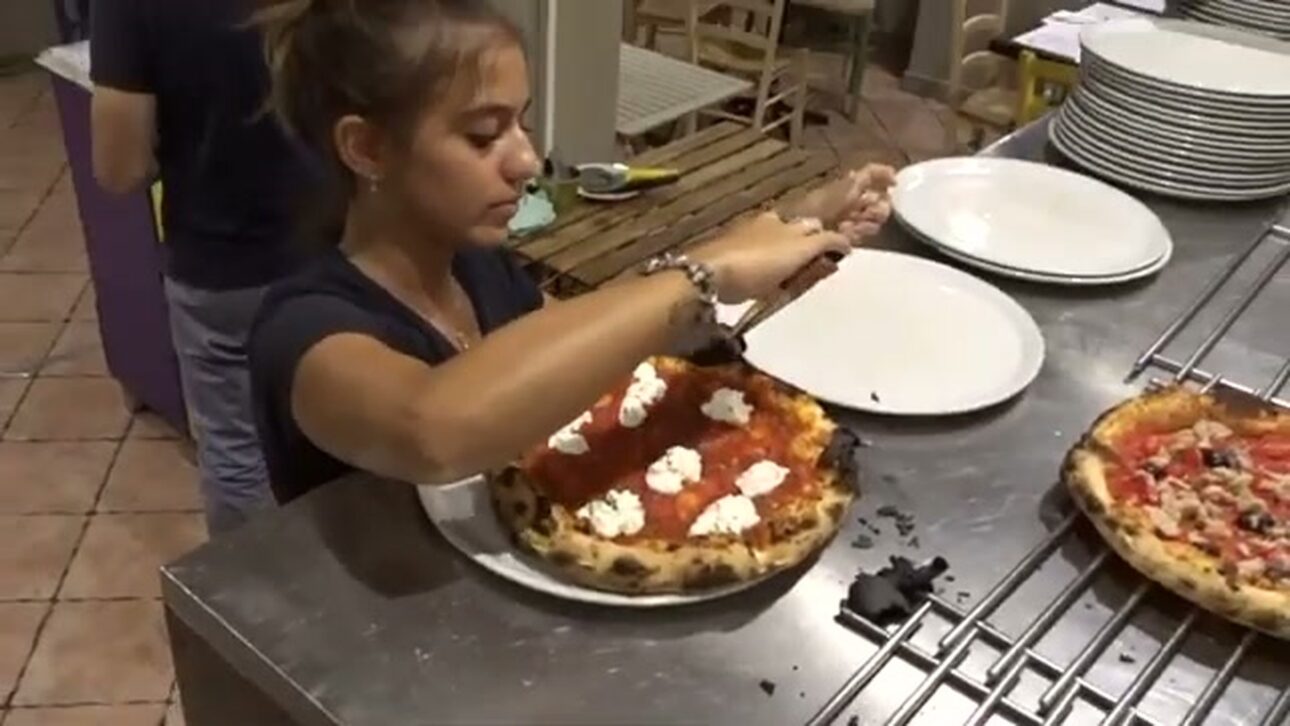
The phenomenon is explained by an engineer. Chemical engineer Maria Eduarda Gonçalves Lousada, a master’s graduate from USP and coordinator of food engineering at Uniso, states that the ice acts as a thermal barrier, according to the Diário do Centro do Mundo. In her words to the Diário do Centro do Mundo: “As long as there is ice melting, the temperature in that exact zone does not exceed 0°C, the melting point of ice, and the resulting liquid water does not exceed 100°C, which is the boiling point.” In a reading of this editorial, duly noted: it is food engineering disguised as simplicity. The ice cube creates a protected zone in the middle of the dough, and it is in this warm, not scorching, island that the parmesan can melt into cream instead of turning into charcoal.
Who is Sudário Silva, the pizzaiolo of the Wine Route
The chef is not a novice trying an internet trick; he is a veteran of the craft. Sudário Silva has been in the São Roque region since 1981 and works with long fermentation and maturation doughs, which can wait up to 120 hours before assembly, reports Diário do Centro do Mundo.
One hundred and twenty hours is five days of waiting just for the dough, as noted by this editorial, duly highlighted. This shows that the ice cube pizza is not an isolated effect, but the culmination of an obsessive method: mature dough, long fermentation, and, in the end, the ice cube that seals the technique. It’s the kind of detail that separates the weekend pizzaiolo from the professional who has made pizza their entire life.
It’s worth explaining why this long fermentation matters, still in highlighted reading. A dough that rests for up to 120 hours develops more flavor and becomes lighter and more digestible because time breaks down some of the starches and gluten even before the pizza goes into the oven. It’s the same logic as the sourdough bread that became a craze in Brazil. Therefore, Sudário doesn’t just sell the ice trick: he sells a dough worked on for five days, and the ice cube is the technical cherry on top of a preparation that starts long before the customer arrives.
And he is aware of what he does. “When I saw that I was doing something that no one else was doing in Brazil, I decided to follow this path. Repeating what I say is easy. Doing what I do is a very different story”, said Sudário, according to Diário do Centro do Mundo.
The Italian origin: the “cacio e pepe” pizza that inspired the technique
Every good recipe has a lineage, and the ice cube one comes from Rome. Sudário’s inspiration came from the Italian pizzaiolo Stefano Callegari, a reference in Rome and creator of the “cacio e pepe” pizza, made with cheese and pepper, details Diário do Centro do Mundo.
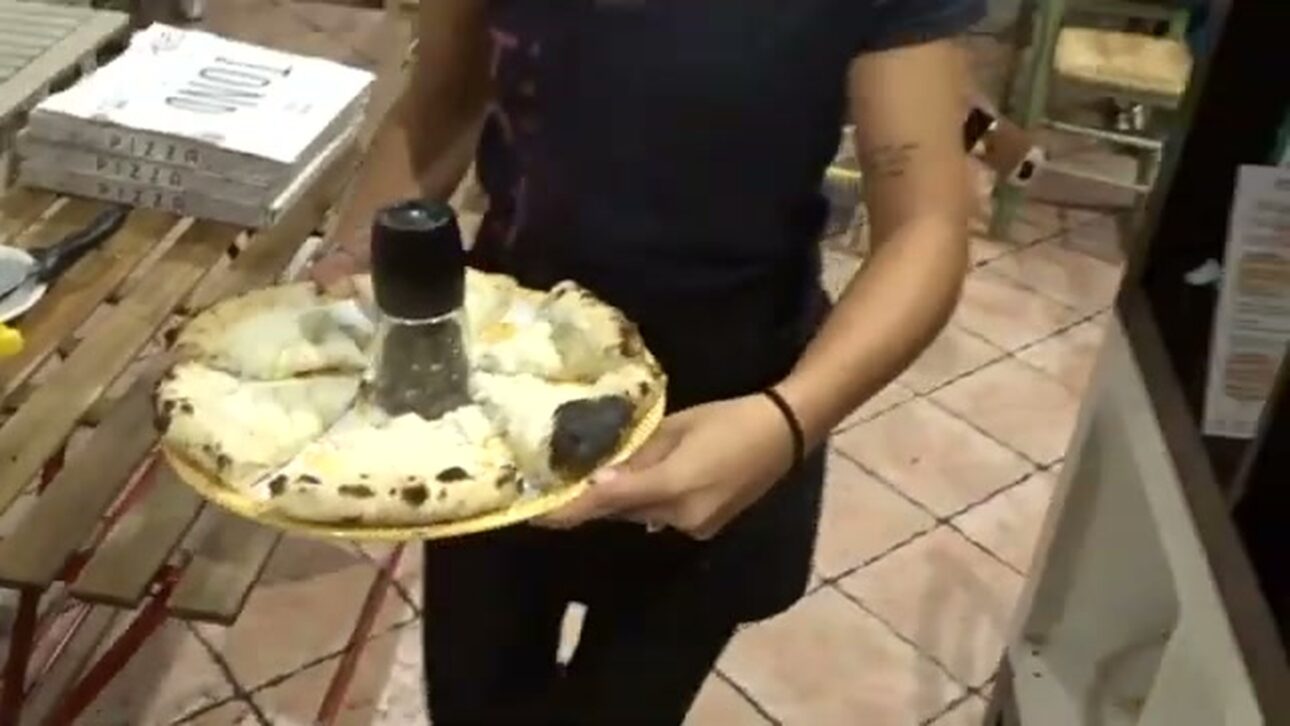
The problem the Italian solved is the same one the Brazilian inherited. Since pecorino can burn at high temperatures, Callegari started placing ice on the dough before putting it in the oven, according to Diário do Centro do Mundo. In highlighted reading of this editorial: Sudário didn’t copy, he adapted. He took the Italian ice solution, which was born to save the pecorino, and applied it to parmesan, the most popular cheese on Brazilian tables. It’s the technique from Rome speaking Portuguese, with the accent of the São Paulo countryside.
And this adaptation has its own merit, still under noted observation. Replacing pecorino with parmesan is not just a matter of taste: they are cheeses with different melting points and fat content, which means the same ice trick had to be recalibrated to work with the Brazilian ingredient. It was by getting this calibration right that Sudário could say he does something no one else does around here. Copying the recipe would be easy; making parmesan turn into cream without burning, as he himself summarizes, is a very different challenge.
Where to eat Sudário’s ice pizza in São Roque
For those whose mouths are watering, the practical information concludes the article. Sudário’s pizzeria is located on Rua São Francisco, in Jardim Villaça, at the entrance of São Roque’s Wine Route, and operates from Wednesday to Sunday, from 6:30 PM to 11 PM, reports the Diário do Centro do Mundo.
Why does this story go beyond gastronomic curiosity, in this editorial’s reading, duly noted? Because it shows the best of Brazilian cuisine: a chef from the interior of São Paulo who discovers a niche Italian technique, understands the science behind it, adapts it to an ingredient Brazilians love, and turns it into a unique feature that fills the house on a tourist route. At a time when many pizzerias bet on expensive ingredients and marketing, Sudário bets on technique and patience, and that’s what makes customers cross the city to try a pizza baked with ice. It’s true innovation, made in a São Roque kitchen, not in an international chain’s lab. Tell us in the comments: would you be willing to try a pizza baked with ice cubes, or do you think ice and oven don’t mix?
Watch: the cacio e pepe pizza with ice at Stefano Callegari’s pizzeria


The technique that inspired Sudário can be seen at its origin, in Rome. The Roma food channel published a video showing Stefano Callegari’s famous cacio e pepe pizza, made with ice cubes on the dough, exactly the Italian recipe that inspired the São Roque pizzaiolo, according to the Diário do Centro do Mundo.