Portuguese
  Spanish


The 4.5% rate charged on cars that Argentina exports drops 0.375 points per month until it reaches zero in June 2027, but the discount on cars sold in Brazil should not be automatic or equal to the full number
Every medium pickup truck sold in Brazil that comes from Argentina carries a tax in its price that has now started to disappear, and this may affect the price of cars at dealerships. The Argentine government has begun the gradual removal of the export tax on industrial products, a measure that includes vehicles manufactured in the neighboring country and sold in Brazil, according to the Diário do Centro do Mundo, in a report dated July 10, 2026.
The number that changes is small at the source, but it affects an entire market. The rate currently charged on exported cars is 4.5% and will decrease month by month until it reaches zero in June 2027, reports the Diário do Centro do Mundo. It is a tax dying slowly, and each fraction that disappears can become a discount on the other side of the border.
Which Argentine cars may become cheaper in Brazil
The list of affected models is filled with names that Brazilians know well from traffic and dealerships. The change may affect important models in the Brazilian market, such as Toyota Hilux, Toyota SW4, Ford Ranger, Volkswagen Amarok, Fiat Cronos, and Fiat Titano, details the Diário do Centro do Mundo.
-
End of an era: Fiat announces the end of production of one of the best-selling cars

-
Nothing about Polo, HB20, or Kwid: the cheapest automatic car in Brazil abandons the flex system, brings back an exclusive ethanol engine, delivers 115 hp, and accelerates from 0 to 100 km/h in 10.5 seconds.
-
Hilux’s little sister: Toyota relaunches the Land Cruiser 70 in the 2027 lineup with over 40 years of production, a 2.8 turbo diesel engine with 201 hp and 51 kgfm, a six-speed automatic transmission, and a renewed retro look.
-
Automatic, economical, and known for reliability: with a 1.5 engine of up to 110 hp, CVT transmission, seven airbags, and fuel consumption of up to 15.9 km/l, this used hatchback appears as a rational alternative to Polo, HB20, and Onix; meet the Toyota Yaris XLS 2020.


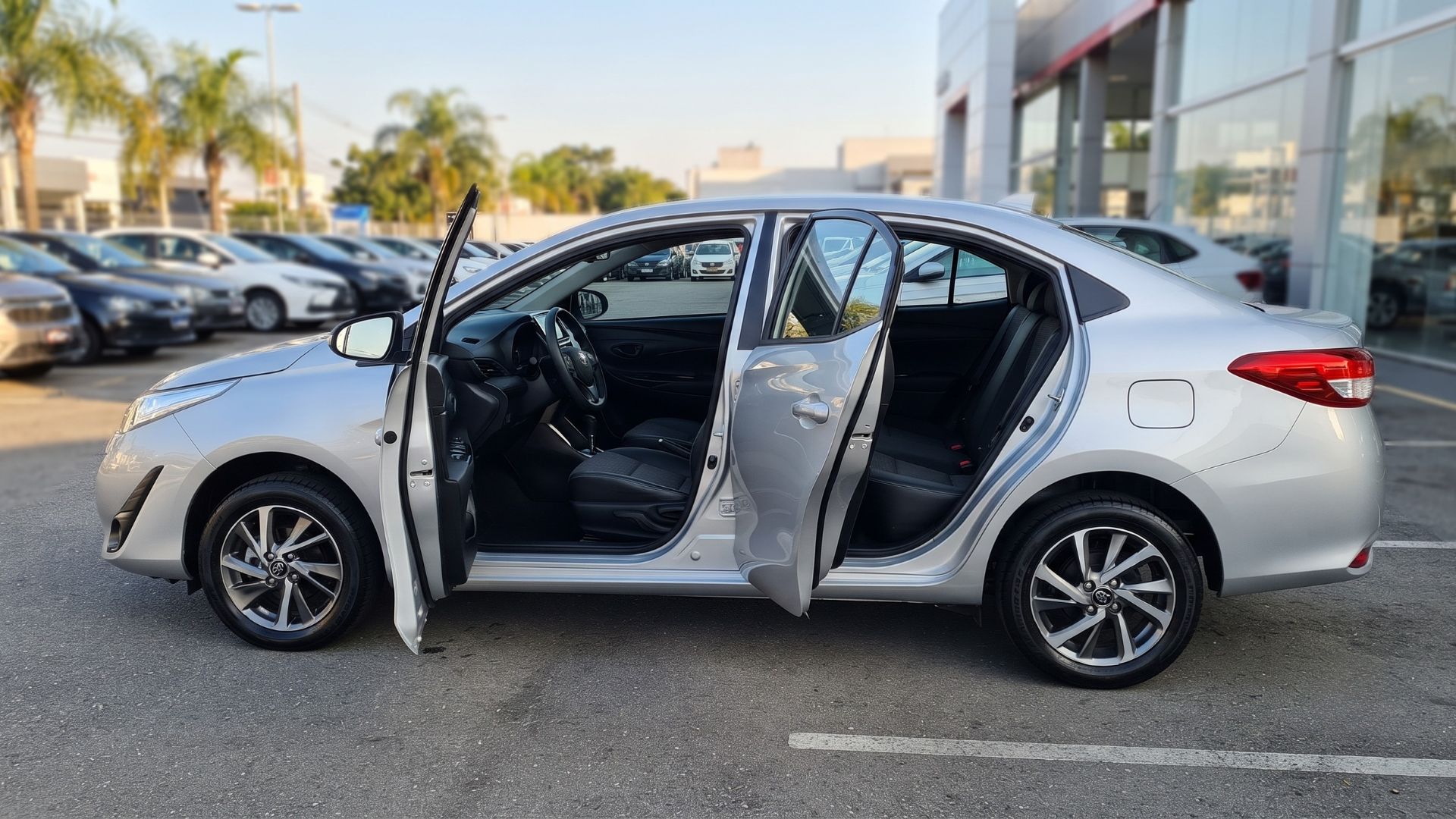
It is precisely the medium pickups and some sedans that dominate sales here, as observed by this editorial, duly noted. The Hilux and Ranger compete at the top of the pickup truck segment, the Amarok has a loyal audience, and the Fiat Titano is the brand’s new bet. If any of these cars become a few thousand reais cheaper, the effect is felt throughout the competition, as competitors need to respond to avoid losing customers.
It is worth remembering why so many cars sold in Brazil are born in Argentina, still in noted reading. Brazil and Argentina have formed, for decades, an integrated automotive industrial hub: automakers divide production between the two countries, manufacturing certain models on one side and others on the other, and exchange these vehicles with Mercosur’s own trade rules. That is why a “Brazilian” pickup truck in your garage may have come from a factory in Córdoba or Buenos Aires, and that is why a tax change there becomes price news here.
Why the discount will not drop all at once in the price list
This is where the alert comes in that separates the encouraging headline from the reality of the dealership. The reduction should not automatically appear in the tables: the drop is 0.375 percentage points per month, and estimates cited by the Argentine press indicate a potential impact closer to 2% on the final price, not the nominal 4.5%, reports the Diário do Centro do Mundo.
In this editorial reading, duly signaled: it is important to keep the euphoria with both feet on the ground. First, because the reduction is sliced, trickling little by little each month until 2027. Second, because the tax is only part of the final price of a car, which still carries freight, Brazilian taxes, exchange rates, and the margin of the manufacturer and the dealership. That’s why the real estimated effect, around 2%, is much smaller than the 4.5% on paper. In a car costing R$ 300,000, 2% is R$ 6,000, a discount that helps but does not transform the luxury pickup into a popular one.
And there is a factor that could even swallow this relief, still under observation: the exchange rate. The price of cars imported from Argentina depends on how the peso is against the real, and a few months’ exchange rate variation can easily nullify or amplify the effect of the tax cut. In other words, the benefit of up to 2% exists on paper, but only fully reaches the consumer if no other piece of the price puzzle moves along the way. That’s why the keyword of the article is “may”: it may fall, but it depends on a set of factors that no one controls alone.
Where the consumer can feel the difference
If it doesn’t come directly on the label, how does the benefit reach the buyer’s pocket? The article itself points out the paths. The gain may appear in factory bonuses, commercial campaigns, discounts for CNPJ, fleet buyers, financing conditions, or specific actions on versions with larger stock, according to the Diário do Centro do Mundo.
In this editorial observation, duly signaled: in practice, the savvy consumer should not look for a new list price, but rather a more generous negotiation. As the Argentine tax decreases, the manufacturer gains a cost margin that usually turns into ammunition for bonuses, zero financing rates, or discounts for those buying with CNPJ. Those planning to change cars in the coming months, therefore, have a new argument on the negotiation table, even if the label in the window remains the same.
A practical piece of advice emerges from this, still in signaled reading: it’s worth keeping an eye on the calendar. Since the tax cut is monthly and only ends in June 2027, the buyer’s bargaining power tends to grow over time, not explode all at once. Those not in a hurry can benefit by waiting for year-end or line renewal campaigns, when manufacturers usually concentrate the best bonuses and the cost of cars will have already dropped a few more points at the source. Hurry and price rarely go together when buying a car.
What manufacturers say about car prices
On the manufacturers’ side, for now, silence. Ford, Toyota, Volkswagen, and Fiat have not commented on any potential impact on prices, reports the Diário do Centro do Mundo.
This silence is understandable, in a signaled reading of this editorial. No automaker wants to promise a discount before being sure of how much will remain in its own cash, nor create the expectation of a drop that the competition would use against it. It is likely that the pass-through, if it comes, will appear discreetly in a commercial campaign, rather than in a price cut announcement. Why does this matter to the Brazilian reader? Because a car is one of the biggest expenses for a family, and a medium pickup truck is a work tool for farmers, builders, and entrepreneurs. Any relief of 2% on a good that costs hundreds of thousands of reais is real money back in the budget of those who depend on the vehicle. Tell us in the comments: are you waiting for pickup prices to drop to change your car?
Watch: the comparison of medium pickup trucks sold in Brazil


To understand which models are at play, it’s worth seeing the trucks side by side. In November 2024, the AUTO+ channel published a comparison between Toyota Hilux, Fiat Titano, Ford Ranger, and Volkswagen Amarok, the medium diesel pickup trucks competing in the Brazilian market, precisely part of the models mentioned by the Diário do Centro do Mundo as affected by the change.