






 Portuguese
  Spanish
  4 min of reading
  0 comments


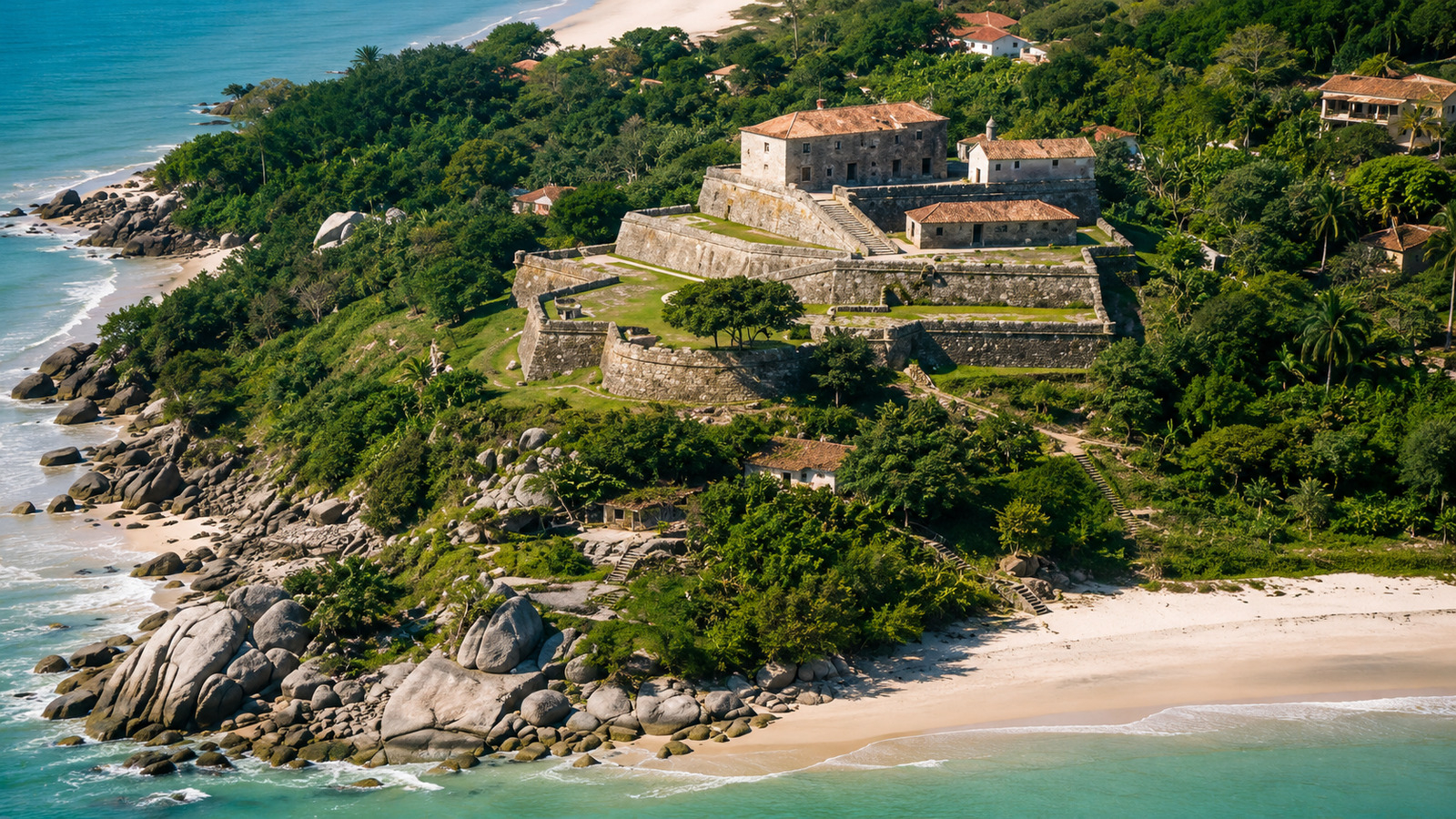
Between Jurerê and Daniela, Praia do Forte offers calm waters, a clear sand strip, Azorean gastronomy, and a fortress listed since 1938, consolidating a historic refuge in northern Florianópolis
Praia do Forte boasts approximately 490 meters of clear sand, calm waters, and one of Brazil’s first listed monuments, preserved since 1938, 25 km from the Santa Catarina center.

Tranquil stretch between famous beaches
Located in the north of the Magic Island, this strip of sand lies between two well-known beaches. Despite its bustling neighborhood, it maintains a peaceful rhythm, reinforced by its secluded access.
The official name is Praia da Ponta Grossa, a reference to the hill of the Fortaleza de São José da Ponta Grossa. Over time, residents and visitors adopted the nickname that prevailed.
-
Survivor of 1966 SS Daniel J. Morrell Shipwreck in Lake Huron Recounts 38-Hour Ordeal in Extreme Cold

-
The Greatest Hoax in World Cup History? The Film That Denied Brazil’s 1958 Victory and Exposed How Fake Evidence Can Seem Convincing on TV
-
Fake South Korean Online Stores Offer Shopping Thrill Without Spending Money or Receiving Products
-
The War of Jenkins’ Ear: How a Severed Ear Sparked One of the 18th Century’s Most Unusual Conflicts


In the IBGE register, the area appears as a transition beach between the bay and the ocean. This condition helps explain the calm, warm, and clearer sea compared to the inner sections.
Why Praia do Forte stands out
Its strategic position shapes the landscape. On the right side, rocky shores separate Praia do Forte from Praia da Daniela, creating a natural passage at low tide.
When the sea recedes, it’s possible to walk between the two beaches, along the rocky shore and the strip of sand formed between the rocks. The route reinforces its discreet character.
The entire region of the island’s fortresses has been managed by the Federal University of Santa Catarina since 1991. UFSC administers this complex, which includes the neighboring fortification.

Fortress listed since 1938
The Fortaleza de São José da Ponta Grossa is the main historical landmark of the region. The monument was erected between 1740 and 1744 by Brigadier José da Silva Paes, atop the hill.
The complex preserves the Commander’s House, the Powder Magazine, and the Chapel of São José. The construction integrates into the beach landscape and gives meaning to the name adopted by the destination.
IPHAN registered its protection in 1938, placing the fortress among the first listed properties in the country and increasing the historical significance of the place.
In November 2022, Ponta Grossa reopened to the public after a restoration costing nearly R$7 million. The reopening reinforced the area as a cultural spot.
Itinerary combines history, sea, and views
The trail to the São Caetano Battery appears as a natural extension of the visit. The 1765 battery is about 200 meters from the fortress and was built to guard Jurerê and Canasvieiras.
Another attraction is the sunset viewed from Ponta Grossa hill. The upper terreplein of the fortification offers a 360-degree view of the North Bay and Anhatomirim Island.
Nautical tours are part of the itinerary. Speedboats and schooners depart from nearby areas towards Anhatomirim, home to the main vertex of the 18th-century defensive triangle.
Azorean gastronomy completes the tour
The surrounding experience includes dishes linked to Azorean tradition, with seafood produced on the island itself. Fresh oysters, from the marine farms of Ribeirão da Ilha, appear raw or gratinéed.
The shrimp sequence includes breaded, garlic and oil, fried, and creamy preparations, usually with rice and pirão. Stuffed mullet appears as a seasonal winter fish, prepared with shrimp farofa and vegetables.
Grilled berbigão completes the list, served as an appetizer with onion, garlic, and parsley. The cuisine reinforces the connection between the sea, local culture, and restaurants.
How to get there and when to visit
Summer concentrates the high season and brings over 3 million visitors to Florianópolis. During the intermediate seasons, the climate provides mild days and a calm flow of tourists.
Leaving the city center, the route to Praia do Forte is about 25 km and takes, on average, 40 minutes via SC-401.
The final access is via a narrow and winding road from Jurerê Internacional. This characteristic preserves the serene pace, even near busy areas.
By public transport, the route passes through TICEN and requires a transfer in Santo Antônio de Lisboa. By sea, schooners depart from Trapiche da Beira-Mar Norte and arrive at Jurerê, about 3 km from the fortress.
Praia do Forte is worth it for its rare combination of calm sea, a centuries-old monument, and Azorean cuisine. From the top of Ponta Grossa, Baía Norte, clear sand, and Anhatomirim complete the landscape.
With information from UAI.





Be the first to react!