






 Portuguese
  Spanish


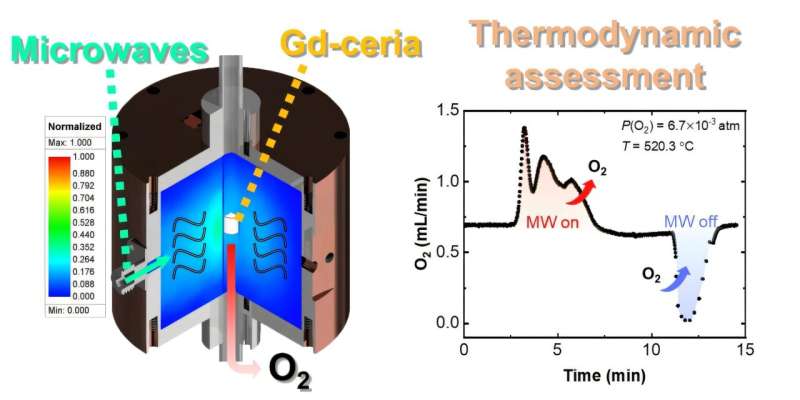


Scientists Discovered That The Use Of Microwaves Can Significantly Accelerate The Production Of Clean And Sustainable Hydrogen.
As the search for sustainable energy sources is constantly evolving, an interdisciplinary team from POSTECH (Pohang University Of Science And Technology), South Korea, made a discovery that could revolutionize clean hydrogen production.
Using microwaves, the researchers overcame critical limitations of traditional methods, drastically reducing the temperature and time needed to generate hydrogen.
The results of this research were published as the cover story of the renowned Journal Of Materials Chemistry A, marking an important milestone for the global energy transition.
-
Brazil Constructs First Japanese SABO Barrier in Nova Friburgo to Prevent Landslides, a $3 Million Concrete Trap for Rocks, Logs, and Mud

-
Brazilian Navy’s Technology Plays Strategic Role in Future of Small Modular Reactors, Boosting Nuclear Energy Capacity with Innovative Solutions for Power Generation and Industrial Applications

-
China Surpasses U.S. and Russia Combined in Submarine Production
-
Xiaomi Unveils Smart Glasses in Brazil with 12MP Camera, 4K Video, and AI Features, Challenging Ray-Ban Meta


The Challenge Of Clean Hydrogen Production
With the urgent need to reduce carbon emissions, clean hydrogen stands out as a promising alternative.
However, current methods face enormous challenges. Conventional thermochemical processes, based on the redox of metal oxides, require extremely high temperatures, reaching up to 1,500 °C.
This energy demand makes the process expensive, difficult to scale, and environmentally questionable.
To overcome these challenges, POSTECH scientists explored a well-known but underutilized energy source in the industry: microwaves.
Commonly associated with cooking, microwaves can be used to drive chemical reactions efficiently and quickly.
The Innovative Solution Of Microwaves
The research revealed that microwave energy can reduce the temperature required for hydrogen production from gadolinium-doped ceria (CeO2), a material widely used for this purpose.
While conventional methods require temperatures of 1,500 °C, the POSTECH team managed to carry out the same process at less than 600 °C, a reduction of over 60%.
Moreover, microwave energy replaced 75% of the thermal energy normally required, making the process much more efficient and sustainable.
Another groundbreaking aspect of this technology is the creation of “oxygen vacancies“, defects in the material’s structure essential for water splitting and hydrogen production.
Normally, these vacancies take hours to form at high temperatures. With the new approach, the same result was achieved in just a few minutes, at temperatures below 600 °C.
Benefits And Impacts Of This Technology
The benefits of this approach are significant. Firstly, the drastic reduction in operational temperature makes the process more accessible and less costly.
Moreover, the improved energy efficiency reduces the carbon footprint associated with hydrogen production, directly contributing to global sustainability goals.
According to Professor Hyungyu Jin, “this research has the potential to revolutionize the commercial feasibility of thermochemical hydrogen production technologies. It will also pave the way for the development of new materials optimized for microwave-driven chemical processes“.
Professor Gunsu Yun adds, highlighting that “the introduction of a new microwave-powered mechanism and overcoming the limitations of existing processes are major achievements made possible by the close interdisciplinary collaboration of our team“.
Future Perspectives For The Study
With experimental validation and support from thermodynamic models, the technology is ready to advance to industrial-scale testing.
The ability to produce hydrogen quickly, efficiently, and affordably may accelerate the adoption of hydrogen as a clean energy source across various sectors, such as transportation, industry, and power generation.
For the next steps, it will be essential to broaden studies on the application of this technology under different materials and operating conditions, ensuring its viability at scale.
In addition, incentive policies and investment in infrastructure are crucial to solidifying clean hydrogen as a protagonist in the global energy transition.





Fala isso para o Stanley Meyer a história se repete….
Notícia fantástica, no meio de tantas mazelas que ocorrem no mundo. Xô ****!
Torço para que de alguma maneira se quebre o cartel das petrolíferas mundiais, mas o que está acontecendo nos EUA, está provando o contrário